Dads are parents, too

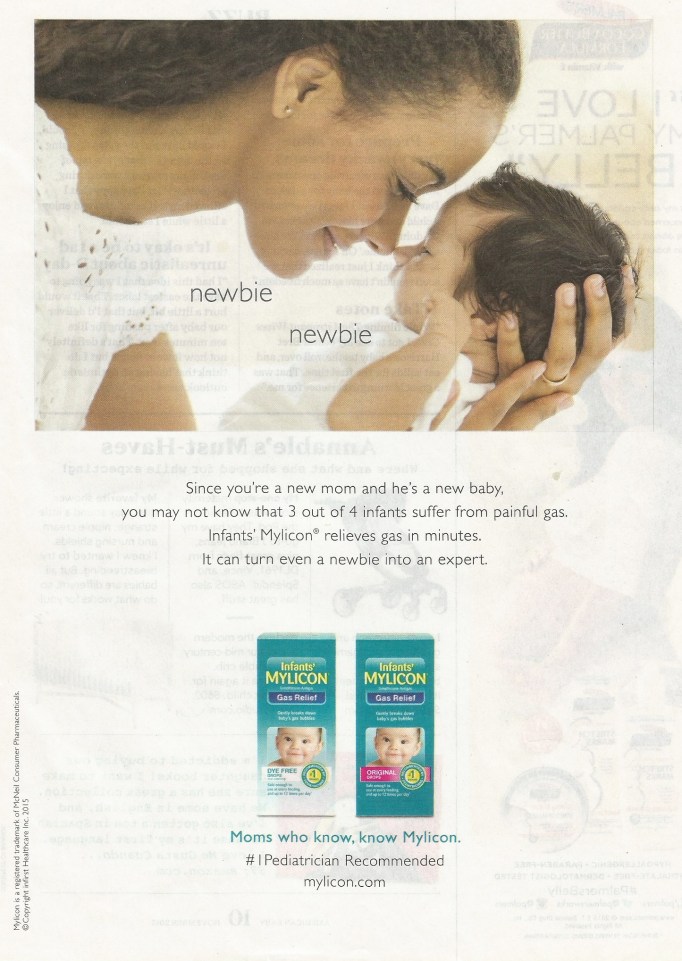
mylicon1We’ve heard more than one SAHD’s story about being left out of the conversation while at the local park amongst a group of SAHMs.  And for a dad to get invited to a SAHMs’ playgroup – that’s even less likely to happen.  It’s hard to say if this is the norm, but it happens.

And, it’s unfortunate and unavoidable.

But when the topic is childcare, and a company purposely creates a moms-only club without a dad counterpart?

That’s blatant sexism.  The featured ad – found in a parents magazine, natch – recently caught our eye.  It doesn’t even bother relinquishing dad to the assistant role, it downright ignores him.

Over at mylicon.com, it only gets worse, where it offers Mylicon Moms, yet no similar club for dads.  Read the language on this page; look how Mylicon completely ignores fathers and makes them feel like outsiders:

Receive a free product sample, promotional information and advice from other moms when you subscribe to our Mylicon® Moms newsletter. All you have to do is share your contact information and join other moms who answer our posted question below.

How can a dad feel like one with this kind of treatment?  And all this, from a company that claims to offer an “unparalleled experience for consumers.”

Really?  Dads are consumers, and “unparalleled” means “having no equal.”  Sadly, Mylicon has equals, but for all the wrong reasons – among companies who continue to disregard dad as an equal parent.

It’s another example of exclusionary marketing that screams of old fashioned ignorance and chauvinism, as if dads can’t, don’t, or won’t handle basic family health care.

Mylicon, please do what is right, and include dad as part of your marketing mission – because dads who know, know there’s other options for painful gas.

Getting burned by sunscreen

coppertone5.jpg

Somewhere, at this very moment in time, a dad is being treated differently simply because he’s a dad.

  • “It’s impressive how you brought the baby to the store all by yourself.”
  • You cooked that?  Your wife didn’t help you?”
  • That’s not how you fold the diaper.  Let me show you the right way.”
  • “Who ironed your shirt so nice for you?”

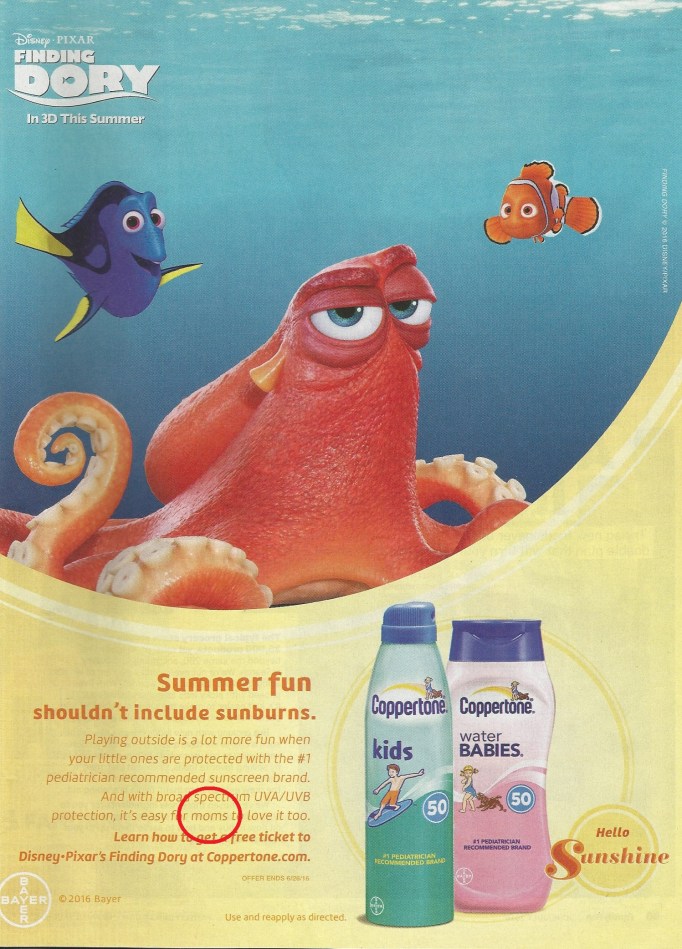
And now, apparently, you can add sunscreen to the list of things dads aren’t capable of handling.

Here we have another sexist ad from Coppertone, who negates dad as an equal parent.

Sadly, this isn’t the first time Coppertone has pulled the dads-don’t-care-about-their-childrens’-skin stunt.  And just this past May we wrote about Aveeno Baby, who also doesn’t believe fathers are equal parents.

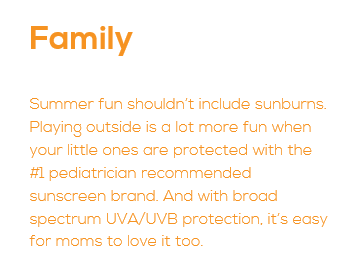
coppertone3.pngIf you follow the ad’s instructions and take time to visit coppertone.com, there you’ll find a scrolling slide titled “Family,” which continues the sexist notion that mom is in the parental lead.

Yet on its Facebook page, Coppertone makes the awkwardly contradictory pledge:  “Coppertone, part of Bayer, is committed to bringing families the promise of better suncare for better summers.”

So, Coppertone, is dad part of the family or not?

Rather than employing “Finding Dory” as its latest promotion, perhaps Coppertone should have used “Finding Dad.”

Is that dad? In a breastfeeding ad? It’s no fad

Although the basic concept of breastfeeding will never change – yes, it’s still exclusive to women – Medela feels the industry is ripe for reinvention. medela1
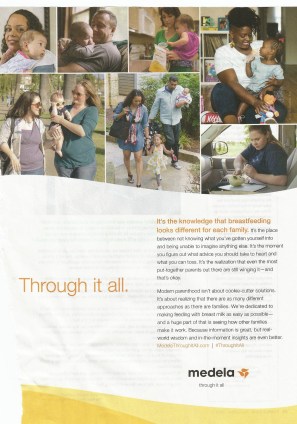
As one of the global leaders in breastfeeding technology, Medela recently strengthened its industry mettle by spending the past 10 months doing something many firms thoughtlessly overlook:  communicating with customers.

However, Medela didn’t simply monitor various social media sites – it actually conversed, interacted and listened.

The result was a wildly successful “Through It All” campaign that revealed something else companies also fail to notice:  dads matter, even when it comes to breastfeeding.

“We really wanted to make sure our fathers were a part of this,” said Kim Aasen, director of marketing. “Even though (dads) can’t physically breastfeed, (they’re) an important part of that conversion. They’re important to the breastfeeding circle.”

An idea is born

medela-KimAasen_MR


Kim Aasen, Medela


Last September, Medela started asking moms on its Facebook community one straightfoward question:  when it comes to breastfeeding, what would you share with another new mom? Aasen said the response was overwhelming, as many talked of a network, or community of breastfeeding support that might include a spouse, grandma, or friend.

After those key months of taking valuable customer inventory, Medela revealed its marketing idea complete with a print campaign and series of videos which tell the story of real people and their breastfeeding journey.

“We made sure we featured those people along the way, and you can see those people featured in the (print) ad,” Aasen said, who also noted that Medela overwhelmingly heard from moms who insist dads play an integral role in breastfeeding success. “We listened to make sure we are reflecting who our Medela communities are. (Fathers) are caregivers and part of the breastfeeding experience, so we want to make sure that everyone is represented.”

Let reality dictate strategy

Although society encapsulates the topic via the word breastfeeding, that equally applies to one who is breastpumping – which, of course, allows other people to feed the child.

medela-Justa 9-Heinen-LR.JPG


Behind-the-scenes at a “Through It All” campaign video shoot. Copyright Medela 2016.


“We want to make sure that we don’t think there is one right way to do it,” Aasen said. “We want to make sure moms and dads and families – whatever that family looks like – that there is no one perfect way to do it.”

Medela also let the customer feedback drive the campaign. It wasn’t intent on following societal norms, advertising history, stereotypes, or even demographic models – it simply felt its campaign should reflect reality.

“By listening to our community’s focus groups, dads are a part of the picture,” Aasen said. “For us, we feel like it’s reflecting reality. We’re just sharing their words back. The pictures you see online shows everyday life.”

Dads count too

As for the future, Aasen said its current campaign is squarely in phase one, which was “different than anything Medela had ever done.” Plans moving forward will continue to include a reflection of what real, modern families look like and how they make breastfeeding work for them.

On the flip side of breastfeeding is formula feeding, where some of its makers exclude fathers from its messaging.

Aasen believes companies who don’t include dads in ads should take heed:  (Those) companies are missing out. It’s not cookie cutter; (families) comes in all shapes and sizes, as do responsibilities.”

medela-DSC_9816-Brown-LR


Video crews record footage for Medela’s “Through It All” campaign.  Copyright Medela 2016.


Do you say ‘my kids’ or ‘our kids’? The difference is big

For those of you who have children:  when you talk about your kids to others, do you refer to them as “my kids” or “our kids”?noodleandboo1

It’s a major difference, and that distinction of one word says a lot.  The former connotes a more possessive or singular approach, whereas the latter sends a signal of togetherness and unity.  If you use the “my” term, it may seem harmless and might be completely unintentional, but it conveys a certain message – like it or not – to others and to your partner.

Take a look at Noodle & Boo, makers of luxurious baby and pregnancy skin care.  The product is found at high-end retailers, coveted by Hollywood stars, and it generally adheres to an impressive and upstanding company mission statement while supporting several charitable causes.

Now check out its latest ad, where it mentions “Only the best will do for her baby,” and the “first 100 mamas to follow @noodleandboollc and tag #mamaprofile with your favorite photo of you and baby…”

Isn’t the baby his, too?noodleandboo2

noodleandboo3Don’t dads use social media?

We can’t deny that some products and ads are marketed toward a certain gender, especially pregnancy skin care.  However, this ad was printed in a parents magazine.  And this particular product line it’s selling in this ad – it’s for babies.  That child is to be raised by parents, which includes dads.  No marketing piece should ever exclude dads and make them to be the lesser parent, as if they don’t matter.  Using the word “parent” instead of “mama” won’t make or break the business model, and it won’t make a female look away in disgust.

But it will make a dad feel included, feel like he matters to a company, and will make him take notice.

Believe us when we say dads notice.  Take a look on social media to find all the dads fully engaged in marketing messages and how they’re portrayed by retailers.  Old Navy, Huggies, Jif, Amazon – these are just a few of the companies that have been singled out by dads through viral campaigns to get them to change their ways.

It’s disappointing to see the exclusion in word choice and via advertisement photos, but that practice continues at its website, where a dad is nearly non-existent – save for a few celebrity dads it uses to sell its line of products.

When it comes to parenting, let’s hope Noodle & Boo acknowledges all the dads out there, because with Noodle & Boo, only the best will do, and dads count too.

Here’s a case for combining Mother’s and Father’s Day into one holiday

family2Last month on Mother’s Day, we overheard a young dad offering well wishes to a fellow friend, an elderly mom.  The mom extended a kind “thanks” in return, and then shared with a smile:
“Mother’s Day, Father’s Day – they’re really the same thing.  We should just have one ‘Parents Day,’ because parents raise kids together these days.  Everyone has the same job.  We’re all celebrating today, and I hope you have a great day, too!”

That’s some seriously wise knowledge from a veteran mother.

This mom was probably born about a decade after women finally gained the right to vote, so she’s seen changing societal roles and struggles for equality – all while being raised during a time when women didn’t typically work outside the home.

If any person has a reason to be set in her ways or subscribe to old-fashioned thinking, it would be her.

Yet instead, she has it all figured out.  She gets it.  She knows parenting isn’t a one-sided affair where one gender takes the lead, the other serves as an assistant or part-time helper.  She knows dads are just as competent, instinctual, effective and equal as moms when it comes to parenting.

Why don’t companies and their marketing employees think the same?

Technically, there is a Parents’ Day in the United States, held on the fourth Sunday of July.  However, that holiday hardly has the traction of its individual counterparts.

The truth is, we need holidays to celebrate each parental unit.  Moms and dads are different, and they parent different – and we say celebrate that.

So, let’s keep things the way they are, but recognize that no holiday is more important than the other.  We all have a father and a mother, whether we know them or not.

They deserve a day to be honored individually.

And they’re equal parents in every way.

It’s a good week to start placing trust in dad

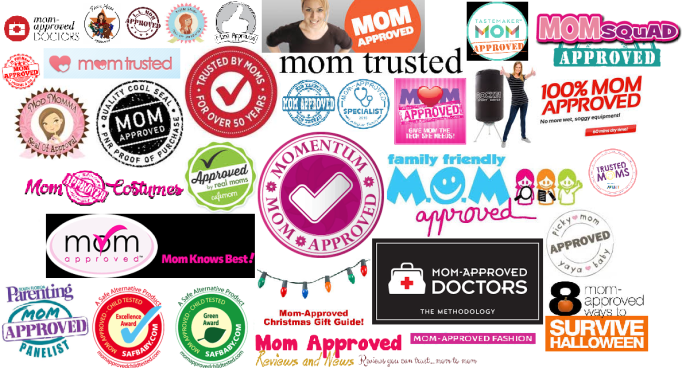
trustIf you monitor the advertising, marketing, branding and packaging of products and services as much as we do, you’ll find that one phrase seems to pop up more than any other:  mom-trusted.
Sometimes the term is mom-approved, but either way, it’s there.

Without reading the minds of those marketing departments and having privy to internal documents, let’s carefully discuss why mom-trusted is so often the choice of expression.

Companies often think:

“Mom is smarter”

A perception exists that mom is the smarter parent, or the one instinctually versed to take care of the family.

Much of this is fueled by our entertainment world, who likes to place dad in the role of bumbling comic relief.  We all know those characters who have made dad look less-than-flattering:  Homer Simpson, Al Bundy, Phil Dunphy, Fred Flintstone and Clark Griswald.  You can even find this odd-ball personality in comics like Blondie and Berenstain Bears.  Sure, we can all find the humor in those characters, but beside nearly every one is a mom that’s the voice of reason and the sensibility, while dad needs to be corrected like a child and put down for his absurdity.  This pattern of stereotype has created a perception that pervades societal behavior.

Just look at this video by What’s Up Moms, which, despite its clever dad-ingenuity, is tainted by a terribly degrading title and includes a departing mom asking her husband, “Are you sure you’re going to be okay?”

Would anyone ever create a video titled, “Mom’s First Time Alone With Baby”?

Not in a million years.

“Mom is the one who handles shopping”

Even if mom works – and they do in greater numbers than ever before – there’s still a belief that she predominantly tackles the shopping.  Let’s be real:  dads shop, and companies who believe otherwise are missing out on the realities of dads’ spending power.  We’ve debunked a lot of misconceptions and analyzed why it’s important to market to dad in this post.

“Mom is the decision-maker.”

Parenting is a shared responsibility in today’s world, be it health care, schooling, or sports leagues.  Dads are more involved than ever, and there’s a large, vocal SAHD community with heavy untapped potential.  Do you think those dads like being told they’re not in charge, or at least not equally in charge?

_____________

Seeing repeated use of mom-trusted leaves dads out of the mix, and ignores them as equal parents.  Employing a gender-neutral term like parent-trusted extends equivalent due, and doesn’t make sexist implications in either direction.

A good relationship is based on trust, and if companies want to maximize gains, it’s high time they start letting their mission and principles guide what they do, and embrace everyone equally.

How to sell breastfeeding to both moms and dads

medela1Whatever Medela is paying the people who handle its marketing and communications – it’s not enough.

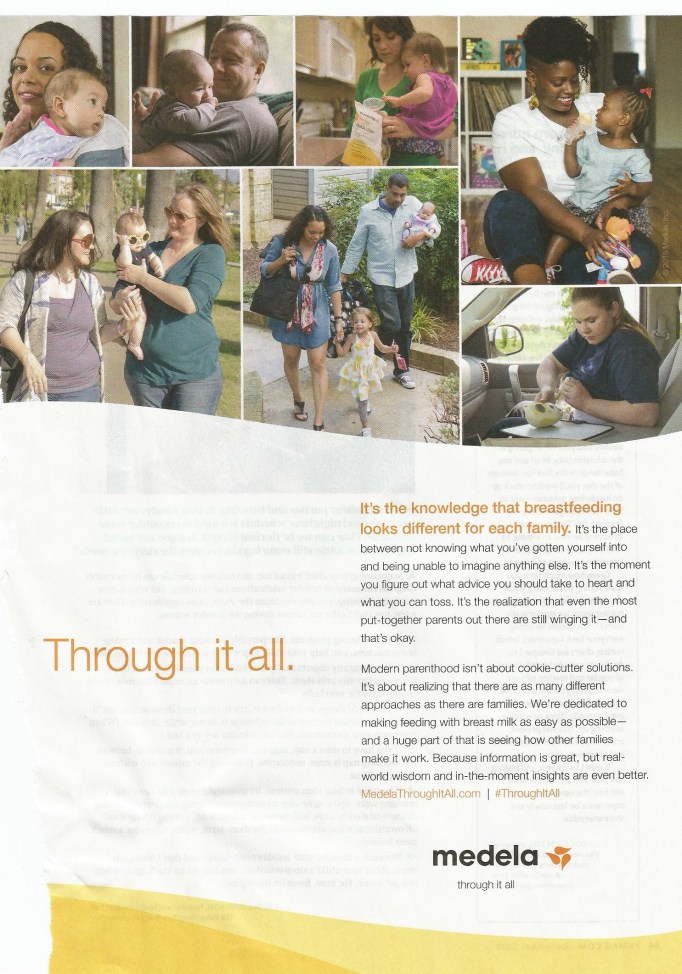
Just take a look at this marvelous ad, which includes families of all shapes and sizes, plus ad copy that doesn’t exclude any one member of the family.  And while you gaze, bear in mind what this company is all about:  it’s a staunch supporter of breastfeeding, and nothing else.  Read what its company founder calls its “Breastfeeding Support Pledge”:

“We pledge our dedication to breastfeeding as the best nutrition for babies and families.  We further pledge that our breastfeeding accessory products and literature shall never be used to influence mothers to switch from breastfeeding to infant formula feeding.  Nor shall our breastfeeding accessory products and literature be used in any way to promote artificial baby milk.” – Olle Larsson, Founder of Medela.

medela2So if there was ever a company that could be excused for playing the dad omission card (not that it’s ever right), Medela would be it.  But they don’t stoop to that inappropriate level – they include dads on its website, in print, and employ complete, inclusionary words like “family,” “parents” and “parenthood” on a consistent basis.

The converse of this wonderment, of course, is Similac – a company which sells formula, which is arguably, intrinsically built-in for dual-parent use.  Yet, Similac takes every opportunity to exclude dads from its messaging.

For further irony, check out comparable ad copy from each ad:

  • Medela:  “…breastfeeding looks different for each family.”
  • Similac:  “There’s no ‘one-formula-fits-all’ for babies, or for parenting, either.” 

While these lines are similar in nature, one walks the talk – the other just talks, because the latter isn’t backed by consistent communication through photography, social media or website use.

Medela deserves Dad Marketing’s highest Seal of Approval for demonstrating that breastfeeding involves both parents, and for not propagating the unfair perception that parenting should be directed by one gender.

Can’t dad use a Boppy?

Last month we came across a thought-provoking post titled “Needlessly gendered products for men.” There’s actually several articles on this topic, so consider reading at least one of them via your friendly neighborhood browser.boppy9

Anyway, that post made us consider the many needlessly gendered slogans which exist, phrases which promote products unnecessarily aimed at one gender:

Jif Peanut Butter – to its credit – is slowly releasing the stranglehold it has on its timeworn phrase, but it’s still hard to believe the CEOs of these companies continue to cling on to these old-fashioned, sexist slogans, allowing their marketers to intentionally discount the viability of at least half of its customer base, particularly with products that have nothing to do with gender.

Alas, peanut butter is no more a feminine product than watching football is intended solely for men.

boppydadBut then you have some products which seem to bemuse our perception, products which have been marketed for so long, positioned in such a convincing way and aimed at a certain audience that we’ve come to believe its use was envisioned strictly for one gender.

That’s certainly the case with the Boppy, which for 26 years has made us believe it is a breastfeeding pillow.  For starters, go ahead and visit boppy.com and notice your browser, which reads “nursing pillow.”

Its website is loaded with mom-only references, and yet you may be surprised to know the product was never intended for nursing.

According to this story, inventor Susan Brown came up with the idea in 1989 when, her daughter’s day care center requested parents to bring in pillows to prop up infants. Brown’s idea for a horseshoe-shaped pillow soon came about, but Brown never invented it for the sole purpose of breastfeeding:

“Now it’s almost embarrassing to admit, but when people started using it for breast-feeding, I was like, ‘Oh, yeah.  Of course,’” she said.

boppy11A brief reflection upon its own history and founding – and a glance at its own latest ad – may encourage Boppy to return to its roots.  Check out the bottom of this ad, where Boppy describes four of its product’s core uses, none of which have to do exclusively with moms (while physical breastfeeding does, general feeding – the word used in the ad – doesn’t).
If a Boppy can do all these things, why exclude dads from its marketing and ignore dads’ contributions to parenting?

Yet it specifically proclaims the Boppy to be mom’s domain.  It’s another unfortunate exclusionary tale which makes us wonder at least four times over:  why not use the word “parent” instead of “mom”?  Replacing that word would no longer alienate dads, it wouldn’t make moms turn the page in revolt, and Boppy would position itself as a true baby product for both parents.boppy12

It’s a little ironic that Boppy references “boy bands” is its clever headline.  Several members of those ‘90s bands are now dads, and rumor has it that some of them even use a Boppy.

What do you say Boppy?  Twenty-six years is a long time, but it’s time to start recognizing both genders as equal parents.

The boldest prediction we’ve ever made

intelligender2When a child starts playing sports, parents will do everything imaginable to be a part of that child’s team.  Whether it’s organizing a booster club, volunteering at the concession stand, providing snacks, coaching, or simply cheering loudly from the stands, parents love to get actively involved.
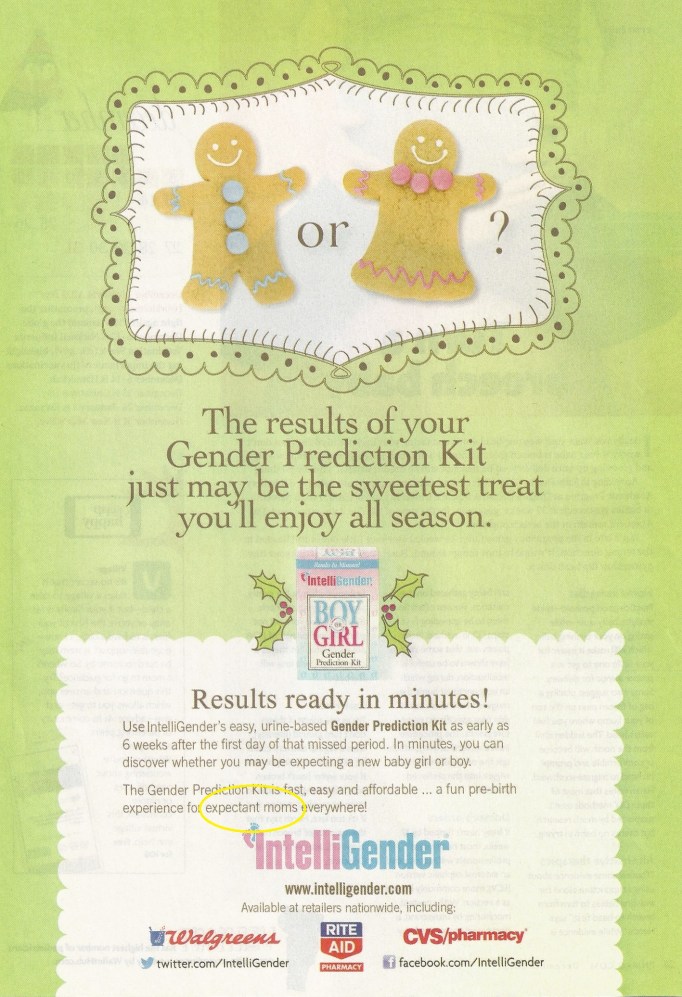
Dads and pregnancy are often the same.  Aside from carrying out the actual birth, dads routinely like to get as close to the action as possible:  going to doctor appointments, prepping the baby’s new room, narrowing down baby names, shopping, and so on.  We’ve even met several guys, who like the mothers-to-be, will watch what foods they eat as a show of solidarity.

Alas, men love being team players and involvement, which makes this latest ad by IntelliGender all the more confusing.  Here it tries to take the fun of predicting a child’s birth away from expecting dads.

Why exclude them?

Men love predictions.  An entire month each year is dedicated to brackets and determining the outcome of basketball games.  Meteorologists take educated guesses at the weather daily.  Presidential elections are constantly forecast and polled.

Anytime a pregnancy is involved, that means incessant planning, waiting and predicting – and it’s exactly like the pregame!

If Fox Sports can precede a Super Bowl with six hours of nonstop banter trying to prophesy the winner and speculate on players who will make an impact, wouldn’t most guys want to turn a life-changing, baby-to-be moment into a fun pre-birth experience?

Doesn’t IntelliGender think that guys would want in on this action, rather than exclude them?

Just imagine the entertainment.  Want to wager on the child’s gender?  How about bracketizing your name choices?  What’s the over-under on its weight and height?

Think of the enjoyment that could be spread around, not just with dad-to-be, but with everyone.  IntelliGender’s own slogan is “Share the joy!,” but its marketing materials hardly want to divvy it around.

Let’s hope IntelliGender can start to include dads in its future messages, or odds are, another company will beat them to it.

Old Navy removes sexist ‘Father’s Day’ shirt from shelves

gap3After more than a week of social media outcry concerning a misguided Father’s Day t-shirt, retailer Old Navy has finally pulled the item from its shelves.  News of the removal was first reported by the National At-Home Dad Network.

Last month, Old Navy unveiled a men’s shirt with bold letters proclaiming “It’s Father’s Day”; creative use of alternate colors and one small, additional word revealed its true message:  “It’s Really Her Day.”

oldnavy2Consumers everywhere have demanded a response from Old Navy, but so far it has remained markedly quiet.  Attempts to reach an Old Navy spokesperson have gone unanswered.

Late last year, Old Navy unveiled a controversial children’s shirt proclaiming “Young Aspiring Artist,” whose last word crossed out in favor of “Astronaut” and “President.”  The shirt sent a strong message to artists that their profession wasn’t respectable, and under pressure from consumers everywhere, the shirt was eventually pulled from shelves.

At that time, Old Navy issued a statement concerning the controversy, but this time around it has remained silent.