
There’s been a lot of talk about the “Mr. Mom” reboot on Walmart-owned streaming service Vudu.
Most of it has been centered upon this being Vudu’s first original series.
There’s also a bit of buzz about its need – as in, no one really asked for it.
Julian Franco, Vudu senior director, insists the remake centers upon nostalgia.
“As parents, we want to share with kids the TV shows and movies that we grew up with,” he said to Variety.
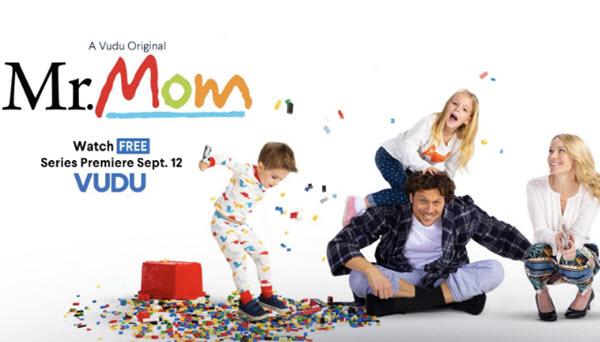
There’s just a few problems with that kind of nostalgia. Namely, it’s sexist – pure and simple.
Look back at the 1983 version and you’ll find a rather simple, primary plot: the dad was a stay-at-home parent. That was it.
It offered laughs for a generation of parents who cheered at the ultimate family role reversal. Switching mom’s and dad’s jobs made for instant comic fodder, especially after decades of expected social norms.
But even by 1983 standards, those roles had already been transforming for years. It’s not like mom wasn’t already working outside the home. She was, and stay-at-home dads were already a thing, though admittedly less common.
And yet as successful as “Mr. Mom” was for its time, it bears mentioning that there was never a sequel, the go-to bread-and-butter for any Hollywood studio executive.
Fast forward 36 years later and you find a world where parenting roles are blurred, and a marketing/media industry that clearly hasn’t caught up with the times.
Then there’s that title.
You’d be hard-pressed to find a term more offensive to dads. After all, they’re not moms – they’re dads – and there’s nothing emasculating about working inside the home and taking care of children.
It’s called parenting.
For years, dads have been unfairly mislabeled Mr. Mom – a name that’s not only insulting, but erroneous. Would anyone dare call a working mother, Mrs. Dad? Moms don’t exactly find that term endearing, either; it’s not their job to cook, clean and tend to the kids.
And yet studio executives pass off this as nostalgia, or comedy – or whatever.
It’s no joke watching a dad care for his children. Imagine a show that laughs at moms trying to make it in the corporate world. Or work on cars. Or play sports.
It wouldn’t happen because they can do those things. The parenting community has matured and evolved. Hollywood, to a certain extent, has too.
Damsel-in-distress movies have gone by the wayside because they’re old-fashioned and passé. Today’s audiences want to see “Wonder Woman,” “Captain Marvel,” or Rey take down the First Order in “Star Wars.”
Its films like these – with plenty more on the way – which shape public perception of females. Here we begin to see assertive, independent, active leaders. Those successful female characters don’t politicize, sexualize or diminish their gender, they just lead. We begin to accept this new fantasy as reality, and of course, we have to learn how to deal with reality.
No male should have to show his feminine side. He doesn’t have one – he’s a man. And it’s no fun being ridiculed as a parent, which is completely different from encountering laughing matters while parenting. That happens to everyone.
There is, however, a completely masculine way to parent whether you’re cleaning the home or working outside it.
If you’re a dad in today’s world, sometimes you have to do both.
Someone ought to let Vudu know that.

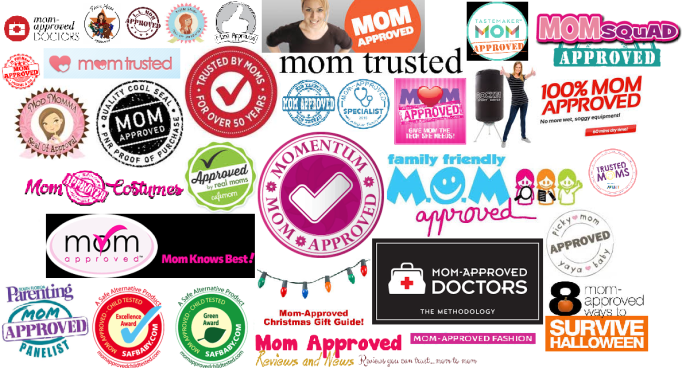


 Got This” slogan which offers wonderful parental assurance, but only for mom. Observe its one-sided slogan description: “Congratulations, mom! You just did the amazing and brought a beautiful baby into the world.” Wording like this ignores the indisputable fact that dad also just did the amazing and brought a beautiful baby into the world.
 tackle this mom thing.”

 that has spawned a
  Its headline sounds like dad is some sort of project that needs to be developed, and can only be done so by a woman. As the reader’s question poses, yes, dad needs cared for – which is part of the definition of nurture – but he doesn’t need to be grown or developed (another part of the definition of nurture). If mom was given space to figure out things on her own, so can dad. That learning can also come together, but there’s no need to insinuate that a dad needs training that only the “lead parent” (e.g., mom) can provide.
 Now looking at Murkoff’s response, the opening line also shows a lack of respect for men. No, men don’t care only about sex, and it also suggests that men aren’t as dedicated to conceiving as women. Saying anything otherwise is demeaning to the many caring dads-to-be who are just as interested in having a baby as the mom-to-be.
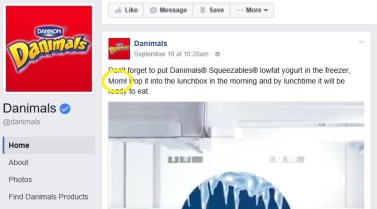


 , “Other products moms love” and “What moms love.”
 And yet, every so often we encounter an organization who Gets It, who realizes that dads matter every bit to the parenting world as moms – and the idea speaks to dads, and markets to them, and listens to them. Suddenly, dads matter and are valued as true parents and customers.
