
Most couples would never intentionally divide parenting into “mom territory” and “dad territory.” But sometimes, our language does it for us.
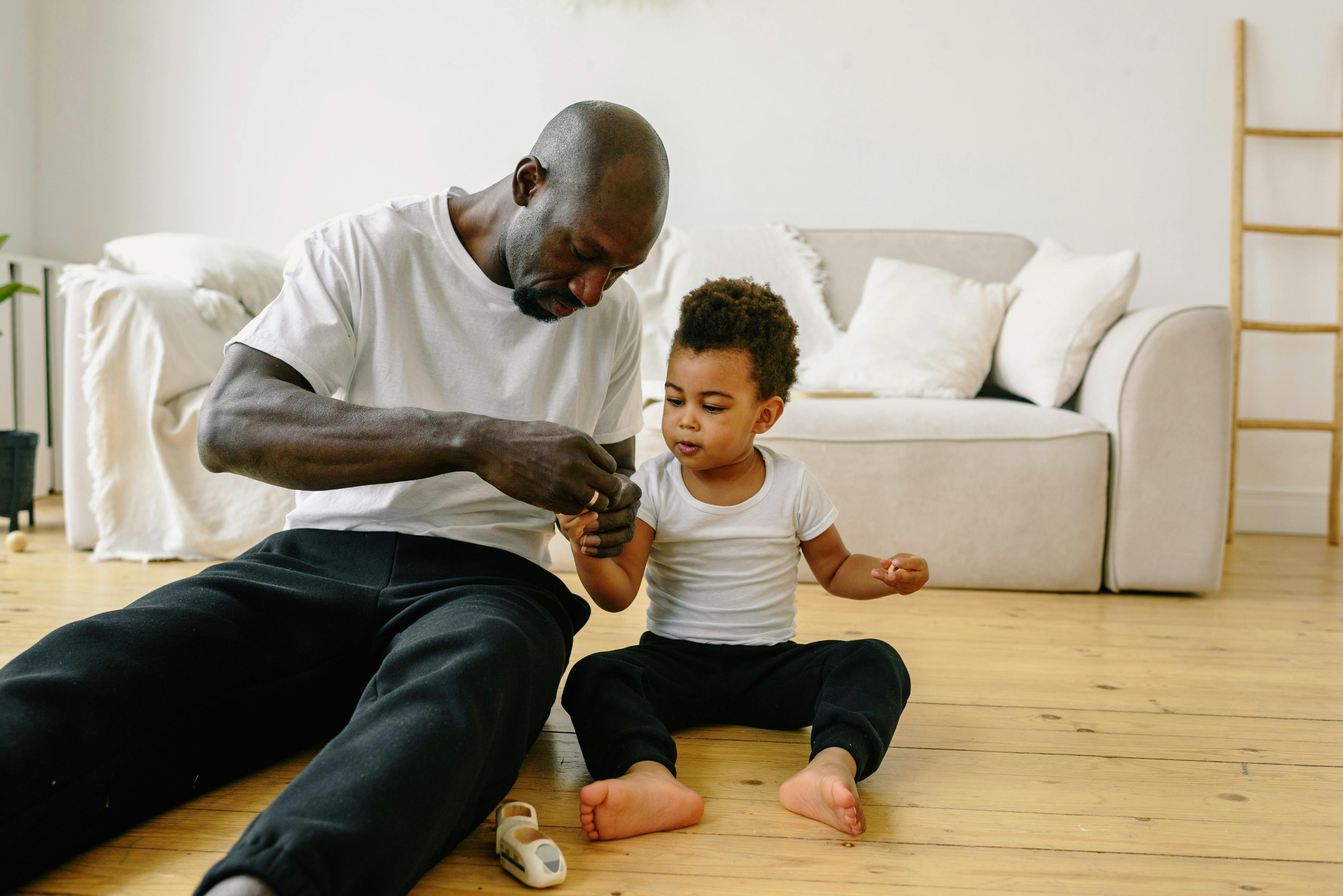
Take a simple phrase like:
“Can you watch the kids for me?”
At first glance, it sounds harmless. Practical, even. But hidden inside the sentence is an assumption: the children primarily belong to one parent, while the other is temporarily assisting.
We hear versions of this everywhere.
“Dad is babysitting tonight.”
“Go ask your mother.”
“Mom’s better at that stuff.”
“He’s helping with the kids.”
None of these phrases are malicious. Most people say them without a second thought. But over time, language has a way of shaping identity, expectations and roles inside a family. And this kind of talk shapes how marketing speaks to us everyday.
When Parenting Becomes Separate Worlds
Eventually, parenting can start to feel less like a shared mission and more like two separate departments operating under one roof.
One parent becomes the default organizer, emotional manager and scheduler. The other slowly drifts into the role of helper, substitute, or “fun parent.” Not necessarily because either person wanted that dynamic, but because culture quietly trained them into it.
The interesting thing is that families often drift apart linguistically before they drift apart relationally.
Compare:
“My son” versus “our son.”
“Can you help me with the kids?” versus “Can we figure this out together?”
“I need a break from the kids” versus “We’ve had a long parenting week.”
Small differences. Big implications.
Words Shape Family Culture
Words create atmosphere. Repeated daily, they create culture. Marketing then uses this creation in content, and thus, an endless, sad cycle continues.
Maybe stronger families aren’t built only through big moments, vacations, or parenting strategies. Maybe they’re also built through tiny reminders — spoken over and over — that this family belongs to both of us and each parents matters just the same.
Be an example for marketing and media by choosing your language carefully. Because in their line of work, words definitely matter.

