Baby food is important – and so are dads

Could it really be the business model of Beech-Nut to exclude dads as part of its beechnut1.pngcustomer base?

It’s a fair question when you visit beechnut.com and read its content.  After all, what else is one to think when you see a website which speaks only to moms and ignores dads as fully competent and equal parents?

Having a practice like this would be like showing up at a party where the host only speaks to your partner and completely ignores you.  Doesn’t talk to you.  Doesn’t even look at you.

It was a little like that with Beech-Nut’s CEO Jeff Boutelle, who used the word “moms” 18 times during this 2014 interview with Grocery Headquarters, with nary a mention of “dads.”

beechnut2.jpgNo one likes to be left out, but sadly, this belief is penned right within its mission, where it insists only moms prepare food for families.

Yet even if Beech-Nut claims that research proves the majority of its customers are moms, why exclude the dad segment as if it doesn’t matter?  Stereotypical dad-products (e.g., tools, cars), or even sports, doesn’t hone its marketing exclusive to men.  So why must Beech-Nut craft its message to the exclusion of equally capable parents like dads?beechnut3.png

It’s a gender bias, which is sexist and wrong.  Dads cook.  Dads buy baby food.  Dads feed children.

We’re calling for Beech-Nut to treat dads like true parents and make some quick edits to its website and social media.  If its values include “real food for everyone,” then it must think not only about current dads, but the future ones who are eating its product right now – and will want to be valued as consumers someday when they become dads, too.

Seahorse of a different color

Every good invention is born out of necessity.

So when Don Hudson created Seahorses – America’s first and only retail store geared toward fathers – nothing surprised him about the process, his concept and its need. What surprised him was that no one had ever thought of it before.seahorses4.JPG

“That’s what blows my mind,” he said. “That no one has done this before. How am I the first? That no one noticed this huge, gaping market before?”

That huge, gaping market – as Hudson knows all too well – belongs to dads.

“When you market to that dad like he’s a mom, you build up a wall,” said Hudson. “He doesn’t want to talk to you.”

Yet every bit an equal parent who nurtures, raises, feeds, shops and provides for his family, dad remains ignored by marketers who either don’t know how to reach him, or purposely avoid his presence based on habit. Old fashioned stereotypes and labels may die hard in the world of marketing and media, but it’s ancient history at Seahorses in Portland, Ore., where Hudson’s progressive shop has skyrocketed to notoriety since opening in June 2015.seahorses1.JPG

His shop celebrates the unique needs and challenges of parenting as a father in a world that traditionally caters to mothers.

What makes men uncomfortable in stores? Not having products with which they can’t relate as fathers. At Seahorses, you’ll find plenty of baby, child and parental items necessary for raising a family – but with an eye on dads.

So while big box baby stores have nursing equipment, Seahorses offers Leatherman multitools and shaving kits. Traditionally diaper bags are frilly and pink; no dads want to carry those, and some moms don’t either. Hudson curated diaper bags that are masculine and stylish enough for fathers to sport. Other baby stores offer organic clothing, but dads don’t care about that; they want things to last. So, Seahorses offers Carhartt kids clothing. No maternity tops here – try matching dad and child shirts.

seahorses6.jpgA lack of those items meaningful to fathers, combined with a prejudice toward dads, is what drove Hudson to bring his idea to fruition. He experiences a bias all too often while together with his wife, raising their four children.

“Dads are (treated like) a sideline parent, and they are not marketed to,” he said. “And let me tell you, I did all the shopping when I was stay-at-home. When you walk in to these baby stores, they’d say, ‘What did mom send you in for? Where’s her list?’ It’s a turn off. Has no one noticed that dads are being alienated? You’re creating a subconscious culture of bias toward dads.”

His store even reaches beyond tangible products and the overall shopping experience by serving as equal part gathering space. There you’ll find an enclosed play space with seating, free Wi-Fi and a community meeting area for classes, workshops and events. And there’s even free coffee.

“It’s a space for anybody,” Hudson said. “The idea is that it’s more of an atmosphere that’s comfortable for dads. I have darker wood and subdued colors. It’s a masculine and man-cavey kind of feel so you’re like, ‘This is a baby store, but it’s for dads.’”seahorses2.JPG

Hudson assures his store is for both moms and dads, and gets plenty of customers of each, along with some hesitancy. Moms sheepishly ask if they can come in, while dads’ tendency leans toward tentative, mostly due in part to other store experiences, but also because of how they’re treated as second-class parents in stores of any kind.

“(Dads) come in and look around and say, ‘This is really cool; this is my place,’” Hudson said. “You can see this weight melt off of them when they walk halfway through the store.”

Hudson gets a lot of dads and moms who come in to hang out, work on their blog or social media, or just want a simple five-minute break. His intimate, personal community has even helped nurture some lifelong friendships, which he loves to see.seahorses7.jpg

As the business grows and soon-to-be e-commerce takes off, Hudson hopes to expand his concept further:  “I think this kind of resource needs to be available for every community and every parent, where moms and dads are both allowed.”

His store’s name is derived from the sea creature who takes care of its offspring entirely. Male seahorses undergo pregnancy and care for the young as they grow.

“In nature, I think the seahorse is probably the world’s most perfect father,” he said. “If you’re a seahorse, you’re a perfect father.”

Unfortunately, society and commerce tend to alienate dads before they even become one. So, Hudson is just happy to be offering a place to help dads become better dads, because he knows that process is shaped well before the actual birth.

“Moms have plenty of places to go, dads don’t,” he said. “Having dads marketed to properly and involved in the marketing process give them that foundation for being involved with kids.”

Why is Disney making dads out to be moms?

Sometimes it appears as if Disney can do no wrong.

Most of its movies are hits.  Disney TV is generally squeaky clean and safe.  Media acquisitions seem to be financial steals.  Its merchandising knows no bounds.  And a visit to one of its theme parks has become a consensus family destination of a lifetime for many.

But at least one part of it is a major letdown.

That’s because Disney Parks, a subsidiary responsible for the conception, building and managing of its theme parks and vacation resorts, offers a rather dad exclusionary feature on its website, disneyparks.com.

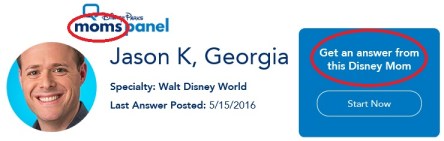
Click on the Vacation Planning menu tab, and you’ll find a section offering a Moms Panel, an inexcusable practice that leaves dads out in name, and in other unfortunate ways.disneymoms1.png

First, Disney Parks offers no Dads Panel counterpart, thus ignoring a father’s contribution and unique perspective for vacation planning.  By presenting no voice for dads and the viewpoints they might lend while families prepare for a dream destination, it directly ignores the indispensable influence of fathers.  Disney is also clearly saying that dads don’t handle this vacation planning facet of family life, and that dads don’t matter.

But wait – you say – there are some dads on the panel.

And therein lies problem number two, where it uses the term “mom” as an equal synonym for “parent” – a faulty, exclusionary approach when marketing to families, families which include dads.  There are very few products exclusively intended for one gender as parents, and vacation planning certainly is not one of them.

Alas, the term gender bias comes to mind.

Disney makes matters worse by trying to rationalize its practice of replacing the word parent with mom:

We understand that the role of “mom” is met differently from family to family, so we made sure to fill our panel with enthusiastic, dedicated and diverse individuals—moms, dads and other in the know family members—to help guide you with your vacation planning.

Note how the word mom is placed in quotes.  Here, at least in Disney’s world, all dads are no longer equal parents, they’re moms!

Let that sink in for a moment:  Disney is calling dads, moms.

Don’t dads matter to Disney more than this?  Must dads’ presence as equal parents be demeaned, it not outright ignored?  It’s wrong.  Dads matter every bit as moms.

Now take a look at those actual dads serving as Moms Panelists:  don’t these dads have a problem with this concept?  If one was called a mom at a public function, wouldn’t he correct the speaker?  Let’s hope so.  So why let it persist online, in print, for the entire world to see?  disneymoms2.jpg
This whole discomfiture is not just literally inaccurate – it’s gauche, inappropriate and disrespectful.

And ignoring the contribution of a father by way of exclusion in its name – Moms Panel – doesn’t exactly feel welcoming to fathers seeking information.  It leaves them out of the discussion, and makes them feel like outsiders – that is, if they even bother to find and examine the site in the first place.

What’s more, among its entire 27 panelists only two are dads?  That’s hardly representative of the population, nor its customer base.disneymoms3.jpg

Third, it’s beyond disappointing that the Moms Panel was unveiled in 2008, during these politically correct times.  It’s not like we excuse Jif for prolonging use of its old fashioned motto, but at least it was born during a time where its slogan was representative of a bygone era.  That slogan, too, is inappropriate and Jif is taking steps to minimize (perhaps eliminate) its use.

But 2008?  That’s a mere eight years ago.  In this so-called modern, gender sensitive, all-inclusive, equality-seeking world, doesn’t Disney have some high level PR officer who would’ve screened this before it even happened?

This entire Moms Panel endeavor reflects a huge lapse in judgement for a global mass media and entertainment conglomerate that considers its parks “the Happiest Place on Earth.”

Dads can’t be happy with this kind of treatment.disneymoms4.jpg

Whether or not you’ve made it to Disneyland or Disney World before, at least we can all say we’ve enjoyed its movies over the years, and we continue to be enthralled with its new Star Wars handiwork and future plans.

But that’s what makes the rub hurt even more, because with Disney, we expect more.  We don’t just want our expectations met, we want them to be exceeded.  Sure, that’s a lofty desire, and maybe a bit unfair, but that’s the standard Disney has set.  We expect greatness.  Perfection.  Happiness.

All of it makes Disney’s use of the Moms Panel name indefensible.

Not long ago, Amazon – the largest Internet-based retailer in the United States – finally responded to the PR nightmare known as Amazon Mom by quietly and suddenly changing its name to reflect dads’ contributions as parents.

Let’s hope Disney can make a swift change, too, and thereby stake its claim as the Happiest Panel on Earth.

Surprise – a dad could win this mom contest

Stereotypes, media and long-held assumptions might make you believe that more men buy power tools than women – and maybe that’s true.  Maybe it’s not.

But either way, you’re certainly not going to find major home improvement retailers running campaigns which target only men.

It’s bad business.  It alienates customers.  It’s sexist.  It’s wrong.armour

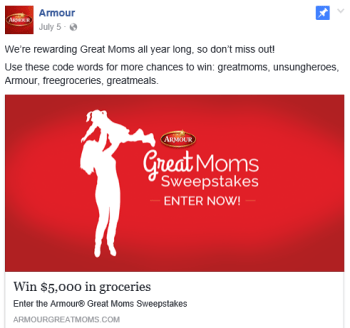
Unfortunately, that’s not the way business works at Armour, which makes various food products, most notably meats.  There, it unveiled the exclusionary Great Moms Sweepstakes, running now through November.

No, it has nothing to do with Mother’s Day, and yes, anyone can enter – which means that a dad could be named a “great mom” and receive $5,000 in free groceries.

It’s hard to fathom just how Armour – founded in 1867 by two men – could create a campaign that ignores fathers contributions in today’s equality-seeking world.  Digital salt is rubbed in the wound when Armour uses its website to try and justify its oddly named contest:

Join us as we honor Great Moms – the everyday unsung heroes who give their all for their family and ask for nothing in return. We are celebrating and surprising deserving moms nationwide all year. Follow along on our website and Facebook Page for news and updates from our events.

To be sure, moms deserve those kind words in entirety – but so do dads.

Imagine you’re a dad who’s just read that text, and you’re thinking about all the work you’ve done to help raise your kids:  diapers changed, stories read, baths given, shopping trips made, youth sports attended, gifts bought, meals cooked, snacks made – and it has all been overlooked.  Your contribution means nothing.  So why should you continue buying its products?  You probably won’t, which is unfortunate.armour2.png

Ignoring dad’s contribution as an equally unsung hero disregards his status as a true, equal parent.

Armour even awkwardly uses photos of men (dads?) on its Facebook page to promote the contest.  And how strange will it look if a dad ends up being its winner?

The entire Armour campaign is a missed opportunity to celebrate parenting – not just moms – because we all know that roles are different in families now, and that they all come in different shapes and sizes.

Dads are parents, too

mylicon1We’ve heard more than one SAHD’s story about being left out of the conversation while at the local park amongst a group of SAHMs.  And for a dad to get invited to a SAHMs’ playgroup – that’s even less likely to happen.  It’s hard to say if this is the norm, but it happens.
And, it’s unfortunate and unavoidable.

But when the topic is childcare, and a company purposely creates a moms-only club without a dad counterpart?

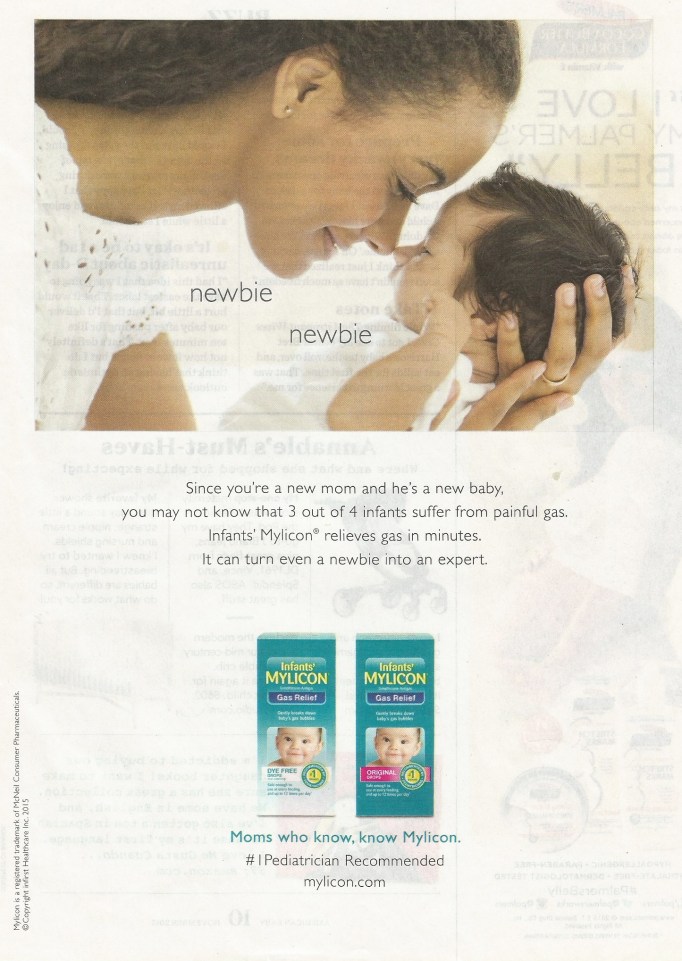
That’s blatant sexism.  The featured ad – found in a parents magazine, natch – recently caught our eye.  It doesn’t even bother relinquishing dad to the assistant role, it downright ignores him.

Over at mylicon.com, it only gets worse, where it offers Mylicon Moms, yet no similar club for dads.  Read the language on this page; look how Mylicon completely ignores fathers and makes them feel like outsiders:

Receive a free product sample, promotional information and advice from other moms when you subscribe to our Mylicon® Moms newsletter. All you have to do is share your contact information and join other moms who answer our posted question below.

How can a dad feel like one with this kind of treatment?  And all this, from a company that claims to offer an “unparalleled experience for consumers.”

Really?  Dads are consumers, and “unparalleled” means “having no equal.”  Sadly, Mylicon has equals, but for all the wrong reasons – among companies who continue to disregard dad as an equal parent.

It’s another example of exclusionary marketing that screams of old fashioned ignorance and chauvinism, as if dads can’t, don’t, or won’t handle basic family health care.

Mylicon, please do what is right, and include dad as part of your marketing mission – because dads who know, know there’s other options for painful gas.

Getting burned by sunscreen

coppertone5.jpg

Somewhere, at this very moment in time, a dad is being treated differently simply because he’s a dad.

  • “It’s impressive how you brought the baby to the store all by yourself.”
  • You cooked that?  Your wife didn’t help you?”
  • That’s not how you fold the diaper.  Let me show you the right way.”
  • “Who ironed your shirt so nice for you?”

And now, apparently, you can add sunscreen to the list of things dads aren’t capable of handling.

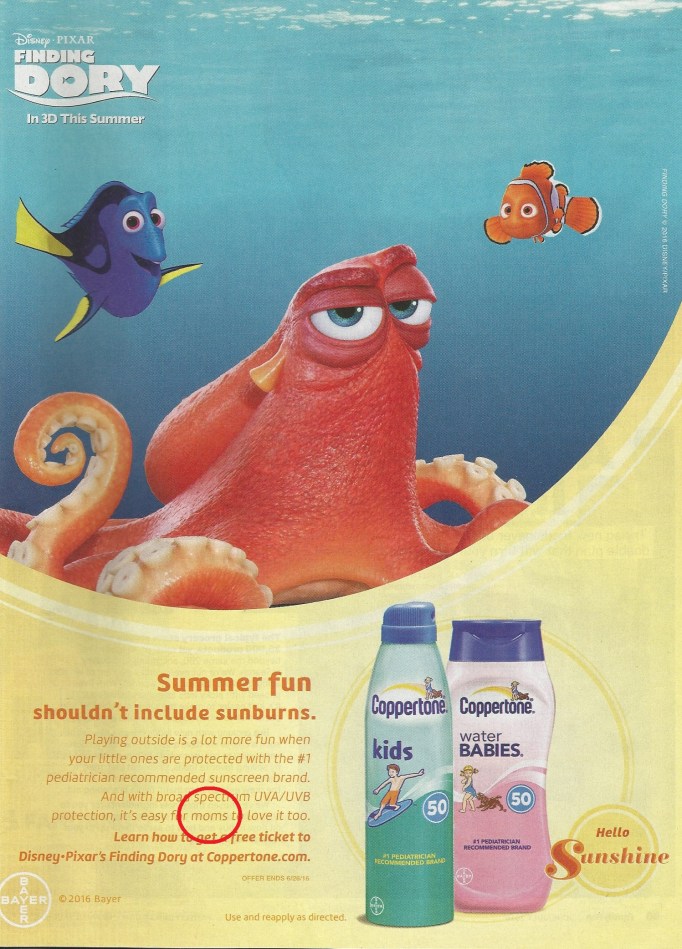
Here we have another sexist ad from Coppertone, who negates dad as an equal parent.

Sadly, this isn’t the first time Coppertone has pulled the dads-don’t-care-about-their-childrens’-skin stunt.  And just this past May we wrote about Aveeno Baby, who also doesn’t believe fathers are equal parents.

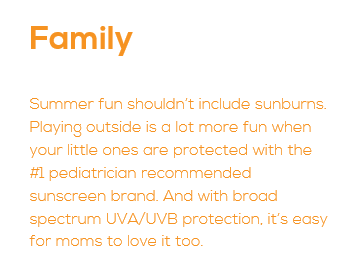
coppertone3.pngIf you follow the ad’s instructions and take time to visit coppertone.com, there you’ll find a scrolling slide titled “Family,” which continues the sexist notion that mom is in the parental lead.
Yet on its Facebook page, Coppertone makes the awkwardly contradictory pledge:  “Coppertone, part of Bayer, is committed to bringing families the promise of better suncare for better summers.”

So, Coppertone, is dad part of the family or not?

Rather than employing “Finding Dory” as its latest promotion, perhaps Coppertone should have used “Finding Dad.”

Is that dad? In a breastfeeding ad? It’s no fad

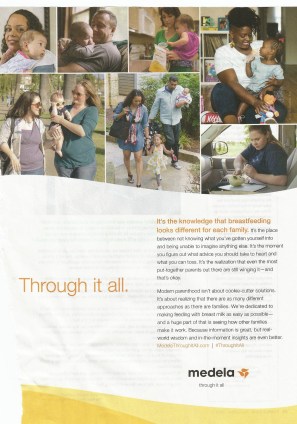
Although the basic concept of breastfeeding will never change – yes, it’s still exclusive to women – Medela feels the industry is ripe for reinvention. medela1

As one of the global leaders in breastfeeding technology, Medela recently strengthened its industry mettle by spending the past 10 months doing something many firms thoughtlessly overlook:  communicating with customers.

However, Medela didn’t simply monitor various social media sites – it actually conversed, interacted and listened.

The result was a wildly successful “Through It All” campaign that revealed something else companies also fail to notice:  dads matter, even when it comes to breastfeeding.

“We really wanted to make sure our fathers were a part of this,” said Kim Aasen, director of marketing. “Even though (dads) can’t physically breastfeed, (they’re) an important part of that conversion. They’re important to the breastfeeding circle.”

An idea is born

medela-KimAasen_MR


Kim Aasen, Medela


Last September, Medela started asking moms on its Facebook community one straightfoward question:  when it comes to breastfeeding, what would you share with another new mom? Aasen said the response was overwhelming, as many talked of a network, or community of breastfeeding support that might include a spouse, grandma, or friend.

After those key months of taking valuable customer inventory, Medela revealed its marketing idea complete with a print campaign and series of videos which tell the story of real people and their breastfeeding journey.

“We made sure we featured those people along the way, and you can see those people featured in the (print) ad,” Aasen said, who also noted that Medela overwhelmingly heard from moms who insist dads play an integral role in breastfeeding success. “We listened to make sure we are reflecting who our Medela communities are. (Fathers) are caregivers and part of the breastfeeding experience, so we want to make sure that everyone is represented.”

Let reality dictate strategy

Although society encapsulates the topic via the word breastfeeding, that equally applies to one who is breastpumping – which, of course, allows other people to feed the child.

medela-Justa 9-Heinen-LR.JPG


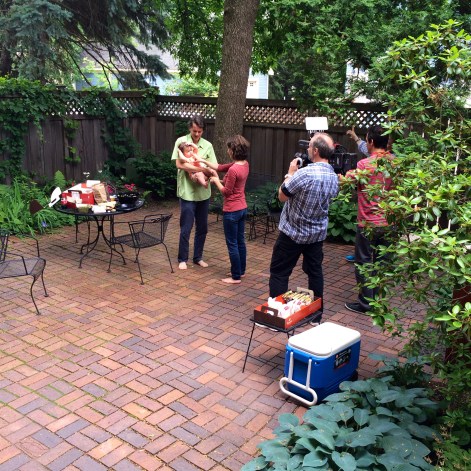
Behind-the-scenes at a “Through It All” campaign video shoot. Copyright Medela 2016.


“We want to make sure that we don’t think there is one right way to do it,” Aasen said. “We want to make sure moms and dads and families – whatever that family looks like – that there is no one perfect way to do it.”

Medela also let the customer feedback drive the campaign. It wasn’t intent on following societal norms, advertising history, stereotypes, or even demographic models – it simply felt its campaign should reflect reality.

“By listening to our community’s focus groups, dads are a part of the picture,” Aasen said. “For us, we feel like it’s reflecting reality. We’re just sharing their words back. The pictures you see online shows everyday life.”

Dads count too

As for the future, Aasen said its current campaign is squarely in phase one, which was “different than anything Medela had ever done.” Plans moving forward will continue to include a reflection of what real, modern families look like and how they make breastfeeding work for them.

On the flip side of breastfeeding is formula feeding, where some of its makers exclude fathers from its messaging.

Aasen believes companies who don’t include dads in ads should take heed:  (Those) companies are missing out. It’s not cookie cutter; (families) comes in all shapes and sizes, as do responsibilities.”

medela-DSC_9816-Brown-LR


Video crews record footage for Medela’s “Through It All” campaign.  Copyright Medela 2016.


Do you say ‘my kids’ or ‘our kids’? The difference is big

For those of you who have children:  when you talk about your kids to others, do you refer to them as “my kids” or “our kids”?noodleandboo1

It’s a major difference, and that distinction of one word says a lot.  The former connotes a more possessive or singular approach, whereas the latter sends a signal of togetherness and unity.  If you use the “my” term, it may seem harmless and might be completely unintentional, but it conveys a certain message – like it or not – to others and to your partner.

Take a look at Noodle & Boo, makers of luxurious baby and pregnancy skin care.  The product is found at high-end retailers, coveted by Hollywood stars, and it generally adheres to an impressive and upstanding company mission statement while supporting several charitable causes.

Now check out its latest ad, where it mentions “Only the best will do for her baby,” and the “first 100 mamas to follow @noodleandboollc and tag #mamaprofile with your favorite photo of you and baby…”

Isn’t the baby his, too?noodleandboo2

noodleandboo3Don’t dads use social media?

We can’t deny that some products and ads are marketed toward a certain gender, especially pregnancy skin care.  However, this ad was printed in a parents magazine.  And this particular product line it’s selling in this ad – it’s for babies.  That child is to be raised by parents, which includes dads.  No marketing piece should ever exclude dads and make them to be the lesser parent, as if they don’t matter.  Using the word “parent” instead of “mama” won’t make or break the business model, and it won’t make a female look away in disgust.

But it will make a dad feel included, feel like he matters to a company, and will make him take notice.

Believe us when we say dads notice.  Take a look on social media to find all the dads fully engaged in marketing messages and how they’re portrayed by retailers.  Old Navy, Huggies, Jif, Amazon – these are just a few of the companies that have been singled out by dads through viral campaigns to get them to change their ways.

It’s disappointing to see the exclusion in word choice and via advertisement photos, but that practice continues at its website, where a dad is nearly non-existent – save for a few celebrity dads it uses to sell its line of products.

When it comes to parenting, let’s hope Noodle & Boo acknowledges all the dads out there, because with Noodle & Boo, only the best will do, and dads count too.

The boldest prediction we’ve ever made

intelligender2When a child starts playing sports, parents will do everything imaginable to be a part of that child’s team.  Whether it’s organizing a booster club, volunteering at the concession stand, providing snacks, coaching, or simply cheering loudly from the stands, parents love to get actively involved.

Dads and pregnancy are often the same.  Aside from carrying out the actual birth, dads routinely like to get as close to the action as possible:  going to doctor appointments, prepping the baby’s new room, narrowing down baby names, shopping, and so on.  We’ve even met several guys, who like the mothers-to-be, will watch what foods they eat as a show of solidarity.

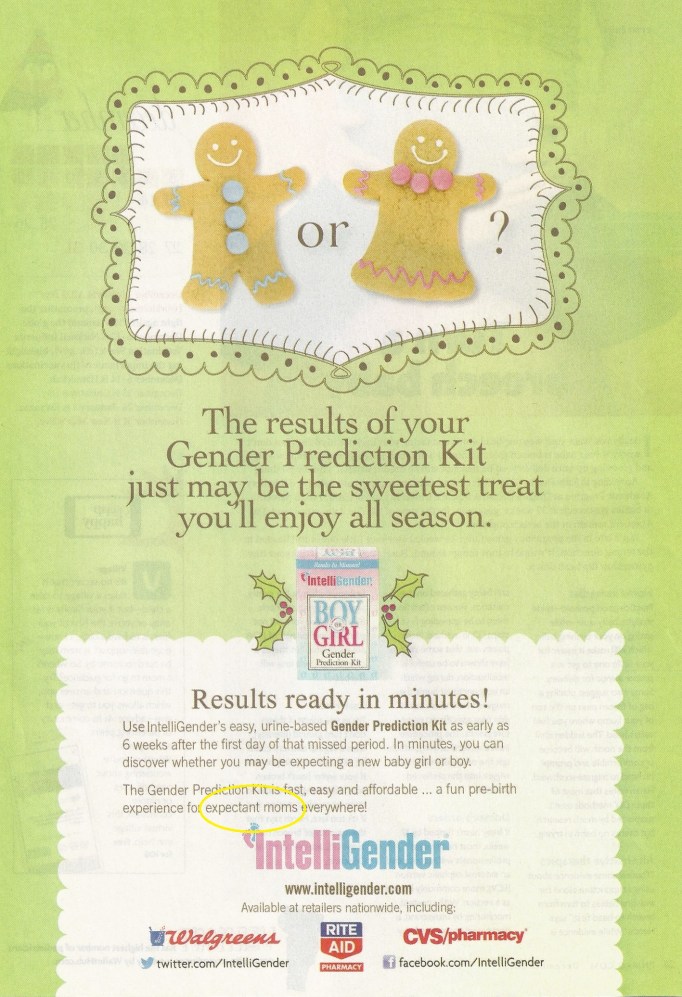
Alas, men love being team players and involvement, which makes this latest ad by IntelliGender all the more confusing.  Here it tries to take the fun of predicting a child’s birth away from expecting dads.

Why exclude them?

Men love predictions.  An entire month each year is dedicated to brackets and determining the outcome of basketball games.  Meteorologists take educated guesses at the weather daily.  Presidential elections are constantly forecast and polled.

Anytime a pregnancy is involved, that means incessant planning, waiting and predicting – and it’s exactly like the pregame!

If Fox Sports can precede a Super Bowl with six hours of nonstop banter trying to prophesy the winner and speculate on players who will make an impact, wouldn’t most guys want to turn a life-changing, baby-to-be moment into a fun pre-birth experience?

Doesn’t IntelliGender think that guys would want in on this action, rather than exclude them?

Just imagine the entertainment.  Want to wager on the child’s gender?  How about bracketizing your name choices?  What’s the over-under on its weight and height?

Think of the enjoyment that could be spread around, not just with dad-to-be, but with everyone.  IntelliGender’s own slogan is “Share the joy!,” but its marketing materials hardly want to divvy it around.

Let’s hope IntelliGender can start to include dads in its future messages, or odds are, another company will beat them to it.

Because dads are nurturers, too

armsreach1It’s a nice breath of fresh air when someone isn’t afraid to show a dad in a nurturing, or dare we say, snuggly position.  But that’s exactly the case with Arm’s Reach, who does what’s unfortunately the unthinkable for so many baby product companies – placing a baby carrier on dad.
It’s a sight we’ve all seen before, be it the park, library, or store. But for some reason, companies have a hard time going there.

Alas, the ad is great, where Arm’s Reach takes a small and brief moment to show a dad in a positive fashion, which validates that it must believe – on some level – dads do indeed shop and parent, too.

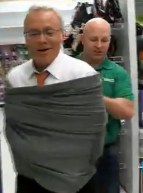
Last year, a Kansas City television station put the combination of dads and baby wraps in ksn3a less-than-flattering light while simultaneously making a mockery of fathers in other ways.  That station would do well to learn from this undertaking by Arm’s Reach, who isn’t afraid to put dad in an ad that also promotes a bassinet.

Anything placing dad in a position of nurturer is encouraging and needed.  Mother’s and Father’s Day occur in back-to-back months, yet you’ll be hard pressed to find many hearts on cards for dad – it’s more like neckties, easy chairs, power tools and beer mugs.

We say celebrate the love and warmth that comes from a father.

Keep up the good work, Arm’s Reach.  We’ve already heard from a few dads who appreciate the message you’re sending to America!