Here’s a case for combining Mother’s and Father’s Day into one holiday

family2Last month on Mother’s Day, we overheard a young dad offering well wishes to a fellow friend, an elderly mom.  The mom extended a kind “thanks” in return, and then shared with a smile:

“Mother’s Day, Father’s Day – they’re really the same thing.  We should just have one ‘Parents Day,’ because parents raise kids together these days.  Everyone has the same job.  We’re all celebrating today, and I hope you have a great day, too!”

That’s some seriously wise knowledge from a veteran mother.

This mom was probably born about a decade after women finally gained the right to vote, so she’s seen changing societal roles and struggles for equality – all while being raised during a time when women didn’t typically work outside the home.

If any person has a reason to be set in her ways or subscribe to old-fashioned thinking, it would be her.

Yet instead, she has it all figured out.  She gets it.  She knows parenting isn’t a one-sided affair where one gender takes the lead, the other serves as an assistant or part-time helper.  She knows dads are just as competent, instinctual, effective and equal as moms when it comes to parenting.

Why don’t companies and their marketing employees think the same?

Technically, there is a Parents’ Day in the United States, held on the fourth Sunday of July.  However, that holiday hardly has the traction of its individual counterparts.

The truth is, we need holidays to celebrate each parental unit.  Moms and dads are different, and they parent different – and we say celebrate that.

So, let’s keep things the way they are, but recognize that no holiday is more important than the other.  We all have a father and a mother, whether we know them or not.

They deserve a day to be honored individually.

And they’re equal parents in every way.

Is laundry only a mother’s job?

Laundry.  It comes in heaps and never stops, and this week we found a few items in need of a good washing.

First, let’s take a look at the latest Arm & Hammer ad, which offers something both endearing and cautionary about the way it positions its brand.armandhammer1

On one hand, A&H takes a clever, charming approach by using generational ties as laundry solutions.  We can certainly appreciate the appeal of doing things the way our parents did them.  Passing down advice from one generation to another offers a timeless sentiment that pulls at our emotions.  That aspect is nice.

But on the other hand, with piles of laundry comes great responsibility.

That laundry room in your home – yes, that one over there – must be handled with extreme caution.  It’s dangerous to assume that it’s mom’s domain. That would be inconsiderate, old-fashioned and passé, sort of like saying a mother’s place is in the kitchen.  Frankly, it would have been better had A&H had not even gone there and employed this motherly theme.

We acknowledge that sometimes an idea can be too good to pass up, but that doesn’t mean you still can’t.  Look at the incongruity the New York Times offers in name with its Motherlode section – a section which supposedly covers the issues of parenting.

So, by A&H using mom as the focal point, we’re all led down a path to believe that laundry is the mother’s duty.  That creates perceptions that aren’t necessarily true, especially in today’s modern, dual-income, gender-lines-have-been-blurred, and everybody-takes-on-different-roles world.

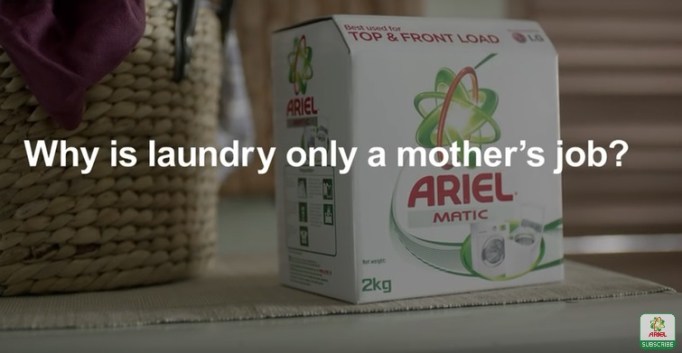
ariel1Which brings us to the peculiar ad unveiled by Indian detergent maker Ariel.  In it, Ariel offers an apology to moms everywhere, on behalf of dads, for guys not helping with the laundry.

Admittedly, we’re somewhat ill-equipped to analyze this ad, as we have no awareness of Indian culture.  However, for the purposes of this column, we’ll probe within an American context.

The Ariel ad is admirable for encouraging everyone to help around the house, but sadly, it’s at the expense of dads.

Once again, dads are made out to be the bad guy – the lazy spouse – and coerced into apologizing unnecessarily.  Let’s put this ad in perspective:  you have to remember that in days past, when the dad traditionally went to a job all day and was the sole breadwinner, it was the mom’s duty to run the household – and there’s nothing wrong with that scenario even today.  Both roles contribute to a family and household, even if they’re held by opposite parties nowadays.  No job is more important than the other.

The older father in the ad shouldn’t have had to apologize for anything, unless he wasn’t carrying his load and doing his part in life.  The younger father in the background, clearly isn’t – at least for the brief period shown in this elongated ad.

A&H curiously has an ad of its own, and not once is a male of any age shown.  Perhaps these laundry detergent makers could have compared notes, rather than send conflicting messages that only leave dad caught in the middle of two contradictory campaigns:  one that puts dad at fault, another that says it was never dad’s job in the first place.

So when the A&H ads are stacked up next to Ariel’s apologist campaign, it’s more than a little disconcerting to see the commercial’s closing question:  “why is laundry only a mother’s job?”

I think we all know the answer to that question:  it’s not.

But, maybe, just maybe, that question is better posed directly to A&H.

Tell us, A&H, why is laundry only a mother’s job?

If we’re in this together, you’ll have to unblock our Twitter account

Gerber has an unfortunate history of excluding dads in its direct mail pieces, on its website, and in its My program.  But things could be improving – that looks like a man’s hand feeding the baby on its website.

And a recent magazine actually acknowledges that the featured baby is a “him,” a possible future dad that will eventually be disregarded by the very company using his likeness to sell its products.

It’s another piece of a portfolio that’s confusing and erratic.

gerber4

Just look at the front page of Gerber’s website as it stands today.  If you’re a dad and reading the left side of the page, it exclaims, “We’re in this together.”  But glance to the right and you find a site that indicates it’s only “For mom.”

(sigh)

However, to top it off – at least for our staff – Gerber has blocked us from following its company on Twitter.

Now, Twitter blocking certainly has its place in life, but to prevent one entity from communicating with another?  Why?

The words close-minded and censorship come to mind.

Hey Gerber, we’re only trying to help.  Factual proof created by your very own marketing team indicates you have a practice of excluding dads, and that’s wrong.

Dads buy your products.  Dads care for children.  Dads count too.

We’d love to chat, but it’s kind of hard to do that right now.  Drop us a note.

Just some food for thought.

Marketing to baby must involve dad

hylands1Hyland’s has been making safe and natural homeopathic medicines since 1903, and after a quick look at its latest magazine ad, seems to be rather dad-friendly.  It’s nice to see a dad featured prominently in its ad.

But take a close look and read the copy.  Why doesn’t it speak to dads?

Now glimpse at hylands.com and click on “Calming Tablets,” and you’ll find a similar mom-only reference.

Those are some disappointing dad omissions for an otherwise decent overall marketing approach.  Generally, Hyland’s seems to try to use “parent” references, so these nuggets caught us a little off-guard.

hylands3Hyland’s talks about party invitations here, a symbolic reminder that dads want to be invited to the “party,” too.  They take care of babies and have plenty of choices when it comes to baby care products.  So why should Hyland’s give them a reason to go anywhere else?

Parenting isn’t a mom-only thing, and mom isn’t the lead parent, regardless of what any particular family’s situation may be.  It is the responsibility of both parents to raise a child, and that equality has never been more prevalent than it is today.

The Hyland’s example is an exhortation for any company looking to increase sales:  don’t forget your customers, and they won’t forget you.

When you don’t even realize you’re being sexist

If you haven’t heard of What’s Up Moms – you should. It claims to be the #1 moms channel on YouTube, and that’s no small feat.

This groups of mom friends aims to produce short, funny videos geared toward women, and throughout it all has been featured nationally while garnering over 550,000 subscribers.

whatsupmoms3There are plenty of items to watch, but check out the video titled, “Dad’s First Time Alone With Baby.”

If you can get past the fact that this sketch is one long commercial for GLAD Press ‘n Seal, you’ll find a video that generally offers a warm, clever look at a dad’s ingenuity and resourcefulness. We enjoy how its creators celebrate the fact that dads parent different.

That’s refreshing and important to see!

However, the title – “Dad’s First Time Alone With Baby” – certainly implies something different doesn’t it?

It implies that dad isn’t an equal parent, and that mom is in charge when it comes to raising children.

That title would have never been written about a mom; imagine: “Mom’s First Time Alone With Baby.” Thus, its current title comes across as sexist and demeaning.

So does mom’s question to dad and baby at the beginning of the video: “Are you sure you guys are gonna be ok?”

Would anyone ever question whether mom could handle a baby alone for the first time or not? Why turn it into an event, and why make it an issue with dads?

The only time someone should ever utter the phrase, “Dad’s first time alone with baby,” is when it’s one of these tearjerking, soldier-meets-baby-for-the-first-time moments.

This video’s sexist approach is so wrong, we’d like to see the title changed and the beginning of the video edited. Keep the funny, just not at dad’s expense.

How about it, What’s Up Moms?

A picture is worth a thousand hugs

toysrusSure, this featured email promo from Toys”R”Us is a gratuitous Father’s Day message which ran this past June 21, likely the lone time during the year you’ll see a dad-specific message from the giant toy retailer.

Today, however, that’s not of our concern.

Take another look at the ad. The copy is creative. The design is clean. The look is simple.

And, whoa, is that a child is hugging a dad?

That act – the hug – is the kind of thing normally unassociated with the stiff, rigid, unexpressive, stereotypical father, right? So often we typically see hugs and kisses for mom at Mother’s Day, and a lot of tools and neckties for dad on Father’s Day. It’s unfair labeling where we’ve been conditioned by companies to think that only moms are the caring, nurturing ones at home, while dad’s true love must be work since he’s there most of the day, hence the tie.

So when it comes to expressions toward dad, it’s less common to see hugs in advertisements. You might see hand holding or a shoulder ride at best, but a hug for dad is rare in ads.

We applaud the creative team at Toys”R”Us for presenting what others can’t: a deep tenderness and affection toward dad.

This is exactly the kind of move that tells dads, “We know you’re out there, and we value you; we’re talking to you, and we want you as customers.” It presents dads in a caring light as the nurturers they really are, and speaks to them through solid marketing messages that evoke emotion.

Nice work Toys”R”Us, and we look forward to seeing repeat performances not just in June, but throughout the year.

That’s because rumor has it, more than one dad has visited all of your 865 stores before.

What to expect when you’re expecting to be treated like a parent

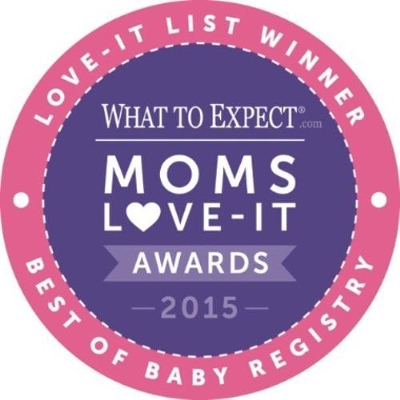
whattoexpect1If WhatToExpect.com truly offers information, as it says, on “pregnancy and parenting,” then why is it singling out one gender and hosting the annual “Moms Love-It” Awards?

It’s confusing how things ended up this way.

Originally, Heidi Murkoff conceived the idea for the famed book, What to Expect® When You’re Expecting, during her first pregnancy as noted on its website: “Determined to write a guide that would help other expectant parent (sic) sleep better at night, Heidi delivered the proposal for What to Expect® When You’re Expecting just hours before delivering her daughter, Emma.”

It’s admirable that the site uses the term “parent” when speaking about Murkoff’s original ambition. Murkoff seems like a fantastic, dynamic, successful woman on a mission to improve lives.

However, somewhere along the way, parent was replaced with mom, leaving dad as the one parent who apparently isn’t on equal footing. It’s a bias we’ve seen elsewhere and remains as unfortunate mistreatment.

Check out the “About What to Expect” page, where Murkoff’s commitment has wavered from its initial care for parents, to now only moms: “Heidi’s passionate commitment to moms and babies…”

And now with the relatively new “Moms Love-It” Awards (launched 2013), it makes expecting fathers feel like they simply don’t matter, underscored by the various award-winning companies from whom expectant dads everywhere will be purchasing their baby needs. Yes, indeed, dads shop too.

whattoexpect2What’s more, this is again yet another example of a website offering a “For Mom” section, with dad information buried elsewhere. Even the “Military Mom” section offers a one-sided look that ignores fathers. Why not offer a “For Dad” section with equal prominence instead of burying it under “More”? How about a “Military Dad” section?

If marketers so often like to falsely earmark dad as the parent who isn’t as smart when it comes to babies or who isn’t as involved, wouldn’t those fallacies be all the more impetus to offer solid information to fathers?

Everyone wants to be treated with respect and dignity, but how can dads find it here? Of course, dads aren’t actually carrying the baby, but that doesn’t mean they’re less important, or don’t matter to the pregnancy – they’re totally, equally important to the child. And the “Moms Love-It” Awards are only two years old. How about renaming them the “Parents Love-It” Awards before another company beats them to it?

Dads have a lot of options when it comes to parenting information, and those companies who choose to actively engage with them will be the true award winners.

Is that a dad in a breastfeeding ad?

lansinoh1Check out this stellar ad from Lansinoh, makers of breastfeeding products and accessories. It features words like “breastfed” and “nipple” and “breast,” yet boldly places at dad at the center of its full page magazine ad.

That’s powerful. That’s wonderful. That’s making dads feel like involved parents!

But then, the company does a strange about face on its website – lansinoh.com – where it decides to bury dad’s importance down below on its home page. If it truly believes that dad is “critical to (the baby’s nursing) success,” as its website states, then why is dad minimized so greatly online?

How about a Lansinoh Dads’ Club?

Why not publish an article titled, “8 Benefits to Dads for Breastfeeding Moms”?

How about more photos of dads on its website (they’re hard to find) – and prominently feature them – like the dad in the magazine ad?

How about have a special dads-only section, which might dig deeper into a dad’s involvement with breastfeeding? Or have a different guest dad blogger featured every so often?

How about simply show the word “dad” more?

The magazine ad was so incredibly fantastic because it proved it can utilize fathers in an advertisement about breastfeeding products, and we were ready to give Lansinoh the highest dadmarketing Seal of Approval™, but then Lansinoh changed its tune online.

Oh. So. Close.

Let’s hope Lansinoh’s marketing professionals can get on the same page and mimic a magazine ad that’s beyond sensational, and thus lead the market among those companies insisting upon total parental inclusion.

Soggy cereal

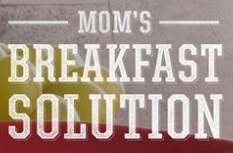
What exactly does this Twitter bio say about dads? And if you are a dad, what is it saying to you?momsbestcereals1

In our estimation, it’s saying that you don’t count, the company isn’t talking to you, and it doesn’t want your business.

What’s strange about MOM Brands is that it adopted its exclusionary name in 2012. No, that’s not 1912, but 2012 – as in, three years ago!

Jif adopted its discriminatory slogan decades ago, and same for Kix’s mom-centric box, while Similac has been ignoring fathers nearly since its beginning.

But 2012? It’s hard to imagine a company looking so old-fashioned in today’s equality-hungry, politically correct world that strives to include everyone and even blur the lines between, say, toys and clothes. Alas, MOM Brands has found a way to make even cereal buying sexist, because dads apparently do not know best.

What’s equally bizarre about MOM Brands is how they proclaim to have made the name change to reflect “the company we are now. We’ve been family-owned since 1919…” and “We’re really proud of the fact that we’ve saved families over one billion dollars since 2007.”

But don’t families include dads, too?

Apparently not, according to MOM Brands, or it might recognize them by name – or at least on Twitter.

It’s hard to stomach this say-one-thing, do-another corp-speak, especially since MOM Brands seems like a rather progressive group. We admire its innovative packaging that’s helping to keep its cost (and customers’) down. Its variety and tastes are every bit good as the next cereal brand.

But that name. And that Twitter bio.

Both are enough to make dads reach for something else. Chances are, they already have, but it won’t be easy: marketers of the cereal industry seem insistent that only moms have the ability to put breakfast food on the table, and/or mom’s place is in the kitchen.

Alas, cereal makers are stuck in time (see #7).

It’s quite the reversal from the days when pa would gather and hunt for what the family needed.

MOM Brands says it’s taking the saying “’mom knows best’ to the next level,” and perhaps that’s a good thing.

Maybe, just maybe, that “next level” might include dads in the future.

I don’t wanna taco about it

Now we’re really confused. El Monterey, makers of authentic Mexican frozen foods, has a Twitter page that outright discriminates against dads, yet it was founded by a father and his son.elmonterey1

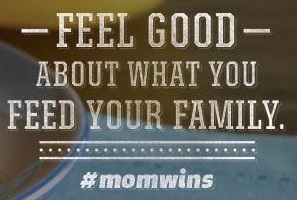
Don’t believe us? Check out twitter.com/elmonterey, which has a bio reading, “We’re a family owned company dedicated to helping mom conquer her day,” and also includes a #momwins campaign.

If the bio wasn’t exclusionary enough, the #momwins hashtag certainly creates a senseless rift. After all, if mom wins, then where does that leave dad?

We know, we know, its marketing department would tell us that dad wins, too, by way of the delicious food served, but that age-old corporate speak would be missing the point.

elmonterey2This sort of old-fashioned marketing is a tired approach that’s sure to make dad feel left out. If this company really believes the fallacy that dad doesn’t handle kitchen duty (which in turn implies that mom’s place is squarely in the kitchen — ouch), wouldn’t it be all the more reason to promote its easy-to-make, freezer-to-oven products directly to dads themselves?

elmonterey3Oddly, #momwins doesn’t appear on its website, but is used more regularly on Twitter, Facebook and Pinterest — all of which could be correctly rather easily.

Many here at dadmarketing headquarters have purchased and enjoyed El Monterey products in the past, but that practice is coming to a sudden stop. Instead of #momwins, it’s now #everybodyelseloses. Isn’t that a calamitous case of marketing gone awry?

Let’s hope its marketing department can make a change for the better, as it reflects on its “family owned” slogan, knowing that dads count as part of the family, too.