Good Dad Wenceslas

Good Dad Wenceslas looked ahead,
‘Tis time for cooking and cleaning.
Dishes stacked and toys about,
Holiday lights gleaming.
Though the brands said, “Mom does that,”
He just smiled and listened.
Equal care was happening ‘natch,
Though few had yet envisioned.

“Hither, child, bring me the broom,
We’ll fix what’s overflowing.
Work and love share all this room,
And both are worth our showing.”
Page and parent side by side,
Through the tasks they wander,
Proving that the season’s pride
Belongs to those who ponder.

Marketers, be not afraid,
Truth needs no invention.
Homes are built by hearts that trade
Patience, care, attention.
Tell the stories whole and clear,
Show what’s real and steady.
Dads are equal parents, yes,
Active, engaged and ready.

Therefore all who brands employ,
Hear this gentle warning:
Honor dads with love and joy,
Every night and morning.
When your message seeks what’s true,
Tell the full endeavor —
Every dad has been in view —
Side by side, forever.

Do You Approve This Message?

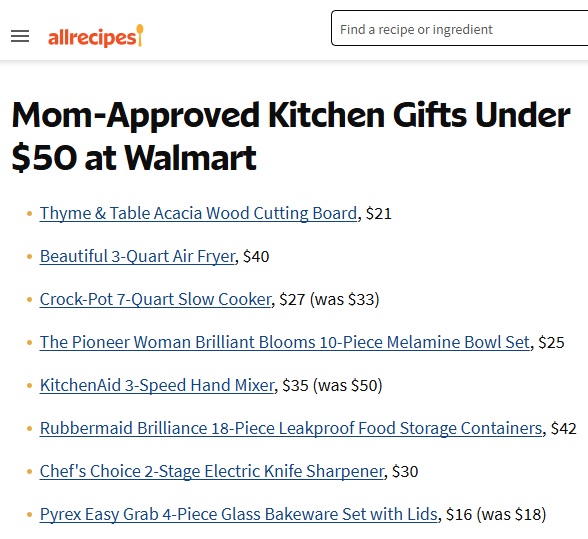
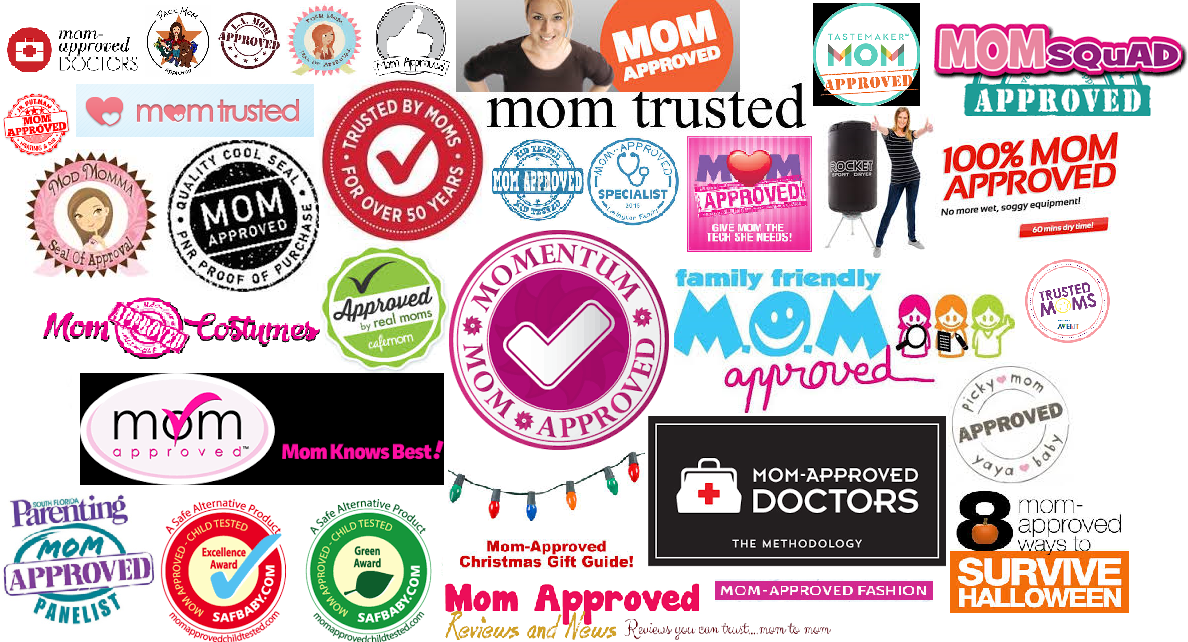
We’re a quarter through this new century, but the term “mom-approved” remains in use. It perpetuates a subtle yet significant exclusion of fathers from the parenting conversation. This exclusion is worth examining, particularly as societal norms shift toward recognizing the importance of parents as equals.

At its core, “mom-approved” is a gendered phrase that assumes mothers are the ultimate arbiters of what is best for children. This assumption reinforces the outdated stereotype that mothers are inherently more capable or involved in parenting decisions than fathers. While many mothers do play a central role in childcare, the same is true for fathers. Modern dads are indeed engaged in parenting. Yet, phrases like “mom-approved” suggest that their contributions are secondary or even invisible.

This language not only marginalizes fathers but also places undue pressure on mothers. By positioning moms as the default decision-makers, the phrase reinforces the idea that they bear the sole responsibility for their children’s well-being. This can perpetuate the “mom guilt” phenomenon, where mothers feel they must constantly prove their parenting competence, often at the expense of their mental and emotional health.

The exclusion of fathers in terms like “mom-approved” also has broader implications for how society views parenting roles. It subtly reinforces the idea that parenting is women’s work, making it harder for fathers to assert their role as equal partners. This can deter companies from creating products or services that explicitly cater to dads, further perpetuating a cycle of exclusion.

To build a more inclusive parenting culture, it’s crucial to rethink the language we use. Terms like “parent-approved” or “family-approved” are simple, gender-neutral alternatives that acknowledge the roles of all caregivers. These shifts in language might seem minor, but they can have a significant impact on breaking down stereotypes and fostering a more equitable view of parenting.

By moving away from “mom-approved” and adopting more inclusive terminology, we can celebrate the diversity of parenting experiences and ensure that all parents feel seen and valued. It’s time to recognize that the parenting world isn’t just a “mom’s club” – it’s a shared journey where everyone’s contributions matter.

Deciding When to Have Kids – and How Many?

If you give your girlfriend a ring, she’s going to ask for a wedding. When you give her a wedding, she’s probably going to ask for a home. When you move into the home, you’ll both see an empty room. Seeing the empty room will remind you about having a baby…

[Record scratch]

Wait a minute – you’ve heard this before. That’s because when you and your spouse knew you wanted to spend your lives together, it was probably a foregone conclusion that you’d welcome kids along the way. The only question became when and how many?

Of course, no one can answer those questions but you and your spouse, but here are some factors to consider when deciding to have kids.

Space

If your digs are tight, you need to think about how an addition will make things even tighter. Remember, it’s not just the extra person (however tiny they may be – initially), but all the trappings of babyhood: bassinets, cribs, playpens, changing tables, swings, dressers, etc. You also must be prepared for anything, like – surprise – the possibility of more than one baby.

Finances

You can’t put a price tag on a human life, but you certainly can on diapers, wipes, formula, clothes and baby furniture. No, it’s not cheap having a baby, but neither is anything else in life, so it’s all about priorities. Be sure to consider what your budget can handle, because you don’t need extra strife when undertaking something new.

Jobs

You also need to consider your work situation. Some employers aren’t so family-friendly and may not make it easy for both mom and dad to transition into this new lifestyle. Be ready for anything career-wise, even if that means that one of you suddenly decides to quit work and stay home with the baby. It could also mean transitioning into a remote gig for one of you. If none of that is an option, figure out how much childcare will cost for you to keep your current job.

Ages

Having a baby at age 25 is a lot different than having one at 45 no matter whether you’re male or female. The challenges are different for each gender, but proper consideration remains important for each. You’ll also need to discuss how many kids you hope to have, and by when. Planning for future additions is a lot like planning your financial future – it takes a lot of thoughtful joint discussion.

Lifestyles

This category offers a lot of intangibles that could sway you in either direction. Are you so active in a hobby or passion that it could prevent you from raising a child as it deserves? Do you have a solid support network nearby? Are you planning a major career change or dramatic move across the country? Consider all those factors that influence how you function in life.

Viewpoints

If one of you is ready and the other isn’t, that’s going to take some heartfelt and meaningful conversation. It’s not like you’ll be able to resolve your difference of opinion overnight. But remember, you got into this relationship for a reason, you’re committed, and you can work this out. Something this important deserves a lot of loving empathy, as well as give-and-take.

Of course, there’s another factor not examined here – and that’s your heart. You know you love each other, and you want that love to grow even more. So, you could stop thinking about it, over-analyzing it and just get on with it.

Then one day when you have a baby, you’ll lay her down for a nap. While she’s sleeping, you’ll look around your home and realize there’s an empty room. And chances are if you have an empty room…

Why Do Breakfast Foods Ignore Dads?

Cereal makers can’t seem to wrap their heads around the notion that dads provide breakfast for their kids.

For years we’ve been pointing out the problems of Cheerios, Kix, Quaker and others who continue to disregard dads as part of their customer base.

The latest offender is General Mills, who not only excludes dads from its latest campaign, but uses a possessive pronoun that contributes to the problem.

If you have children, do you refer to them as “my kids” or “our kids” when speaking with others?

The former connotes a more possessive or singular approach, whereas the latter sends a meaning of togetherness and unity. While “my” may seem harmless and unintentional, it conveys a certain message – whether you believe it or not – to others, but also to your partner.

It’s not uncommon to find stories, comments, or blog posts from women who complain that they’re stuck with the majority of the household and parental duties (that’s no fault of the dad – he’s typically working outside the home, but we’ll save this topic for another day). However, wouldn’t the action of calling the baby “ours” drive home a greater spirit of togetherness when tackling daily familial duties? These women might not feel so alone in their work by calling the children ours.

Companies like General Mills furthers this perception, too. It inconspicuously calls the children “your squad.” That makes dad out to be the lesser parent at best, completely irrelevant at worst. General Mills would do families and society a much better service by speaking in terms of “us.”

Using the word “parent” instead of “mom” won’t make or break the marketing business model, and it won’t make a female look away in disgust. Rather, it will make a dad feel like an included member of the family and feel like a valued customer.

It’s time for change. Words matter.™

Driven By Discrimination

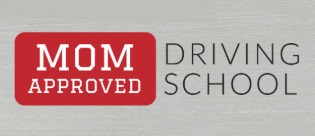
It must be a strange situation if you’re a dad and you choose this driving school in the Houston area.

From the outset, it’s labeling you a secondary parent and already making you feel less important.

momapproveddrivingschool

But it gets even more bizarre if you’re looking for adult courses. Imagine being a grown man and attending a driving school that your mom — er, wife? — has approved.

It’s disappointing to see professional drivers’ education offering an inclusive program with such an exclusionary name. After all, its website states that teens must complete a “mandatory 30 hours of parent-supervised in-car driving.”

If a dad is good enough to offer that parent supervision while driving, isn’t he good enough to be mentioned by name?

In a world that won’t stand for inequality and unfairness, shouldn’t this company be driven by principles that don’t ignore parents on the basis of gender?

It’s time for change.

Equivalent holidays deserve equal treats

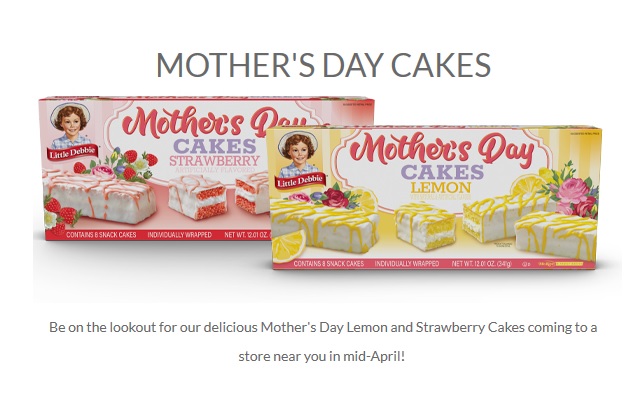
It’s great to see a heart-warming promotion and holiday-specific foods like the ones snack maker Little Debbie recently unveiled.

Moms deserve it.

littledebbie6

But you can’t help but wonder – will dads get their due come June?

There hasn’t been a snack cake devoted to dads in the history of fatherhood. A quick Internet search for “dad cakes” results in a lot of beer-themed versions, neckties and tools.

There’s a lot more to fatherhood than that.

Little Debbie has a golden opportunity to set the trend for a promotion with incredible potential by doing it right. What dad would turn down a box of sweet treats he could share with his kids? There’s no better way to celebrate fatherhood than with a gift designed to honor dad and the kids who made him one.

As Little Debbie says, it’s time to pamper dad and offer him a prize that will ease the load of his to-do list.

littledebbie7

A dad is a nurturer, protector, provider, teacher, friend, spiritual guide, role model, mentor, disciplinarian, advisor and cheerleader. Let’s see if they can incorporate all that into a treat and promotion that would garner attention nationally.

Dad deserves better than beer cakes and neckties.

So does his sweet tooth.

Hey Vudu, just cancel the sexist reboot no one asked for

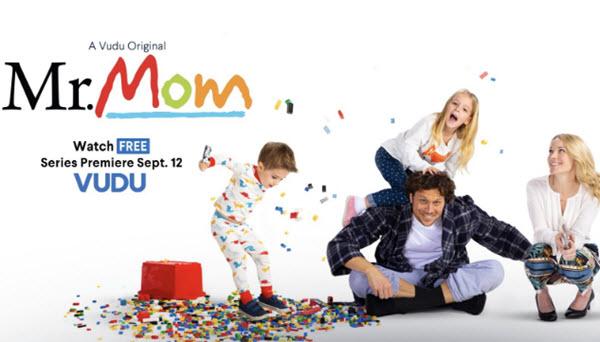
There’s been a lot of talk about the “Mr. Mom” reboot on Walmart-owned streaming service Vudu.

Most of it has been centered upon this being Vudu’s first original series.

There’s also a bit of buzz about its need – as in, no one really asked for it.

Julian Franco, Vudu senior director, insists the remake centers upon nostalgia.

“As parents, we want to share with kids the TV shows and movies that we grew up with,” he said to Variety.
mrmom4

There’s just a few problems with that kind of nostalgia. Namely, it’s sexist – pure and simple.

Look back at the 1983 version and you’ll find a rather simple, primary plot: the dad was a stay-at-home parent. That was it.

It offered laughs for a generation of parents who cheered at the ultimate family role reversal. Switching mom’s and dad’s jobs made for instant comic fodder, especially after decades of expected social norms.

But even by 1983 standards, those roles had already been transforming for years. It’s not like mom wasn’t already working outside the home. She was, and stay-at-home dads were already a thing, though admittedly less common.

And yet as successful as “Mr. Mom” was for its time, it bears mentioning that there was never a sequel, the go-to bread-and-butter for any Hollywood studio executive.

Fast forward 36 years later and you find a world where parenting roles are blurred, and a marketing/media industry that clearly hasn’t caught up with the times.

Then there’s that title.

You’d be hard-pressed to find a term more offensive to dads. After all, they’re not moms – they’re dads – and there’s nothing emasculating about working inside the home and taking care of children.

It’s called parenting.

For years, dads have been unfairly mislabeled Mr. Mom – a name that’s not only insulting, but erroneous. Would anyone dare call a working mother, Mrs. Dad? Moms don’t exactly find that term endearing, either; it’s not their job to cook, clean and tend to the kids.

And yet studio executives pass off this as nostalgia, or comedy – or whatever.

It’s no joke watching a dad care for his children. Imagine a show that laughs at moms trying to make it in the corporate world. Or work on cars. Or play sports.

It wouldn’t happen because they can do those things. The parenting community has matured and evolved. Hollywood, to a certain extent, has too.

Damsel-in-distress movies have gone by the wayside because they’re old-fashioned and passé. Today’s audiences want to see “Wonder Woman,” “Captain Marvel,” or Rey take down the First Order in “Star Wars.”

Its films like these – with plenty more on the way – which shape public perception of females. Here we begin to see assertive, independent, active leaders. Those successful female characters don’t politicize, sexualize or diminish their gender, they just lead. We begin to accept this new fantasy as reality, and of course, we have to learn how to deal with reality.

No male should have to show his feminine side. He doesn’t have one – he’s a man. And it’s no fun being ridiculed as a parent, which is completely different from encountering laughing matters while parenting. That happens to everyone.

There is, however, a completely masculine way to parent whether you’re cleaning the home or working outside it.

If you’re a dad in today’s world, sometimes you have to do both.

Someone ought to let Vudu know that.

One word makes all the difference

Consider the advertisement and slogan examples all around you.

Oftentimes, if marketers could merely change one word, the message they convey becomes much more inclusive.

  • Arm & Hammer: “If you want to know which detergent to trust, ask your mother. And her mother. And her mother.”
  • Applegate natural and organic meats: “Mom’s dream team for lunch”
  • Aveeno Baby: “Trusted sun protection for baby and mom…maybe that’s why so many moms choose Aveeno…”
  • Babybel: “Attention moms! I’m obviously a great addition to your kid’s lunchbox…”
  • Baby Depot at Burlington: “At Burlington, we carry the most Mom-trusted brands…”
  • Banquet frozen foods: “Perfect for busy moms with even busier families.”
  • Beech-Nut: “Moms don’t add anything artificial into their babies’ food. So neither do we.”
  • Betty Crocker: “Your little one will feel like a Superhero – and you will look like Wondermom! – when you reveal a Superhero Cake for his birthday dessert.”
  • Capri Sun: “At Capri Sun, we’ve been listening to and learning from our moms since the very beginning.”
  • Chuck E. Cheese: “Join us for Chuck E. Cheese’s new Mommy & Me class.”
  • Chuck E. Cheese: “Thank you, mom.” (TV commercial)
  • Coppertone: “…it’s easy for moms to love it too.”
  • Dannon: “As a mom, you want your kids to grow up healthy and strong.”
  • Desitin: “Trusted by more pediatricians and moms than any other brand…”
  • Dr. Smith’s: “The brand moms and pediatricians trust to gently help treat irritated baby bottoms, fast.”
  • Earth’s Best Diapers: “For Moms who care and the little ones they love…”
  • Fisher-Price: “Thanks Mom, for choosing us your most loved & trusted brand.”
  • Garanimals: “Moms know the right outfit makes everybody comfortable…Moms love them because they’re practical.”
  • Gerber: “…we’ve collected product reviews from Moms like you…”
  • Gerber Life Insurance Company: “See what Moms are saying about the Grow-Up Plan.”
  • Huggies: “Got questions? We’ve got answers! Huggies Mommy Answers has essential baby info…”
  • Hyland’s Baby: “…and have been trusted by moms for over 80 years.”
  • IntelliGender: “…a fun pre-birth experience for expectant moms everywhere!”
  • Jif: “In 1958, original Jif Creamy Peanut Butter was introduced, and quickly became a favorite. Moms recognized Jif peanut butter’s superior fresh-roasted peanut taste…”
  • Johnson’s: “Moms around the world trust Johnson’s to safely care for their babies. We are committed to working with moms…”
  • Juicy Juice: “Hey moms, check out these great Juicy Juice crafts and recipes!”
  • Kellogg’s Frosted Mini-Wheats: “Mom, more please!”
  • Kid Cuisine: “We believe that kids should get to be kids, and moms should get to serve food…”
  • Kix: “Generations later, kids still love it and moms still approve.”Luvs: “The official diaper of experienced moms.”
  • Lysol: “Congratulations, you’re a mom!…Being a new mom is an exciting…”
  • MyGerber: “Moms and babies, let’s get growing.”
  • Nestle Pure Life: “Meet our moms: nestlepurelifepromise.com”
  • Noodle & Boo: “Our mama profile…only the best will do for her baby.”
  • Nutrients for Life: “Thank mom for the cookies & N.P.K for the ingredients.”
  • Oscar Mayer: “These are real moms getting their kids ready for kindergarten.”
  • P&G: “Thank You Mom for supporting all of our interests.”
  • Pampers: Website menu tab includes “Mommy Corner,” with no dads’ counterpart.
  • Parents magazine: “Must-haves and must-dos for mom and family.”
  • Similac: “More Moms choose the Similac Brand.”
  • Texas Toast: “Thick, crunchy toast. Brushed with buttery, garlic goodness. Bravo, Mom. Take a bow.”
  • Tum-E Yummies: “Moms see goodness. Kids see fun!”
  • Tummy Calm: “Mommy, my tummy hurts…”
  • Walmart: “Baby basics for every mom…Top-rated by moms like you.”
  • Walmart: “Mom’s menu rescue”
  • Zone Perfect: “Mom, look what I can do!…A mom can dream, right?”

trust

The replacement of words mom or mother with the word parent is a simple solution that projects the message that fathers and mothers deserve equality within the realm of the family.

This means that both women and men have the potential to be nurturing, compassionate, and emotionally available to their children. This also means that both men and women have the capacity to be providers, protectors, educators, and disciplinarians to their children.

The beauty of this truth is that both men and women can fulfill each of these roles and more—even if it means they take differing paths to arrive at that goal.

Properly reaching dads means using the right photos

Just as words are so crucial to showcasing the active role of today’s dads as true and competent parents in advertisements, so are images – and realistic images say it best. Smart brands should keep in mind authentic representations of dads in marketing. It’s true that those images of dads fishing, hunting, and working on cars are all fair and accurate, but so are those of dads cooking, shopping, and picking kids up from school.dadhug2.jpg

Even better images might be those of dad nurturing, holding, hugging, cuddling, and kissing – all semblances that portray relevance and authenticity of genuine, loving fatherhood. The latter are not just likenesses of what dads should become, nor do they represent a minority of dedicated dads – this is fatherhood today. It’s alive and well in every community around us.

The modern father views himself as skilled and devoted to his household in every facet of family life. He’s not trying to replace mom in the way society perceived him and labeled him as “Mr. Mom.” He is dad and equal parent. He identifies as a parent in the same way a mom does – sympathetic, caring, and wants to have stronger, intimate relationships with his children far more than the stoic, unresponsive dads portrayed in the media.

When marketers demonstrate these emotional bonds and challenges with parenting, it makes instant connections with customers. The need to reach a certain segment must be efficient.

Is NUK failing dads?

If you’ve ever brought a child into the world, chances are you’ve used NUK products. Whether it’s bottles, teethers or tableware, NUK is easy to be found in the childcare world.nuk2.jpg

Yet for a company that’s been around for almost 60 years, NUK doesn’t appear to be listening to its customer base.

That’s because its marketing team has positioned its business as one of the more dad exclusionary companies around. On its website – nuk-usa.com – you’ll find repeated instances of an unrepresentative approach:

  • A trademarked “You’ve nuk3.pngGot This” slogan which offers wonderful parental assurance, but only for mom. Observe its one-sided slogan description: “Congratulations, mom! You just did the amazing and brought a beautiful baby into the world.” Wording like this ignores the indisputable fact that dad also just did the amazing and brought a beautiful baby into the world.
  • There you can also view a brief, inspirational video that expands on the “You’ve Got This” notion by not only repeatedly speaking to mom in name, but forgets to include even one moment of footage of a father in action.
  • NUK employs use of the exclusionary hashtag #NUKMoms.nuk4.jpg
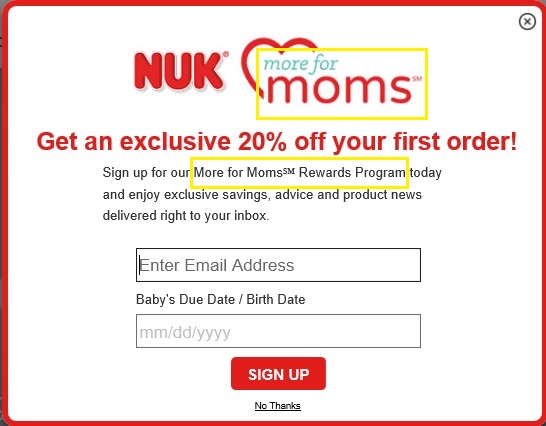
  • It offers the “More for Moms Rewards Program.” And just in case you missed the program’s logo on the front page, there’s a box on the bottom right corner of nearly every page offering “Exclusive Savings Just for Mom.”

Interestingly, if not predictable, you won’t find a single image of a dad anywhere on its site, nor on social media. That’s where unquestionable irony sinks in. There are numerous cute faces of male babies and young boys used to sell NUK products. But then consider how those same faces will be ignored by the very company they represent once they become fathers later in life.

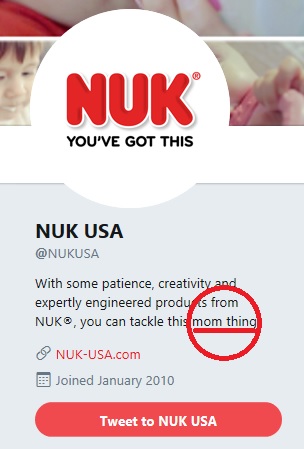
Its Twitter feed reinforces the notion that moms are its intended audience by insisting, “With some patience, creativity and expertly engineered products from NUK®, you can nuk.jpgtackle this mom thing.”

Imagine you’re a dad and reading, “…you can tackle this mom thing.”

If there were any further doubt as to whom it wants as customers, NUK seals the deal on its About Us page by declaring, “And we listen to the real world experts – moms just like you – to meet and exceed your needs.”

Dad knows what he’s doing every bit as mom. In today’s online shopping world where customers are sometimes only known by credit card numbers, it’s time that NUK takes a moment to embrace the other parent who knows a thing or two about nurturing.