Someone needs to tell Luvs that dads change diapers

When Huggies unveiled its infamous Dad Test campaign in 2012, the negative reaction was swift enough for Huggies to make an immediate change in its marketing approach.  The ripple effect was wide, as plenty of ad agencies learned an abrupt lesson:  dads are not buffoons.

But just because dads were being used less and less as the butt of advertising jokes doesn’t mean they had instantly achieved equal footing with moms.  Nearly five years after the Huggies debacle, dads have yet to be treated like true parents in the world of marketing.

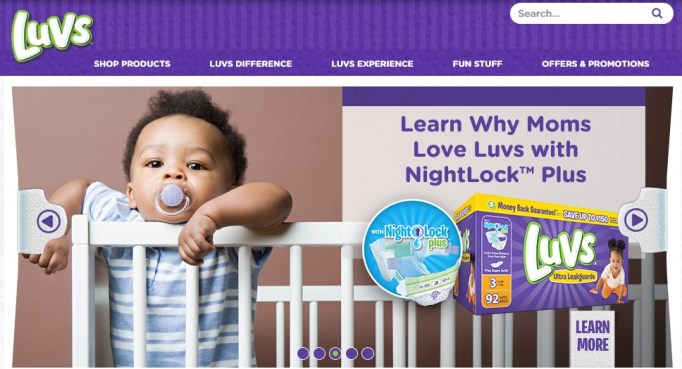
luvs2.jpgTake a look at the website of Luvs diapers, which unveiled material putting the emphasis on mom as the lead parent.  In today’s modern, dual-parenting, two-parent-working-world, it’s hard to imagine Luvs would actually relegate dads to the backseat quite like this.

luvs1.jpgLuvs’s website speaks only to moms on exactly three of its front page sliders by excluding dads as equivalent, equal, identical parents in more ways than one – even to the startling point of exclaiming its diaper as the “Official Diaper of Experienced Moms.”

None of this comes as much of a stretch when you realize that its parent company – P&G – also brought us the highly exclusionary Thank You Mom Olympic campaign, which no doubt made dads cringe while being disregarded as equal child-raising parents during the world’s largest athletic competition. More likely, it sent shockwaves down the spines of dads, who like moms, spent many late afternoons, evenings and weekends shipping their children to incessant practices and games.
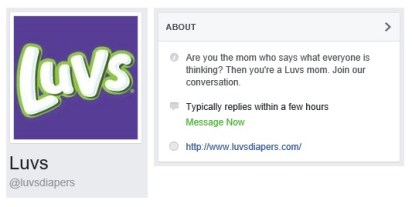
luvs5.jpgThe exclusion continues on its Facebook page, where it gracelessly invites only mothers to join in on the Luvs conversation, leaving dads everywhere in the dust.  Moreover, it offers Momojis as part of its “Official Keyboard of Experienced Parents.”  Here Luvs makes the unpleasant mistake of insisting that mom is an exact literal synonym for parent, when we all know that parents luvs4include both moms and dads.

In other words, all parents aren’t only moms.

With competitors Huggies and Pampers also offering mom-only sections on their respective websites with no comparable dad counterpart, they too insist that only moms change diapers, leaving dads to wonder what it takes to get respect in the parenting world.

It’s a surprising slow-to-change world when it comes to marketing to parents, but here’s hoping Luvs will make some quick and easy edits by spreading equal amounts of its name to both genders before its curious approach reaches Huggies proportions.
luvs3.jpg

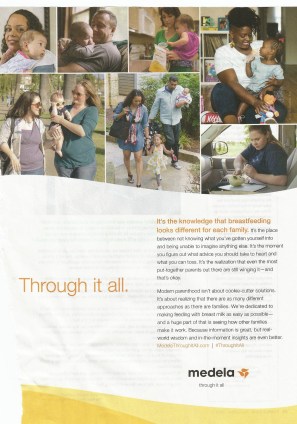
Is that dad? In a breastfeeding ad? It’s no fad

Although the basic concept of breastfeeding will never change – yes, it’s still exclusive to women – Medela feels the industry is ripe for reinvention. medela1

As one of the global leaders in breastfeeding technology, Medela recently strengthened its industry mettle by spending the past 10 months doing something many firms thoughtlessly overlook:  communicating with customers.

However, Medela didn’t simply monitor various social media sites – it actually conversed, interacted and listened.

The result was a wildly successful “Through It All” campaign that revealed something else companies also fail to notice:  dads matter, even when it comes to breastfeeding.

“We really wanted to make sure our fathers were a part of this,” said Kim Aasen, director of marketing. “Even though (dads) can’t physically breastfeed, (they’re) an important part of that conversion. They’re important to the breastfeeding circle.”

An idea is born

medela-KimAasen_MR


Kim Aasen, Medela


Last September, Medela started asking moms on its Facebook community one straightfoward question:  when it comes to breastfeeding, what would you share with another new mom? Aasen said the response was overwhelming, as many talked of a network, or community of breastfeeding support that might include a spouse, grandma, or friend.

After those key months of taking valuable customer inventory, Medela revealed its marketing idea complete with a print campaign and series of videos which tell the story of real people and their breastfeeding journey.

“We made sure we featured those people along the way, and you can see those people featured in the (print) ad,” Aasen said, who also noted that Medela overwhelmingly heard from moms who insist dads play an integral role in breastfeeding success. “We listened to make sure we are reflecting who our Medela communities are. (Fathers) are caregivers and part of the breastfeeding experience, so we want to make sure that everyone is represented.”

Let reality dictate strategy

Although society encapsulates the topic via the word breastfeeding, that equally applies to one who is breastpumping – which, of course, allows other people to feed the child.

medela-Justa 9-Heinen-LR.JPG


Behind-the-scenes at a “Through It All” campaign video shoot. Copyright Medela 2016.


“We want to make sure that we don’t think there is one right way to do it,” Aasen said. “We want to make sure moms and dads and families – whatever that family looks like – that there is no one perfect way to do it.”

Medela also let the customer feedback drive the campaign. It wasn’t intent on following societal norms, advertising history, stereotypes, or even demographic models – it simply felt its campaign should reflect reality.

“By listening to our community’s focus groups, dads are a part of the picture,” Aasen said. “For us, we feel like it’s reflecting reality. We’re just sharing their words back. The pictures you see online shows everyday life.”

Dads count too

As for the future, Aasen said its current campaign is squarely in phase one, which was “different than anything Medela had ever done.” Plans moving forward will continue to include a reflection of what real, modern families look like and how they make breastfeeding work for them.

On the flip side of breastfeeding is formula feeding, where some of its makers exclude fathers from its messaging.

Aasen believes companies who don’t include dads in ads should take heed:  (Those) companies are missing out. It’s not cookie cutter; (families) comes in all shapes and sizes, as do responsibilities.”

medela-DSC_9816-Brown-LR


Video crews record footage for Medela’s “Through It All” campaign.  Copyright Medela 2016.


Can’t dads put sunscreen on kids?

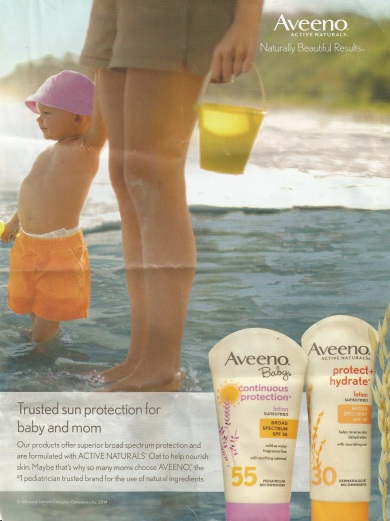
aveenobaby2It’s ironic how there are some who admonish dads for their lack of parental involvement, and some who spend their time furthering that notion through advertising.

Take, for instance, this parent magazine ad for Aveeno Baby, produced by a company who believes that it’s only mom’s duty to handle a child’s skin protection.  That company may argue that “market research indicates…” or “readers prefer…” or “our focus groups suggest…” – but the fact is that it’s furthering a perception which is unfair, sexist and wrong.

Dads shop.  Dads parent.  Dads care.  And, well, dads apply sunscreen.

If you aren’t bothered by this chauvinistic ad, you should be for more reasons than one.  Not only does it disregard and intentionally exclude dads, it also uses the image of a boy to sell its product, the very product that will one day ignore this same boy should he become a father someday.  Spouses, too, should be bothered by this gender annexation:  that person they’re ignoring is your partner, your equal, your helpmate in this adventure called parenting.

Interestingly, last week we received a note from @KnowYourObama, who said, “Marketers don’t market to dads as parents because, mostly, they’re not.”

There’s no telling why this person believe this, but we wanted to chat a little more, and the following brief conversation ensued:

@dad_marketing:  “I think you might have offended Obama, plus a lot of other dedicated dads.”

@KnowYourObama:  “Obama’s a good dad, yes. But good dads – dads – are hard to find. Yay for the good ones.”

Here at DM Headquarters, we have no hard data to prove that there are more dedicated dads than uninvolved dads, but there should at least be some protection against libel, or perhaps some rules which guide what marketers can or can’t say.aveenobaby

Marketing departments have been saying or doing whatever they wanted for years, sometimes with little adaptation for societal changes – all in the pursuit of the almighty dollar.  It takes some real honorable companies to take a stand and do what is right and not just offer lip service (check out Jif-maker Smucker’s, and its “promise” page).

And who – you might ask – makes Aveeno Baby lotion?  None other than Johnson & Johnson, who has a history of waffling on gender equality.

To quote a word from Aveeno’s own ad, parents (dads included) have “trusted” Aveeno Baby and Johnson & Johnson for years.  When will that trust be returned?

The most exquisite folly is made of wisdom too fine spun

elmonterey7How many contradictions can one company make in a single email?  We came across this promo recently, and it’s hard to decide which of these items offers more incongruity:

  • Quoting Ben Franklin – a father – and then saying that its product is a wise choice only for moms?
  • Using a quote whose original use employs the word “man,” and then disregarding that same “man” in its promotional hashtag?
  • Using the term “kids” in the ad copy instead of just “girls”?  Because after all, El Monterey will eventually disregard the boys (who are among those kids) when they become dads.
  • Assuming that Ben Franklin would’ve loved El Monterey burritos, when even as an adult in modern times, he couldn’t have made the pick to buy them.  Clearly, according to El Monterey, it would’ve taken his own mother to choose them in the store for him.

Of course, the startling, underlying theme for El Monterey once again, is that a mother’s place is in the kitchen.  Otherwise, there would be no other reason to continue to snub dads, who certainly must be capable of microwaving a frozen food product.

And also, of course, El Monterey caps off the email promo with its #momwins campaign, which essentially leaves no one as a winner:  mom is typecast as the one who cooks, dad loses by way of exclusion.

The disappointing insistence of this El Monterey old fashioned marketing push leaves us hungry for another burrito maker, one that is thus, all the wiser.

Is Babies R Us starting a trend?

babiesrus3Ahhh, yes – car seats.

If there’s one item dads have no business meddling with, it’s the car seat.  Leave that up to mom, marketers say, because they’re the ones who will be shuttling baby along to appointments, shopping trips and day care centers.  Dad doesn’t even visit baby stores, and when he tries, it turns into utter chaos, right KSN?

But is this trend changing?

babiesrus4Here we have an email ad from Babies R Us, who doesn’t just give dad his due once, but twice – and almost exclusively by way of hiding a mom in the fuzzy background.  This wasn’t necessary, but it certainly sends a strong message as to who this store wanted featured in its marketing.  To be sure, we’ve seen plenty of mom-and-dad photos before, but this ad almost wholly features dads.

Babies R Us proves that dads belong in baby ads, and that they parent, too.  It isn’t afraid to buck the old fashioned trend that it formerly perpetuated, when we wrote about its Big Baby Book.

However, that was almost two years ago, so we’ll ask it again:  are things changing for the better?

We like to think so, and kudos to the creative team at Babies R Us for its inclusion of dads as the rightful parents they are, substantiating the fact that dads shop and parent, too.

Marketing to baby must involve dad

hylands1Hyland’s has been making safe and natural homeopathic medicines since 1903, and after a quick look at its latest magazine ad, seems to be rather dad-friendly.  It’s nice to see a dad featured prominently in its ad.

But take a close look and read the copy.  Why doesn’t it speak to dads?

Now glimpse at hylands.com and click on “Calming Tablets,” and you’ll find a similar mom-only reference.

Those are some disappointing dad omissions for an otherwise decent overall marketing approach.  Generally, Hyland’s seems to try to use “parent” references, so these nuggets caught us a little off-guard.

hylands3Hyland’s talks about party invitations here, a symbolic reminder that dads want to be invited to the “party,” too.  They take care of babies and have plenty of choices when it comes to baby care products.  So why should Hyland’s give them a reason to go anywhere else?

Parenting isn’t a mom-only thing, and mom isn’t the lead parent, regardless of what any particular family’s situation may be.  It is the responsibility of both parents to raise a child, and that equality has never been more prevalent than it is today.

The Hyland’s example is an exhortation for any company looking to increase sales:  don’t forget your customers, and they won’t forget you.

Fresh perspective from Baby Brezza

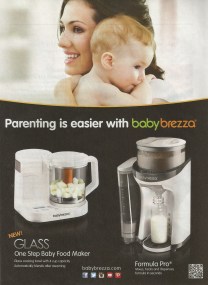
babybrezza1Companies like Similac only wish to target its product to mothers, because unfortunately, it still believes that moms solely handle the reins when it comes to feeding babies.

But then you have different companies like Baby Brezza, who offer a progressive, free-thinking approach to its marketing and advertising.

Check out its latest ad (featured), which uses the inclusive word, “parenting.”

Imagine how different this ad would have looked had it chosen to use the word “mothering” instead of “parenting.”

Even with a photo that only includes mom, by using that complete, all-encompassing term, it makes dads feel like they’re being spoken to – like they count.

Over at babybrezza.com, you’ll find a site that mimics the ad, where uses of parenting abound, just as the testimonials impressively reference non-biased terms such as “families” and “parents.” The videos also include dad feeding baby, and includes a special section “Kitchen Time with Dad.”

It’s no wonder Baby Brezza received awards from Parent Tested Parent Approved and the National Parenting Center.

Keep up the good work, Baby Brezza.

Which insurance company has dads in good hands?

If the basic definition of marketing is “to promote something in order to sell,” then there’s no question as to whom each insurance company presented here is trying to speak.gerber2

One featured ad is actually a direct mail piece from Gerber Life Insurance Company, who for years has been regularly sending this mailer with “See what Moms are saying about…” printed right on the front. And if you’re a dad who has been surprised to receive this in the mail, that’s not the only the only thing Gerber has jumbled; scroll about one-third down here to see another way this piece misfires.

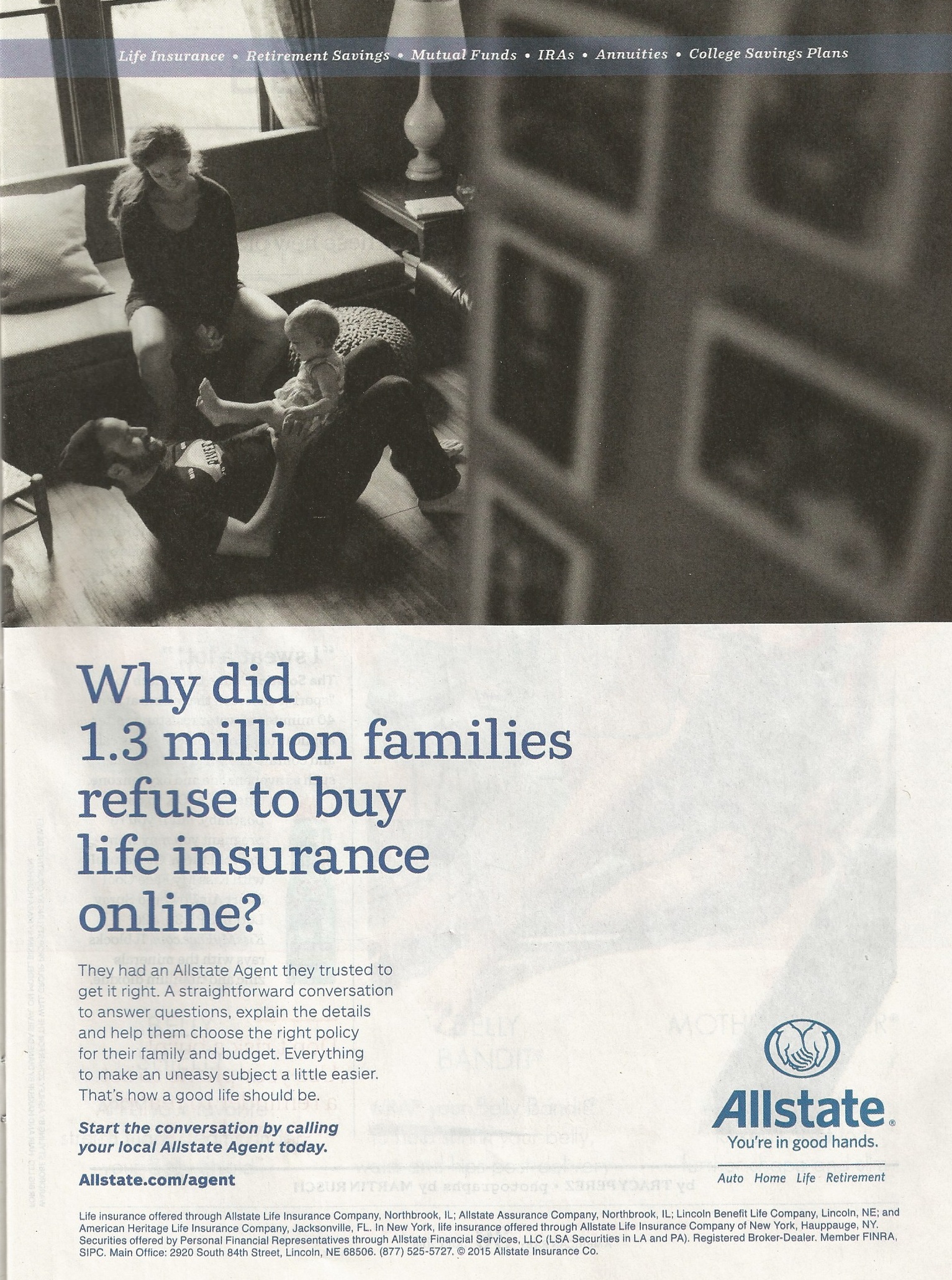
allstate1The other featured is a display ad from Allstate found in the July 2015 American Baby magazine (click to enlarge). It not only addresses all of its potential customers by using the word “families,” but it includes a photo of a family where dad is holding the baby.

So, if you’re a dad and in the market for insurance, or even a college savings plan, where are you more likely to turn? To whom is Gerber and Allstate trying to “promote something in order to sell?”

Allstate’s approach is a positive one. Companies so often follow the supposedly “safe” marketing path, misbelieving that mom is the primary household decision-maker. Allstate knows that the days of “mom-stays-at-home, dad-goes-to-work” are ancient history. Indeed, caring for the family is a responsibility handled by both mom and dad.

Gerber, on the other hand, doesn’t want to change. Keeping an iconic, recognizable logo is a wise marketing move, but ignoring potential customers isn’t. Neither is having a college savings plan that gets dubious reviews.

Ever since our first post about Gerber in January 2014 (and again later in October), it began blocking us on Twitter. It’s the only company we’ve written about who has done so, proving that in Gerber’s world, communication is a one-way street.

Allstate, on the other hand, has won dads over. Dads are in good hands, indeed.

A fine ad, but what’s with Walmart Moms?

mixedsignalsIf you’ve been following this website since the beginning, you know we’ve focused on a variety of ways in which dads are portrayed in marketing, advertising and media.

We’ve featured companies, media channels, sports, entertainment avenues, service organizations, as well as some general ideas of our own.

When it comes to the products we buy and consume every day, it is the retailers who exert immense power. Their prices affect our overall budget. They decide what’s on sale. They decide where it’s placed in the store. They shape our buying habits, and often turn items that “I want” into “I need.”

The retailer at the top of the list, of course, is none other than Walmart. With 4,779 stores nationwide, it’s responsible for $482 billion in annual sales, and no other store comes even close.

When we wrote about Walmart on January 7, we were disappointed by an ad featured in the October 2014 American Baby magazine.

walmart2But now, almost one full year after that magazine ad we discover a change in Walmart’s ways with an advertisement so impressive (featured left), it will no doubt get everyone’s attention in the retailing world. Hopefully it will turn heads and change the way others operate and market their products and services.

Check out this list of the top retailers from last year.  If you’re reading this Kroger, Costco, Target, Home Depot, et al, your friends at Walmart have officially raised the bar.

That doesn’t mean, however, that Walmart is officially the leader in dad-friendly marketing. This ad was a hit, but another part of its portfolio is a clear miss.

That’s because it still insists on offering “Walmart Moms,” a practice that wouldn’t seem so sexist if it offered a dadly counterpart. The old fashioned use of this biased name fosters the misbelief that mom is the lead parent, and dad is merely an assistant.

We call for an end to this chauvinist exercise by renaming the program “Walmart Parents.”

What do you say Walmart?

walmart5Walmart’s approach shows that it’s at odds with its own self. By offering a fantastic ad showing dad in a positive light as an involved parent, and then disregarding dad’s parental abilities through the exclusionary Walmart Mom program, it’s sending mixed signals to dads everywhere.

We’ve debunked the moms are the lead shoppers fallacy so many times over it’s hardly worth doing again, so we’ll let another group do it.

Again, Walmart here offers one quality ad and a fantastic step in the right direction. But as for Walmart Mom, it reminds us of another dad exclusionary marketing campaign that’s taken a beating this year.

Perhaps it’s time for Walmart to be proactive (like the Today Show), rather than reactive, and let dads know that they matter as consumers.

Curing the case of an upset stomach

tummycalm2We came across an interesting approach from Tummy Calm, who at one point was trying to play the “only-moms-take-care-of-kids” card.

Tummy Calm, distributed by TJL Enterprises of Long Beach, CA, is gas relief medicine for children.

The attached graphic appears in its tri-fold brochure, which judging by the tiny print, looks to have been produced in March 2015. (We can’t confirm this for certain, but it seems like a plausible deduction.)

However, over on the front page of its website, we find the word “mommy” removed.

The change is a positive one, as it should come as no surprise (it’s 2015, after all) that a website is a company’s primary communication piece.

But what’s with the sudden change?

Is the brochure targeting a certain segment? That’s conceivable. We came across this piece in a doctor’s office, and we all know that marketers don’t seem to believe that dads can actually transport children to appointments. Either that, or they believe that moms simply adore tri-fold brochures. Or, dads can’t read.

Is it a case of disjointed marketing-speak? That’s always possible. It wouldn’t be the first time we’ve noticed varying approaches – depending on the medium – by products marketed to children.

Could it be that the company is just being inconsistent, and simply forgot to use the word “Mommy” on the website? That’s less probable, especially since there’s unlimited space on the Internet, unlike tri-fold brochures.

Or, did TJL wise up in recent months after reading the latest news at dadmarketing.com?

If so, hats off to a marketing team that stopped exclusionary marketing dead in its tracks and recognized fathers for the work they do.

Keep an eye out for that newly revised brochure at a doctor’s office near you.