Continuing the Super Bowl momentum

If you were like the rest of the nation, glued to your TV set this past February 1 during the Super Bowl, you probably noticed that dads played a significant and positive role in several commercials. This was big news – as big as Tom Brady’s heroics – because we all know the commercials are nearly as important as the game itself, and judging by the price tag for 30 seconds of air time, it’s as substantial as TV ads get.subaru

Fast forward to today, and companies are continuing that momentum of solid sales, realizing that speaking to dads makes common business sense. They realize that dads matter – that dads count too – and that they’re speaking to them as the equal parents they are, and it turns the tide from a generation of stuck-in-time, old fashioned marketers which used to remain convinced that only mom made the family purchasing decisions.subaru2

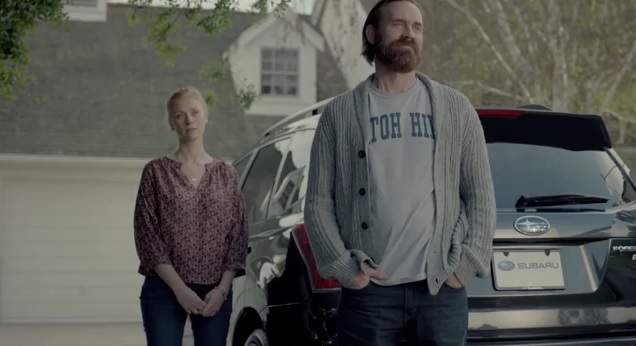
The ever-excellent honordads.org pointed us to an ad so good it seems a crime to get up during a commercial break and miss it. Indeed, Subaru knocks it out of the park with this latest TV ad, which features a father cleaning out the family’s Forester as he prepares to pass it on to his now-grown-up daughter.

We admire the bold approach by Subaru, which proves with a soft and elegant touch that there’s more to parenting than the fallacy of dad merely acting as mom’s right-hand-assistant.

You may want a tissue while watching it, but we weren’t crying – we just had some dust in our eyes.

Why Amazon Mom is like a misshelved library book

A trip to the library is a lot like driving on a long-distance vacation.

It’s fun and fascinating, and whether you’re looking for a particular book or just browsing for whatever meets the eye, it’s a pathway to enjoyment that makes the journey as fun as the destination.amazonmom

One time, though, a friend of mine was cruising through the library, and on a mission.  He was looking for a particular book, and nothing else would do.  He visited the right floor, the right section and the right shelf.  The system said it was available, but it wasn’t.  Even the help of a kind librarian was to no avail.

As it turns out, he eventually found that book.  He said he remembers happily holding it, but also scolding it, as if to ask, “If I didn’t know where you were, how could I find you?”

A recent retail experience again reminded him of that misshelved book.

Amazon knows a thing or two about books.  It started as an online bookstore, and eventually diversified to sell nearly anything that can have a price tag placed on it.  It is the largest Internet based company in the United States, and it’s often our first stop shopping destination.

We love Amazon, and it loves us back.  With regular enticements like free shipping, discounts, Black Friday sales, and rewards programs, it’s everything we’d want in a shopping experience, even if we can’t touch and smell the item first.

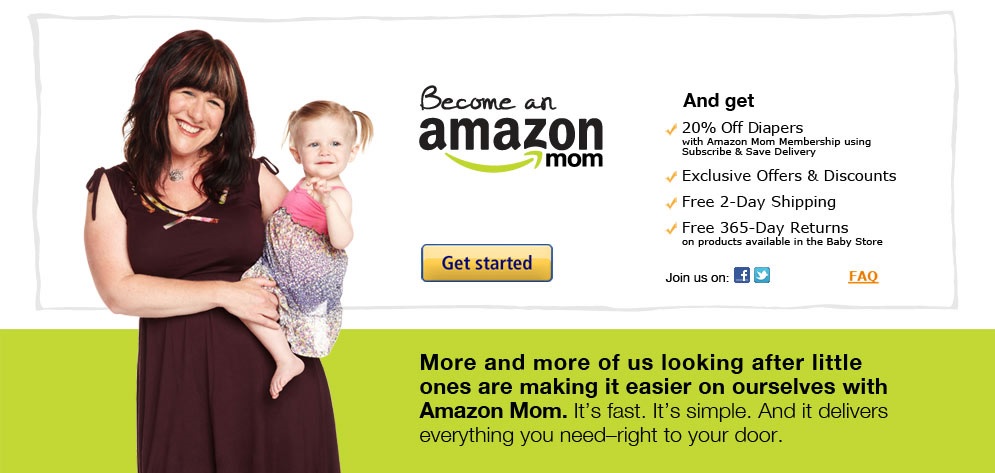
Then, several years ago it introduced Amazon Mom.amazonmom2

For years, dads have been unfairly mislabeled “Mr. Mom” – a name they find both offensive and erroneous (would anyone dare call a working mother, “Mrs. Dad”?) – so it’s easy to make a sophisticated deduction about what Amazon Mom might entail.

But we don’t want to spoil the fun; here’s Amazon Mom’s own curious self-description:  “(It) is a prime membership program aimed at helping parents and caregivers in the prenatal through toddler years use Amazon to find and save on products that families need.  Amazon Mom is open to anyone, whether you’re a mom, dad, grandparent or caretaker.”

So let’s get this straight:  a dad can join a mom program?  The word mom has become a generic term for parent, like Kleenex is for facial tissues?

And then dads must stop to think:  realistically – as a dad – is Amazon Mom speaking to you?  Does this program’s name suggest something that you would want to browse?  Would you walk into a “mom” retailer, or down a “mom” aisle in a bricks-and-mortar store?

Also recently, we had a pleasant 140-character conversation with the friendly folks at 4moms, a baby robotics company founded in March 2006 which makes high-tech baby gear.

4moms enlightened us that its company name is derived from an initial focus group held that consisted of four mothers.

Cute and unique, indeed, but in a baby world where businesses purposely leave dads out of the parenting mix, it’s a saying that’s well-worn.

Had the name been 3moms or 5moms, we would have never taken issue with anything.  But imagine that the wildly-successful burger-maker franchise Five Guys had been named 4Guys – that means something else entirely, doesn’t it?  We’d all perceive them differently, and wouldn’t women be deservedly up in arms?

We’re sure the desire of 4moms to match true company history with the play-on-words was too good for them to pass up, but you know who gets passed up in the process?

Dads.

Dads are parents too, and it’s time businesses start listening to fathers everywhere.

Judging by its products alone, 4moms seems to have a bright future ahead.  And with a financial backing like no other in cyberspace, Amazon will probably carry on for a long time, that is, unless the recent uproar forces at least an overdue name change.

But like that lost library book, if my friend doesn’t know where these companies are or doesn’t notice them because they’re not speaking to him (he’s even a dad), then how can he find them?  They must not care about dads as customers, right?  If a product is not categorized and shelved properly like that book, do consumers stand a chance at ever finding it, enjoying it, or even using it?

If these companies really cared, perhaps they could start marketing their products to its true customers.

As in, all of them.

Keeping baby safe at home involves everyone

You may have noticed the wonderful and much needed t-shirt now available from the fine folks at the National At-Home Dad Network.

American Baby magazine apparently has not.

Once again we turn to a misguided ABM headline that reads, “The number every mom should know.”americanbabyagain

The blurb talks about the importance of knowing the phone number of the national poison control center, and having it readily available. This wasn’t a case of a headline alone speaking to the mom, the story fortifies it by imploring mom to program that number into everyone’s cell phone – dad’s too, because not only is parenting evidently beyond his scope, so is technology.

This forced snub is another example American Baby magazine – and much of the mom-obsessed media – simply not speaking to dads. The powerful role the media plays in our culture then spills into our psyche and eventually into marketing, where so many unfairly assume that dad plays the part of babysitter when mom isn’t around.

Marketing personnel love playing into mom’s ego as the lead parent, a brutal, old fashioned assumption that she must carry the cash and handle all the shopping because dad is at work.

That notion may have been valid many decades ago, but we all know that’s not true today.

If by chance ABM is reading along here, don’t sit at the next editorial meeting and decide to make a gratuitous “for dads” section a permanent feature of your publication.

Instead, try doing something you’ve clearly never done before: talk to dads.

You’ll be a stronger magazine for it, because we know a few American babies who happen to have dads, and those men deeply care about the safety of their children, too.

They did produce some change

When companies receive customer inquiries, they have three basic communication options: 1. Ignore it, 2. Auto-respond, 3. Converse/engage.

We’ve experienced all of these as consumers, and equally so here as dadmarketing employees.

Ignoring the customer contact is the peculiar, and unfortunately all-too-often, approach. Many of us make contact with businesses quite frequently, sometimes without even realizing it, and it’s so often we never hear a thing. That’s troubling for those of us as customers, and potentially terminal for the company. Look at it this way: do you like being ignored by family, friends or co-workers?

Auto-responses can certainly serve their purpose. Sometimes it’s nice to know the company received our email when we send it at 6 a.m. At the same time, the company isn’t fooling anyone; auto-responses feel distant, robotic and forced at times, leaving customers to feel like numbers. It makes the business feel like they’re all about busyness.

Those companies who invest in people, however, and choose to converse and engage with its customers truly get it. Sure, it costs more to devote precious dollars to one-on-one interaction, but it’s totally worth it. Finding that level of interaction is rare, but it’s what separates the companies who care, from the ones who could care less.

On Wednesday we received our regular email newsletter from Produce For Kids, a web resource created in 2002 by Shuman Produce, Inc., who grows and ships Vidalia sweet onions. Its website, produceforkids.com, is dedicated to educating families on the benefits of healthy eating, providing simple meal solutions and raising money for children’s non-profit organizations.

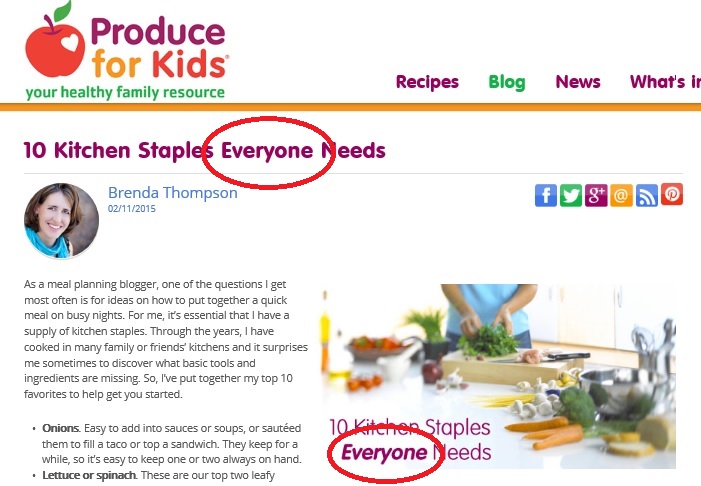
The email newsletter, however, carried a headline that troubled us: “10 Kitchen Staples Every Mom Needs.” We immediately wrote about it, and tweeted Produce For Kids about our post.

Guess what happened?

They listened. They responded. We conversed. They made something wrong, right.produceforkids2

In fact, they made the edit to the headline and photo graphic in a matter of minutes, something completely unheard of in a world of marketing that loves to exclude fathers from messages. Usually that kind of change, simple as it is, must swim through a lot of red tape and organizational bureaucracy.

Cheerios is another story who turned around something negative into something positive, but that quest took several months.

Produce For Kids turned righted the ship over the lunch hour.

For an organization whose efforts revolve around food, produce, shopping, kitchens – it would be easy for it to fall into the dad-exclusionary trap and squarely ignore fathers like so many other businesses and organizations in the same arena. Instead, they have been one of the more stand-up groups, not using a slogan as mere lip service, but rather living by it. Check out its “About Us” page: it could have employed the stereotypical mom-child-kitchen photo, but it didn’t – they gave dads their due.

Here’s to Produce For Kids and its dedicated work at including everyone in the family in its mission — you have dadmarketing’s highest Seal of Approval.

How to show favoritism, and then pass the buck without anyone realizing what you did

Did someone in your life ever play favorites?americanbabymag

It could have been your teacher, your uncle, or your parent. No matter who does it, it’s no fun, and it’s wrong.

American Baby magazine is guilty of that, and more, in its latest ad promotion. Once again, we fine a parent-type magazine believing the word mom is a synonym for parent, and ignores dads unequivocally.

We have no issue with a mom-only ad, although, it would be nice to see an accompanying dad-focused ad for once. But we do take exception to the “moms know best” headline.

That’s one serious slap in the face to dads, and frankly, it’s hard to believe its editors let this one slip.

Ahhh, but there’s a catch – American Baby magazine doesn’t really say it.

Rather, it gets away with a fast one by shifting blame when it exclaims, “They say moms know best.”

It’s like American Baby is expressing, “Hey, it’s not us, it’s others. We’re just telling you what we’ve heard others say.”

Yeah, well, those people out there, they say lots of things:

  • A woman’s place is in the kitchen.
  • Girls can’t play sports.
  • Women can’t drive.
  • Females should be seen and not heard.
  • That woman needs to man up.

We all know these sayings are wrong, and so is saying that moms know best; doing so makes dads feel like assistants, like they’re second best. Parenting isn’t about one gender knowing better than the other, or about one person having more control.

This has to stop!

Cheris Kramarae and Paula Treichler are both quoted as saying, “Feminism is the radical notion that women are people.”

Well put.  And fatherism is the radical notion that dads are parents.

With great power comes great responsibility

I realize the Internet has blurred some of the rules of journalism, but the media still has a certain amount of duty and youtubebabyaccountability.

After what I saw online today, People magazine clearly feels none of it.

Polish dad Bartosz Fórmanski YouTubed a charming video of him placing fake facial hair on his baby, and titled it, “What happens when my wife leaves me alone with our baby.” Although his YouTube name is “Perfect Daddy,” the video simply looks like a dad having fun with his baby. Nothing more.

People magazine wrote about the video on its website, yet interpreted it by making dads out to be the negligent, undependable, butt-of-jokes parent with the irresponsible title, “Here’s Why You Don’t Leave Dad Alone with the Baby.”

People doesn’t appear to have interviewed Bartosz, but decides anyway to make assumptions merely from his headline alone.

It could be that Bartosz is just a funny guy. Perhaps he’s a perpetual practical jokester. Or, maybe it’s just a dad having harmless fun.

But People would rather take the lazy approach and use tired comic relief by reshaping the unknown meaning Bartosz’s YouTube title, making dad out to be the sorry excuse for a parent. Yep, here’s another example of why we can’t leave dads with kids. Clearly, dads aren’t serious parents like mom! They’re only assistants as best!

Why did People have to turn innocent fun into reckless headline writing?

I guess when it gets right down to it, it really doesn’t know, uh, people.

Lysol washes its hands clean of dads

If nothing else, Lysol is efficient.

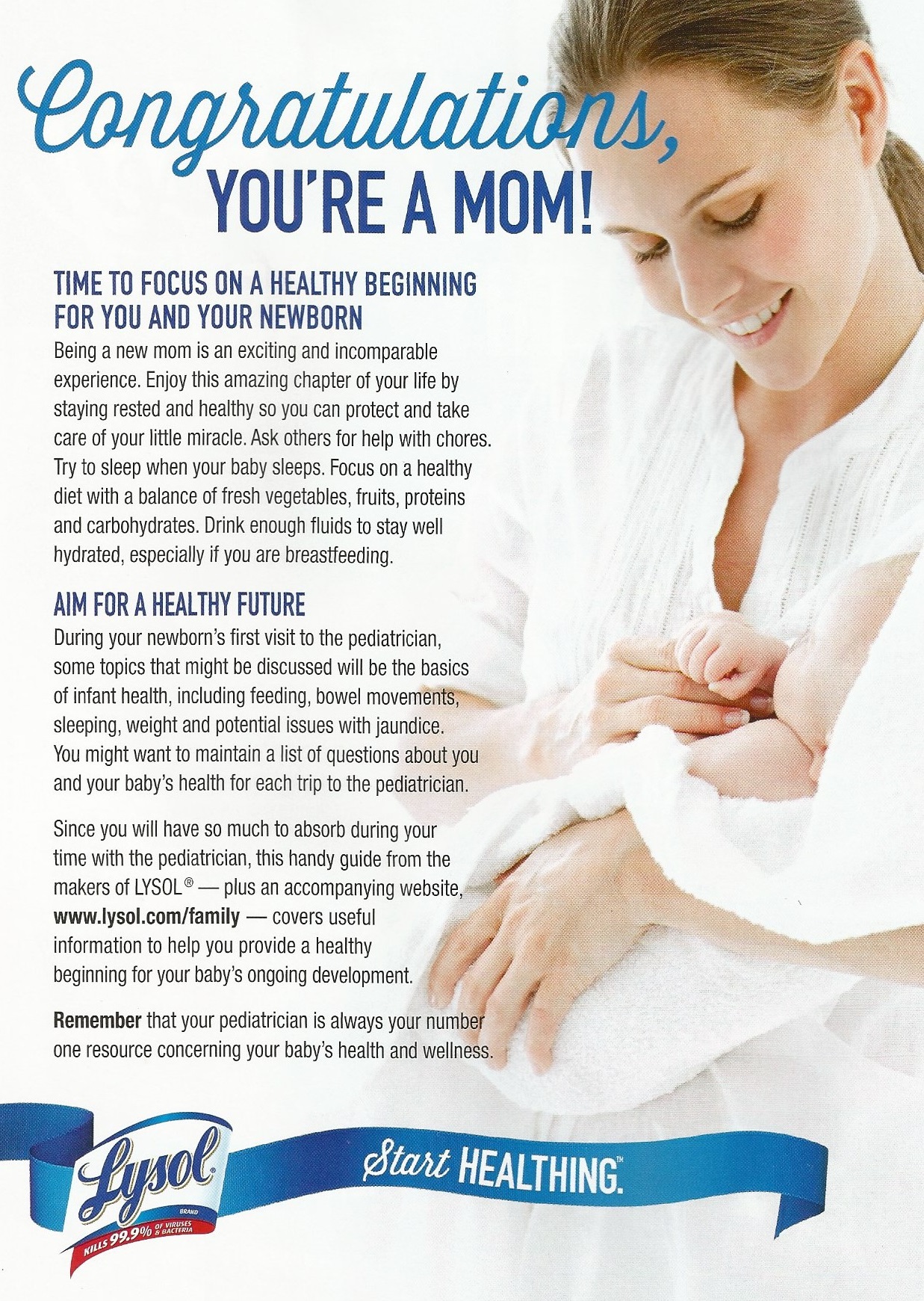
With one little promotional brochure disguised as “valuable information for baby’s first few weeks,” Lysol manages to both exclude dads outright, and peg moms as the do-it-all types who exclusively handle the household cleaning.lysol

If you can get your hands on this curious eight-page booklet, Lysol once again celebrates all things mom and leaves dad in the house dust.

Forget the fact that the other baby’s biological parent (by the way, Lysol, that would be dad) had an equal part in conceiving the child, and now has an equal part in nurturing and caring for it. Apparently, dads have nothing to do with “healthing” and keeping the baby safe from germs. That’s up to mom, who does the chores, and in Lysol’s world most likely the cooking, too.

And dad? Who knows where he is. Probably sitting on his easy chair watching the news, not to be bothered by anyone, sipping brandy after a long day of work. That’s the way it’s supposed to be, right Lysol?

The only way we believed this piece wasn’t unearthed at a flea market having been stuck in between some dusty 1950’s Life magazines was by seeing a website printed on it, proving that this must be some modern day desiring among Lysol executives for a bygone era where moms handle all the cooking and cleaning.

Things are different now, Lysol. Dads do indeed exist, and they certainly help out with newborns. How about starting by congratulating them while you’re at it?

If this was intended to be a mom-only brochure, then this piece is all the more troubling.  It makes mom out to be the house cleaner and totally excludes dads from a joyous occasion.  Dads have been left out too long, and in too many ways.

Things don’t get any better over on their website, where there’s hardly a dad to be found, plus articles that only speak to moms (I guess dads either don’t clean baby toys or don’t have the ability to do so).

Really Lysol, how can something so new be so old fashioned?

At least Boppy acknowledged that boys exist — it’s a start

Boppy Company, why does it have to be this way?

We think you have a really nice product that works, but when you openly and actively market your product to the point of purposely excluding dads (note pictured ad) – well, that’s when we have to step in.boppy2

We don’t think anyone doubts that the Boppy is a “mom friendly” item by nature. Its frilly, cute patterns and soft, cushiony look will immediately appeal to a more feminine side. That’s perfectly ok, and there’s nothing wrong with that. Men/dads and women/moms are different – we say celebrate that, but don’t tell dads by your intentional exclusion that baby products aren’t for them.

Don’t tell dads that they’re less of a parent to their babies than moms.

Don’t exclude dads from the party.

Don’t make them feel left out.

Rather, use your business sense and marketing savvy by selling it to everyone humanly possible!

Are you really afraid that if you take the word “mom” off everything that women won’t notice you? Or that it won’t feel as personalized? Or that suddenly you’re letting in that rough, manly guy on the decision-making process who doesn’t have any business offering input, who doesn’t know anything about caring for babies, and who shouldn’t have any part of that exclusive shopping experience usually saved for the mom-to-be and her mom?

Comparisons can be helpful to illustrate a point. So, let’s take a look at the National Football League.

The NFL is one of the most wildly successful American ventures around, and it has been for decades: huge TV ratings, massive fan interest, tickets sold by the millions, team apparel worn by fans everywhere you look, fantasy leagues, its own TV network. It also has that little end-of-the-season championship game that a lot of people like to watch, sometimes its commercials even moreso.

Yet, there’s no doubting this is a man’s game. No female has ever played in an NFL game (though we’d like to see that change someday). The rough, tough nature of football appeals heavily to the masculine nature.

And that’s ok.

But does that mean that women can’t enjoy the game? Does that mean that women can’t be involved elsewhere?

Of course not. Throughout the NFL, we see female journalists, TV commentators, cheerleaders, front office executives, sideline personnel, and on and on. A female singer has opened one of network TV’s most popular shows — NBC’s Sunday Night Football — since its inception.

Now let’s take a look at its website, nfl.com. Do you see any slogan like, A Game for all Mankind?

A menu tab titled Dad Center?

Helpful Fantasy Football Topics from the Guy Center?

A special offer titled, NFLhood for Dad?

Do you see any special anniversary section that says, Thanks guys/men/dads – for supporting the NFL – we celebrate you!

Do you see any kind of female or mom exclusion going on anywhere? Didn’t think so. If anything, they strive to recognize women through its Pinktober accessories, a color normally associated with femininity.

Sure, the NFL has its share of Ray Rice PR nightmares and a long way to go toward acknowledging proper treatment of women. But this blog is specifically about marketing and advertising. When it comes to marketing, the NFL has a track record of phenomenal success, and advertisers pay big money to be a part of it.

Bobby, perhaps it’s time to take a serious look at your marketing message, and how you can better capitalize on selling to dads. Take a close look at the NFL and how it succeeds.

Better yet, take a moment to talk to some dads and ask how they feel. All too often, we hear from dads who feel left out of things, and miss special moments, and it’s time for the exclusion to stop at least in the ad world.

Try the shoe, er the Boppy, on the other foot.

Not cool-ish

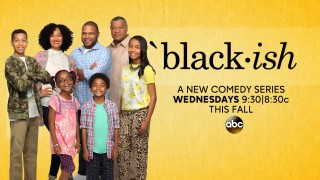
Coming up next week on ABC’s new sitcom, “Black-ish”: Black-ish-TV-series-ABC-logo-key-art-320x180

Hilarity ensues when Rainbow grows bored of being the stay-at-home mom and wants to get a job. But the plan backfires after Rainbow’s husband Dre tells her that her place is in the kitchen – and so does every potential employer with whom she tries to interview! Rainbow also wants to play in an adult softball league, but then it dawns on her that women can’t play sports! Once Rainbow finally realizes her place in life, she goes back to cooking, doing laundry and waiting on her family. It’s non-stop laughs from start to finish in what might be the most funny sitcom episode in the history of television – that’s “Black-ish” next Wednesday on ABC!

No, that isn’t a real promo for next week’s “Black-ish.” No one would dare dream of such a storyline.

But why is it ok the other way around?

In this past Wednesday’s episode, why was Dre made out to be the goofy dad who does next to nothing around the house? And then, when he tries to take on the so-called mom duties (itself a mockery) and switch roles, why does he have to fail miserably?

The episode certainly had its funny moments, but turning dad into a lazy, childlike character and belittling his duties in the home weren’t among them.

It has been 31 years since the “Mr. Mom” movie and we’ve made no progress whatsoever. That attitude in the entertainment world spills right into the commercials you watch and ads you read, where dad still plays assistant to the wiser mom, nodding approvingly to every decision she makes.

Even today, Hollywood still can’t find a better role for dad than mere comic relief.

Anthony Anderson as Dre is fantastic, and “Black-ish” seems like a fun sitcom with promise, but let’s hope they offer the character a little more dignity as a father – then maybe everyone can laugh with dad, and not at him.

Pillow talk

If you’ve never heard of a Boppy, it’s a unique product that was originally created as a baby support pillow, but also can be used to prop a baby during feedings.boppy

The concept is wonderful, and during its brief history has enjoyed a great deal of national publicity through TV shows, magazines and celebrity plugs.

The company appears knows a thing or two about creating a good product that works, but when it comes to marketing, they’re one of the worst offenders we’ve seen when it comes to some serious, major league dad omission.

In the Boppy’s world, dads are not present, plain and simple. Mothers should be greatly offended by this extreme, unwarranted dad exclusion, for it’s their husbands whom Boppy is shunning. Let’s take a look at how they reached this woeful state.

Slogan

Support for all Momkind? We could see a motto like this making the grade, even being somewhat acceptable, at least two or more generations ago. Take Jif and Kix – it’s not like their slogans are proper or right or appropriate, because they remain 100 percent offensive and outdated. But even though they’re both like the Washington Redskins (refusing to change out of stubbornness) at least those old school slogans were born during an era when saying those things might have been customary once upon a time (like using a name such as Redskins).

The Boppy was invented in 1989! How can a company actually make this an official slogan in this modern era, let alone copyright it, all against better judgment in a world that demands equality? Boppy manages to downgrade fatherhood with a simple four word slogan, if not completely banish it, from their one-sided marketing mission. That’s one giant leap backward for all of humankind.

Mom Center

Here we have yet another website with a “moms-only” section. We get the fact that men and women are different as parents, but why exclude dads? Can’t dads feed babies with Boppies, too? Sure they can.

We’ve sent similar thoughts to other companies who respond with things like, “Yes, dads are our heroes too and we’ll take a look at it,” or “Check out this special dad section we created for Father’s Day.”

Why a special section? Why do something only once a year when the calendar tells you to think of dads in June? How about just calling it a “For Parents” section?

25th anniversary

Take a look at the “25 Years!” menu tab on the website, which doesn’t invite dads to the celebration in any way. There you’ll find a giant photo of mom with baby and the script, “We’re celebrating 25 YEARS of supporting mom & baby.”

As long as Boppy thrives on stereotypes, we’ll offer one as we pose this question: if dads are supposedly the providers and earned the money to buy the Boppy, can’t the company at least acknowledge this notion and offer a simple “thanks” for purchasing it in the first place?

Apparently not, because…

There are no dads anywhere

You can’t find even one dad photo anywhere at boppy.com, unless you consider the degrading drawing of ignorant Abe Lincoln putting the Boppy on his head like some clueless dad. And no, we don’t count the guy in the Martha Stewart photo or the two male employees – who knows if they’re dads? We’d like to see an even 50-50 ratio of dad stock photos with moms.

Aren’t dads equal parents, too?

Would Lowe’s or Home Depot ever dream of featuring all dads/men on their site accompanied by a sexist slogan like, “Support for all dadkind”? Of course not, there’d be a mom uprising, and rightly so. It wouldn’t be right.

So why does Boppy get away with it the other way around?

All the baby boys pictured on the site had better enjoy the attention while they can, because they’ll be ignored and forgotten the moment they become fathers by the very company who once featured them.

The numbers don’t lie

Boppy claims to be “beloved by over 15 million moms worldwide!” That’s an amazing statistic which should make Boppy very proud. But you know how many dads (who are potential customers) they’ve managed to ignore?

About 15 million.