Nestle Pure Life misfires

You’ll find no knee-jerk reaction to marketing campaigns we encounter before posting them at dadmarketing.com.

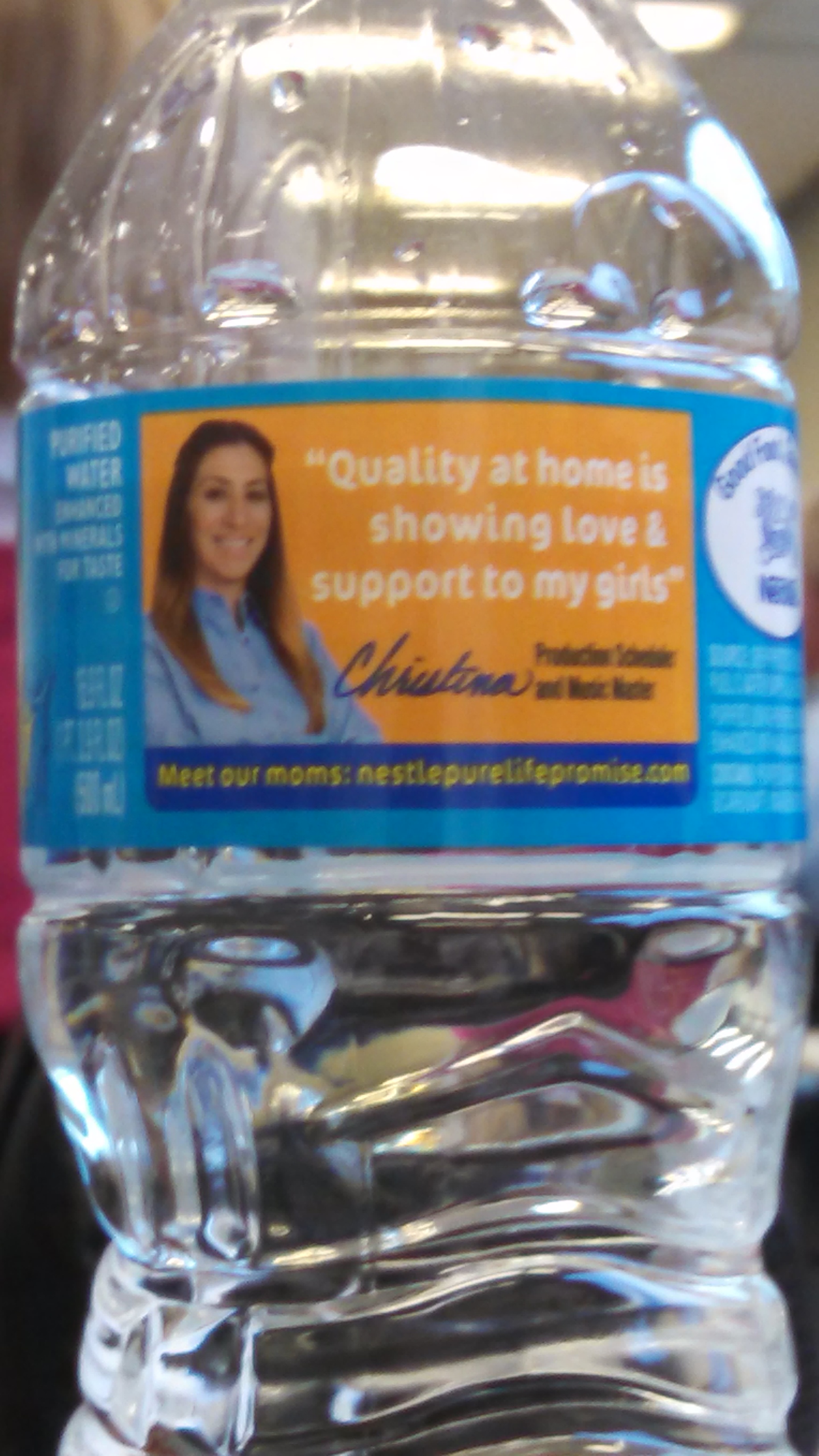
When we saw the new “Nestle Pure Life Promise” campaign on the side of a water bottle which exclaims, “Meet our moms,” it might be easy to jump to conclusions.nestlepurelife

At first glance it looked like another company proclaiming “mom” as the family decision-maker, purchaser and overall food/drink provider.

At second glance, and looking deeper at its website, Nestle is trying to use employees who happen to be parents, while proclaiming that their roles as moms and employees are virtually intertwined.

That seems rather admirable.

After watching the mom videos, however, that’s when we started to notice some onesidedness at the expense of dads.

You’ll see what we mean when you check out the quote from Teneisha, account sales representative: “We are so focused on quality, and so I use that in my home, I give my family the best. Love is a reflection of quality; if I give you a bottle of Nestle Pure Life, I’m giving you a bottle of love.”

So here we have a quote that once again purports the stereotype that mom is the one who shops, makes the food decisions, and gives out the love.

Of course, it’s entirely plausible that Teneisha is a single mom, thus, the only provider for her home. But assuming that is missing the point.

Instead, here we see yet another campaign which only focuses on the moms, and it continues to perpetuate the unfortunate stereotype that dads are only the monetary providers at best, and hardly the providers of food, meals, or even love.

It’s disappointing to see Nestle Pure Life’s misfire with this campaign.

When it comes to bottled water, thanks anyway Nestle Pure Life, but we’ll drink something else.

Johnson & Johnson: taking cues from Amazon Mom

Last May, we wrote about a Johnson & Johnson ad which clearly excluded dads, and then tweeted the company of our displeasure.

Johnson & Johnson wrote back, as you can see on our Twitter site here, and assured us that it “is committed to supporting parents – moms & dads.”

Those were uplifting and encouraging words, especially from a company which plays at least some small part of everyone’s child care, usually from the very start in the hospital.

Yet here we are, nearly a year later, and J&Js marketing message hasn’t changed. Note the featured ad, where the baby only thanks mom for applying its lotion.johnson&johnson2

If you’re a dad, I suspect that right now you’re feeling abandoned by a company whose products you probably used in the hospital right upon your child’s birth. A cold shoulder like this hurts, especially if you saw that Twitter promise last May.

Sadly, Johnson & Johnson’s dad avoidance doesn’t stop with print ads, as its website is filled with examples of one exclusion after another:

  • Visit our Facebook page to share your baby’s special moments with other Moms just like you.
  • Moms around the world trust JOHNSON’S® to safely care for their babies.
  • We’re dedicated to advancing the health and well-being of women, children and families around the world.
  • We are committed to working with moms, healthcare experts and scientists to ensure our baby products continue achieving the highest JOHNSON’S® baby standards.

We’ve said it before, and we’ll say it again:  dads count too.  We can’t expect change to happen overnight, but it has been 11 months after J&J distinctly gave us its commitment – one that sadly wasn’t kept.

Johnson & Johnson was founded in 1886 by two men who may very well have had their own family in mind when conceiving ideas for surgical dressings and sanitation practices. It has to make you wonder about its overall company mission when its marketing and communications team prefers to only speak to a select group, and blatantly ignores another.

Right this very moment, a child is born somewhere and J&J is playing a part in its care.

And also right at this very moment, J&Js marketing department has an opportunity to show dads everywhere it really cares, because as any married couple will tell you, a promise is everything.

Marketing ignorance is not bliss, but a swing and a miss

I’m not really sure what the company Mommy’s Bliss is thinking, but I know it’s not about dads.mommysbliss

From its name, to its packaging, to its butterflied-logo, to its website, to its magazine ads (pictured) – there isn’t a thing about it that would want to make the other half of the parent equation stop by Target, Walmart, CVS, or plenty of other retailers to pick up its product.

In a world where dads take to the streets social media to vent frustration, Mommy’s Bliss should be careful what it’s doing.

Imagine how much more in market share it could be capturing if it had been thinking about dads from the very beginning, starting with a name that might give credit to dads who also care about their kids’ health.

It’s a rather curious approach, because Mommy’s Bliss openly admits that “all families deserve bliss,” yet it doesn’t seem content on even mildly recognizing that dads wish to nurture the blissful bond with baby, too.

I wanted to give Mommy’s Bliss the benefit of the doubt. Its product assortment seems unique. Its ingredients are every bit natural and wholesome as I’ve ever seen. The mother-daughter team of Roshan and Yasmin are cute and comforting.

And there’s certainly nothing wrong with celebrating woman- and motherhood. In fact, it’s wonderful.

But as this company emblazons “mommy” and “mom” on nearly everything in sight with a seemingly purposeful dad-omission approach, and tags it with the exclusionary slogan “Nurturing the blissful bond between mom and baby from day one,” it probably makes dad feel like he should be reading the newspaper, watching TV, or sitting somewhere being aloof and distant from the kids.

In any case, Mommy’s Bliss entire marketing approach feels old fashioned and stereotypical. It’s disappointing to find that the only males the company could manage to highlight on its website are Dr. Waldstein, and some baby boys – possibly future dads who will eventually be lessened by the very company using their cute mugs to sell products which don’t seem to honor, let alone even recognize, fatherhood.

This marketing approach should matter a bit to moms, too: those fathers to which Mommy’s Bliss doesn’t seem to even make eye contact are your husbands.

Here’s hoping that Mommy’s Bliss will really help all families achieve bliss, because it’s not just mom who endures the bumps in the road. The other, forgotten parent wants to get back to the precious moments, too.

If you’re American and a dad, do editors want you reading its magazine?

Imagine opening TV Guide and reading information about television, but it’s not addressed to or intended for women.

Dads are handled this way every month by, what else, American Baby magazine. We’ve penned entries on ABM before, because it has a troubling way of doing business. As a member of the media, it has a duty to report and inform, while living up to its title.

Anything else is misleading.

We’d have less of a problem with this monthly if they’d just call it what it is, say, Mom magazine.

In its March 2015 ABM issue, we counted an image of just one dad, compared to 17 moms holding, cuddling, kissing and caressing cute babies.

Before you say, “That ratio is getting better!” (we found 29 moms and 0 dads back in November), turn to page 2 and page 21, where you’ll find sections titled, respectively, “Mom Buzz” and “All About Mom.”americanbabymag3

Granted, the magazine’s subtitle reads, “Healthy pregnancy, happy baby,” but who said dads can’t be involved with pregnancy and babies? In fact, moms should go out of their way to involve dads with just about the only two things he can’t do in regard to pregnancy and babies: carry it and nurse it from his breasts.

Month in and month out, ABM creates the perception that dads shouldn’t be involved, or aren’t, or can’t.

We know of dad who wanted his forthcoming child to have the healthiest start possible. He overloaded the house with fresh vegetables and fruit. He prepared enormously healthy meals and figured it to be a time for providing mom and child (and him too) with the best nutrition possible. He even stepped up his workout plan, just to show he was “all-in.”

But you know what? He had no shared control over this mutual creation, because his wife viewed this as her pregnancy, not his. She used the nine months as a license to do whatever she wanted, whenever she wanted. It was heartbreaking to a man only wanting the best for their baby.

He felt powerless and useless, totally left out.

We’re not trying to deny the right of an individual to do whatever she (or he) wants, but when a child is involved, that is a mutually, equally collective product of love for which both parties should be responsible.

Legally, a man has few rights after a woman conceives, and many view pregnancy as the woman’s responsibility and choice. Where does this leave dad?

A father has no right to be at any OB/GYN appointments, to be in the delivery room, to name the child, or even to stop an abortion. He may even be denied the right to object to adoption.

Yet, the rules of the game change after birth, where the dad is then required to provide for the child’s material and emotional needs – certainly all good things – but shouldn’t that requirement be mandatory throughout this shared ordeal, such as during the pregnancy?

ABM makes it flat-out look like the woman is 100% charge of the pregnancy and baby. Sadly, that may be true legally, but don’t shut a dad’s heart out of something he loves. Mothers are born with no more instinctual nurturing abilities than fathers, so let human nature suggest that dads play an equal part.

Hey, it’s ABM’s magazine and it can do what it wants, whenever it wants, but including dads in a magazine about babies and pregnancy would be a nice start.

This is weird: a dad can buy Desitin at Amazon Mom

Johnson & Johnson, makers of Desitin, is at it again.

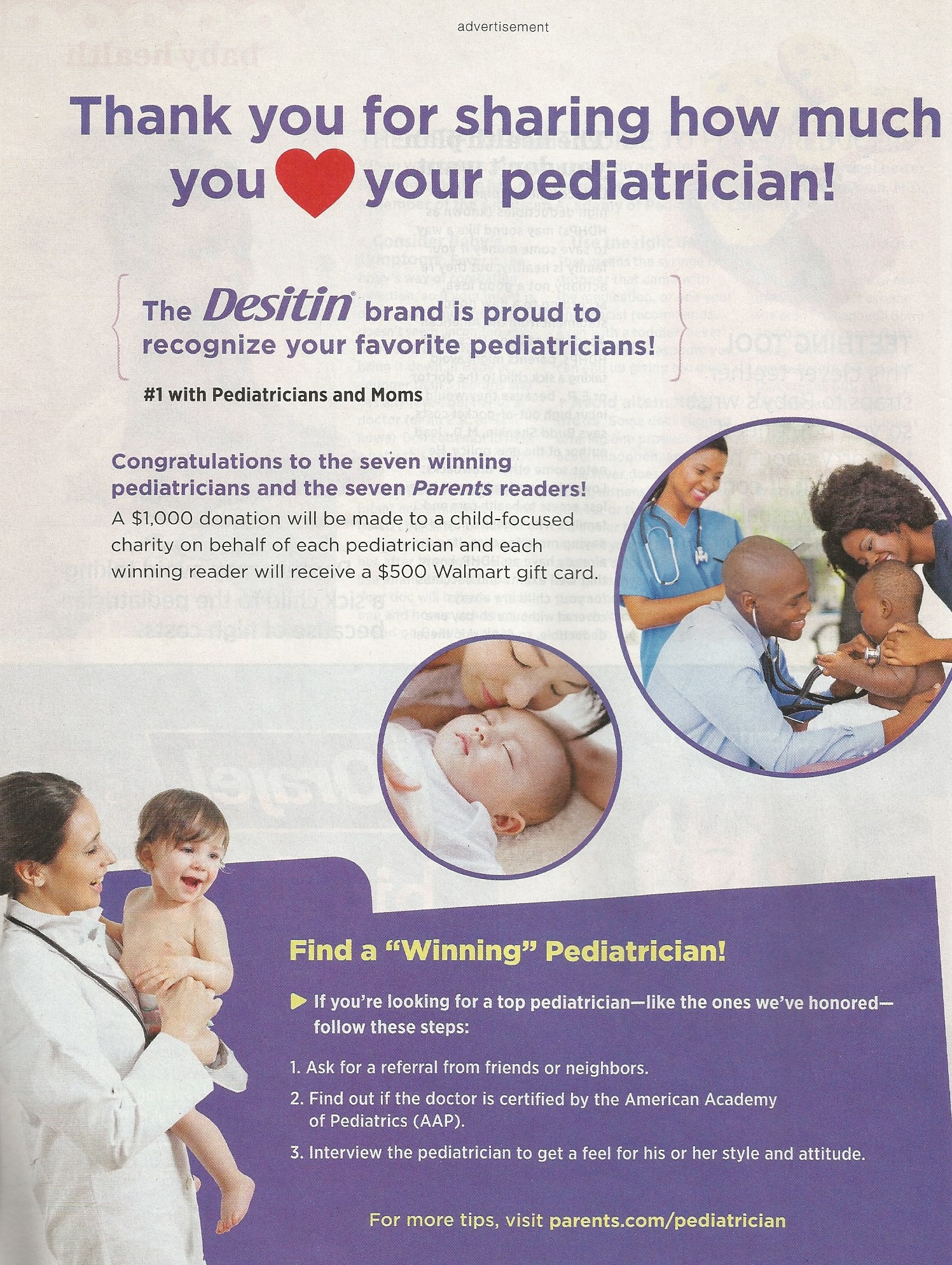
It puts dads in a box, seeing dads as the way it has always seen them, no matter how much times have changed.desitin2

You’ll find its latest ad and subsequent slogan, #1 with Pediatricians and Moms, is repeated twice on its latest two-page spread, featured where else but American Baby magazine, as well as highly visible at the top of its website — with its own separate “seal of approval” logo to boot.

And dads?

Completely nonexistent, from the print ad and all the way through every single web page at desitin.com.

Even though J&J/Desitin totally ignores dads, I still find it slightly odd that – through applying the troubling “dads don’t know how to handle babies” approach – it wouldn’t even seize that as an opportunity to highlight at least one dad on its website.

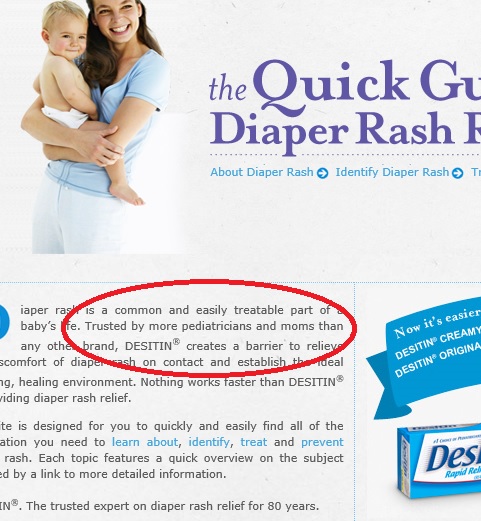
After all, with menu tabs like, “What is Diaper Rash?” and “Identifying Diaper Rash,” and having an only-moms-care-for-kids approach combined with a boxed-in, close-minded attitude toward fathers, you’d think Desitin would take the opportunity to feature that other, less involved “assistant” parent – you know, dads.

desitin4

Screen shot from desitin.com

We offered a review of a similar Desitin ad 9 months ago, and now here we are today, and it’s the same problem.

Isn’t that how some define insanity: continuing to do the same thing but expecting to get different results?desitin3

Good marketers can let go of the past and move on to a new future, growing the brand and branching out into other market segments.

Look at this past Super Bowl to see how much big-time marketing departments value fathers.

But doing the same thing over again results in a stagnant approach.  It may not translate directly into sagging sales today, but over time, and generations, it’s a surefire way to kill a brand.

Is J&J/Desitin up to the task?

Only time will tell.

But if it is, I suspect like diaper cream, it would see instant results.

Why Amazon Mom is like a misshelved library book

A trip to the library is a lot like driving on a long-distance vacation.

It’s fun and fascinating, and whether you’re looking for a particular book or just browsing for whatever meets the eye, it’s a pathway to enjoyment that makes the journey as fun as the destination.amazonmom

One time, though, a friend of mine was cruising through the library, and on a mission.  He was looking for a particular book, and nothing else would do.  He visited the right floor, the right section and the right shelf.  The system said it was available, but it wasn’t.  Even the help of a kind librarian was to no avail.

As it turns out, he eventually found that book.  He said he remembers happily holding it, but also scolding it, as if to ask, “If I didn’t know where you were, how could I find you?”

A recent retail experience again reminded him of that misshelved book.

Amazon knows a thing or two about books.  It started as an online bookstore, and eventually diversified to sell nearly anything that can have a price tag placed on it.  It is the largest Internet based company in the United States, and it’s often our first stop shopping destination.

We love Amazon, and it loves us back.  With regular enticements like free shipping, discounts, Black Friday sales, and rewards programs, it’s everything we’d want in a shopping experience, even if we can’t touch and smell the item first.

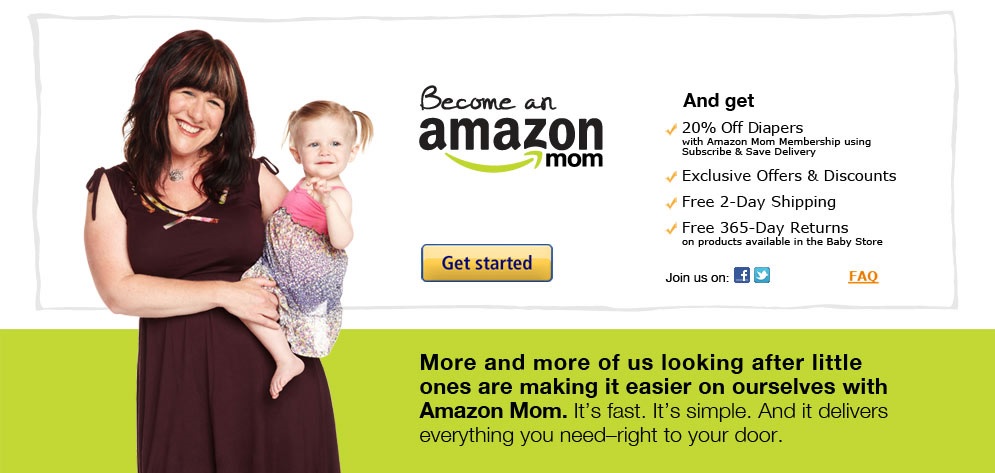
Then, several years ago it introduced Amazon Mom.amazonmom2

For years, dads have been unfairly mislabeled “Mr. Mom” – a name they find both offensive and erroneous (would anyone dare call a working mother, “Mrs. Dad”?) – so it’s easy to make a sophisticated deduction about what Amazon Mom might entail.

But we don’t want to spoil the fun; here’s Amazon Mom’s own curious self-description:  “(It) is a prime membership program aimed at helping parents and caregivers in the prenatal through toddler years use Amazon to find and save on products that families need.  Amazon Mom is open to anyone, whether you’re a mom, dad, grandparent or caretaker.”

So let’s get this straight:  a dad can join a mom program?  The word mom has become a generic term for parent, like Kleenex is for facial tissues?

And then dads must stop to think:  realistically – as a dad – is Amazon Mom speaking to you?  Does this program’s name suggest something that you would want to browse?  Would you walk into a “mom” retailer, or down a “mom” aisle in a bricks-and-mortar store?

Also recently, we had a pleasant 140-character conversation with the friendly folks at 4moms, a baby robotics company founded in March 2006 which makes high-tech baby gear.

4moms enlightened us that its company name is derived from an initial focus group held that consisted of four mothers.

Cute and unique, indeed, but in a baby world where businesses purposely leave dads out of the parenting mix, it’s a saying that’s well-worn.

Had the name been 3moms or 5moms, we would have never taken issue with anything.  But imagine that the wildly-successful burger-maker franchise Five Guys had been named 4Guys – that means something else entirely, doesn’t it?  We’d all perceive them differently, and wouldn’t women be deservedly up in arms?

We’re sure the desire of 4moms to match true company history with the play-on-words was too good for them to pass up, but you know who gets passed up in the process?

Dads.

Dads are parents too, and it’s time businesses start listening to fathers everywhere.

Judging by its products alone, 4moms seems to have a bright future ahead.  And with a financial backing like no other in cyberspace, Amazon will probably carry on for a long time, that is, unless the recent uproar forces at least an overdue name change.

But like that lost library book, if my friend doesn’t know where these companies are or doesn’t notice them because they’re not speaking to him (he’s even a dad), then how can he find them?  They must not care about dads as customers, right?  If a product is not categorized and shelved properly like that book, do consumers stand a chance at ever finding it, enjoying it, or even using it?

If these companies really cared, perhaps they could start marketing their products to its true customers.

As in, all of them.

Keeping baby safe at home involves everyone

You may have noticed the wonderful and much needed t-shirt now available from the fine folks at the National At-Home Dad Network.

American Baby magazine apparently has not.

Once again we turn to a misguided ABM headline that reads, “The number every mom should know.”americanbabyagain

The blurb talks about the importance of knowing the phone number of the national poison control center, and having it readily available. This wasn’t a case of a headline alone speaking to the mom, the story fortifies it by imploring mom to program that number into everyone’s cell phone – dad’s too, because not only is parenting evidently beyond his scope, so is technology.

This forced snub is another example American Baby magazine – and much of the mom-obsessed media – simply not speaking to dads. The powerful role the media plays in our culture then spills into our psyche and eventually into marketing, where so many unfairly assume that dad plays the part of babysitter when mom isn’t around.

Marketing personnel love playing into mom’s ego as the lead parent, a brutal, old fashioned assumption that she must carry the cash and handle all the shopping because dad is at work.

That notion may have been valid many decades ago, but we all know that’s not true today.

If by chance ABM is reading along here, don’t sit at the next editorial meeting and decide to make a gratuitous “for dads” section a permanent feature of your publication.

Instead, try doing something you’ve clearly never done before: talk to dads.

You’ll be a stronger magazine for it, because we know a few American babies who happen to have dads, and those men deeply care about the safety of their children, too.

Give it a rest

I feel pretty confident in knowing that if I open a copy of Newsweek, that I’ll be able read about the news. If I pick up TV Guide, it will cover the topic of television. Sports Illustrated, naturally, deals with sports.

What about American Baby magazine? Well, as you might imagine, it discusses babies and parenting. Since most babies aren’t prone to pick up magazines and read them, you would think its primary audience would be parents.

And you would be wrong.

It’s moms.

American Baby magazine, and others like it – Parents, FamilyFun, Parenting, Babytalk – all seem to think that dads don’t count, and don’t exist.

In the November 2014 issue of American Baby magazine, for example, I counted images of 29 moms. And how many dads?

Zero.

Fifty-three pages and not one single dad (note: there were a few male doctors, but no dads).

But the ban on dads doesn’t stop there. It was the tiny little headline (pictured) that makes dads feel useless: “Better rest for you, mom.”americanbabymag2

That also evidences a slight tinge of narcissism. C’mon, don’t dads need rest, too? Don’t dads have a hand in taking care of kids? Just because the baby actually comes forth from a female, doesn’t mean that moms are instantly able to nurture better than dads, or that they must care for them more. Since these magazines believe the falsity that dads are less competent, shouldn’t that be all the more incentive for editors to have some articles scripted specifically toward fathers?

We all know that media has a heavy hand in shaping public perception. If it really wants to be a trustworthy source for news and information, and genuinely speak to all of its readers, then it should live by the adage that parenting involves fathers.

American Baby magazine wants to give mom better rest.

All dad wants is some respect.

Baby magazines don’t get dads

Imagine you’re in grade school, and despite having done nothing wrong or not having changed one bit, suddenly a group of people you thought were friends stopped involving you, inviting you and talking to you.americanbabypromo

Besides the obvious hurt, you’d probably need to look for a new set of friends. Like it or not, they don’t want any part of you, and you can’t force someone to do something.

Dads have seen this kind of event play out before. It’s exactly what parent and baby magazines do to them all the time.

In the official Dads Don’t Exist publication, otherwise known as American Baby magazine, we found a full page advertisement titled “Baby Registry,” which showcases eight different advertisers. There you’ll find perennial dad snubbers Boppy and Dreft telling readers that dads don’t care for their kids, buy things for their kids, or shop.

It’s no wonder we find skewed, short-sided propaganda like this, because dads are repetitively being told by marketers that they aren’t supposed to be caring for their kids.

And we’re not trying to take sides, but look what kind of mess was created in New York City when its Mayor did. He started a firestorm, creating instant tension by speaking out against the very people in charge of maintaining safety and order. The city had senseless strain (and probably still does) all because one person turned his back on a group of people.

American Baby magazine takes sides in nearly every issue by turning its back on dads, telling them they’re not valid parents.

In the case of dads, they can easily take their business elsewhere without saying a word. So imagine how much even more successful these businesses could be if they started involving, inviting and talking to dads.

Not the earth’s best advertisement

A friend of mine once had an unsettling experience at her job.

It was during a typical end-of-year holiday luncheon when the boss praised a group of workers for a successful project. The cantankerous male boss, however, had a rather old-fashioned attitude toward women in the workplace. He reluctantly accepted females, but didn’t see them as equals to males.earthsbest

Nevertheless, my friend had an equal part in helping this particular project reach its fruition.

At the luncheon, the company chief praised a group of male colleagues for their project work, while intentionally omitting my friend’s name.

She took the high road and never said a word about it again, but being left out really hurt her.

In fact, that same episode has sadly been replayed a few times since, yet she keeps silently marching on and doing her part. She really doesn’t want or need any praise, but rather, just wants to be acknowledged that she’s a part of the team.

This story bears a striking resemblance to the latest ad from Earth’s Best (featured), makers of earth friendly disposable diapers and wipes.

Note the small-in-print, but large-in-scope exclusion from the bottom of its American Baby magazine ad.

Don’t dads care? Don’t they love their little ones?

Not so, says Earth’s Best, who exhibits the identical uncomfortable and disconcerting conduct of my friend’s boss.

The dad exclusion continues on over at earthsbest.com, where it features a “For Mom, By Mom” section, leaving dads in the cyberspace dust.  It’s a not-so-subtle way of Earth’s Best saying that it doesn’t expect dads to visit its site, almost as if they aren’t able to point and click.  Very disturbing, indeed.

And while we’ll continue to take the high road, we won’t be silent – dadmarketing is here to call out advertising excluders like Earth’s Best and ask it to change.

Dads count too, and if Earth’s Best wants dads to buy its products, it should market them accordingly.