There’s no ointment that treats offensive marketing

drsmith5We’re seeing a striking similarity with Dr. Smith’s latest ad, and ads from yesteryear that would be deemed offensive today.
Why is it that Dr. Smith’s can get away with saying that only moms trust its brand? Why does it get away with saying that only moms love Dr. Smith’s?

In doing so, it’s clearly saying that dads don’t matter to Dr. Smith’s as customers.

Forget the fact that Dr. Smith’s might be targeting its product to a certain segment – the product has nothing to do with females. So, you have to consider one simple question: don’t dads parent, too?

That said, pause for a moment and check out this old-fashioned ad.

What might be wrong about running this ad in today’s world? Because people of all genders and ages would rightfully find it incredibly distasteful and insulting.

That’s kind of how we here at dadmarketing view this newest Dr. Smith’s ad. We’re not comparing the ad content — we’re comparing how the two ads make us feel. It’s a sad state when Dr. Smith’s can’t even consider dads enough to speak to them, declaring that only mothers tend to children. It’s insulting and it’s distasteful, to treat dads this way as parents and consumers.

Dads trust Dr. Smith’s. Why can’t Dr. Smith’s trust dads in return?

If we’re in this together, you’ll have to unblock our Twitter account

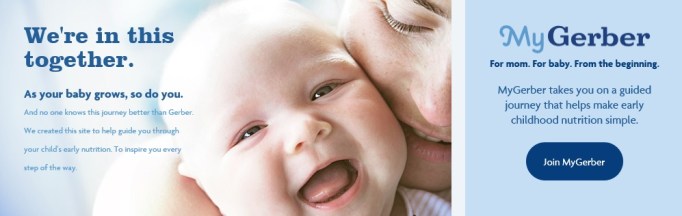
Gerber has an unfortunate history of excluding dads in its direct mail pieces, on its website, and in its My program.  But things could be improving – that looks like a man’s hand feeding the baby on its website.

And a recent magazine actually acknowledges that the featured baby is a “him,” a possible future dad that will eventually be disregarded by the very company using his likeness to sell its products.

It’s another piece of a portfolio that’s confusing and erratic.

gerber4

Just look at the front page of Gerber’s website as it stands today.  If you’re a dad and reading the left side of the page, it exclaims, “We’re in this together.”  But glance to the right and you find a site that indicates it’s only “For mom.”

(sigh)

However, to top it off – at least for our staff – Gerber has blocked us from following its company on Twitter.

Now, Twitter blocking certainly has its place in life, but to prevent one entity from communicating with another?  Why?

The words close-minded and censorship come to mind.

Hey Gerber, we’re only trying to help.  Factual proof created by your very own marketing team indicates you have a practice of excluding dads, and that’s wrong.

Dads buy your products.  Dads care for children.  Dads count too.

We’d love to chat, but it’s kind of hard to do that right now.  Drop us a note.

Just some food for thought.

Marketing to baby must involve dad

hylands1Hyland’s has been making safe and natural homeopathic medicines since 1903, and after a quick look at its latest magazine ad, seems to be rather dad-friendly.  It’s nice to see a dad featured prominently in its ad.

But take a close look and read the copy.  Why doesn’t it speak to dads?

Now glimpse at hylands.com and click on “Calming Tablets,” and you’ll find a similar mom-only reference.

Those are some disappointing dad omissions for an otherwise decent overall marketing approach.  Generally, Hyland’s seems to try to use “parent” references, so these nuggets caught us a little off-guard.

hylands3Hyland’s talks about party invitations here, a symbolic reminder that dads want to be invited to the “party,” too.  They take care of babies and have plenty of choices when it comes to baby care products.  So why should Hyland’s give them a reason to go anywhere else?

Parenting isn’t a mom-only thing, and mom isn’t the lead parent, regardless of what any particular family’s situation may be.  It is the responsibility of both parents to raise a child, and that equality has never been more prevalent than it is today.

The Hyland’s example is an exhortation for any company looking to increase sales:  don’t forget your customers, and they won’t forget you.

Fresh perspective from Baby Brezza

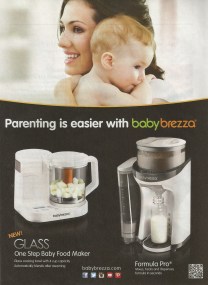
babybrezza1Companies like Similac only wish to target its product to mothers, because unfortunately, it still believes that moms solely handle the reins when it comes to feeding babies.

But then you have different companies like Baby Brezza, who offer a progressive, free-thinking approach to its marketing and advertising.

Check out its latest ad (featured), which uses the inclusive word, “parenting.”

Imagine how different this ad would have looked had it chosen to use the word “mothering” instead of “parenting.”

Even with a photo that only includes mom, by using that complete, all-encompassing term, it makes dads feel like they’re being spoken to – like they count.

Over at babybrezza.com, you’ll find a site that mimics the ad, where uses of parenting abound, just as the testimonials impressively reference non-biased terms such as “families” and “parents.” The videos also include dad feeding baby, and includes a special section “Kitchen Time with Dad.”

It’s no wonder Baby Brezza received awards from Parent Tested Parent Approved and the National Parenting Center.

Keep up the good work, Baby Brezza.

The reports of dad’s death are greatly exaggerated

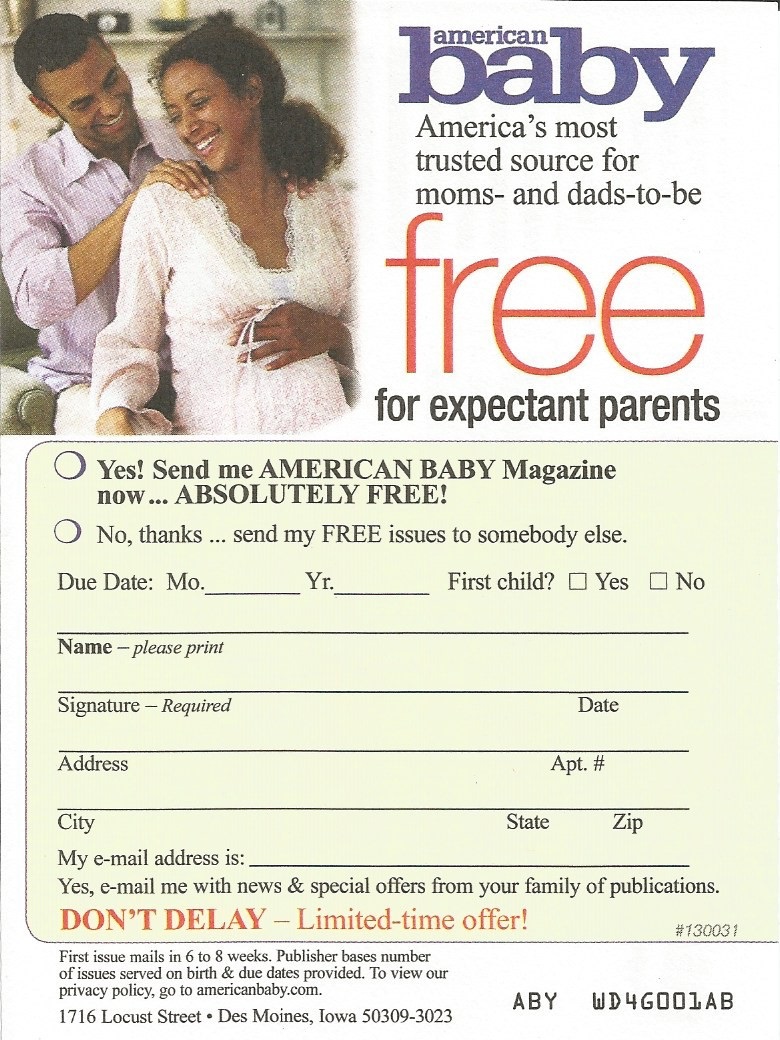
You won’t believe what a certain parents magazine recently said about dads: they exist!americanbabymag6

After numerous stories where we pointed out American Baby magazine’s inability to consider dads as equal parents, it finally conceded to the inevitable reality that dads are indeed part of its customer base.

It was no easy road to get here.

We’ve written about American Baby magazine and its sexist photo credits.

We’ve written about its general monthly editorial content that ignored fathers.

We’ve written about how it doesn’t believe dads are concerned about child safety.

We’ve written how its baby registry advertisement disregards dads.

We’ve written about how it suggests that dads don’t buy baby products.

We’ve written about how it simply pays no attention to dads as parents.

We’ve also heard absolutely no feedback from ABM, nor any attempt to communicate, or even any acknowledgement of our issues.

But the tide is turning, and if you held the latest American Baby magazine by its spine and emptied out those (sometimes annoying) subscription postcards before reading it, you missed the best part. As you can see above, it clearly mentions dads by name, acknowledging that its magazine is for dads to read, too.

Well done, ABM, and we look forward to your next issue with great interest!

Will Folgers treat dads to some conversation?

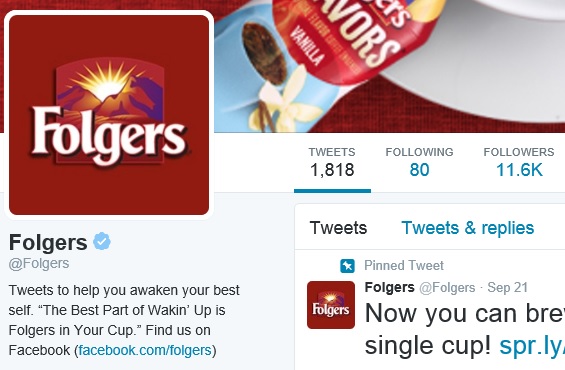
The best part of wakin’ up may be Folgers in your cup, but it’s clearly not the best part when you discover that among the mere 80 Twitter accounts that Folgers follows, only 14 of them appear to be guys/dads.folgers2

The far majority are moms, which leaves us wondering: why?

With over 11,000 followers of its own, it’s a strange enough sight to see Folgers following a meagre 80. That’s the kind of behavior you see among the celebrity types, such as Conan O’Brien, who famously began following one single person – a stranger, no less – back in 2010.

However, coffee is a consumer-driven product which depends on a customer base among an ultra-competitive mix of brand name coffee makers, not to mention modest rivalries among a share of regional favorites, too.

What’s more, coffee isn’t exactly a mom-only thing. Like one of the accounts that Folgers follows, Jif mistakenly believes that only mom handles the shopping. Do birds of a feather flock together? Let’s hope not.

What do you say, Folgers? Are you up for learning more about your true representative customer base? How about listening to some of the words some dads have to say?

After all, it took a few dads to form the company Folgers has become today.  We’ll be watching.

Which insurance company has dads in good hands?

If the basic definition of marketing is “to promote something in order to sell,” then there’s no question as to whom each insurance company presented here is trying to speak.gerber2

One featured ad is actually a direct mail piece from Gerber Life Insurance Company, who for years has been regularly sending this mailer with “See what Moms are saying about…” printed right on the front. And if you’re a dad who has been surprised to receive this in the mail, that’s not the only the only thing Gerber has jumbled; scroll about one-third down here to see another way this piece misfires.

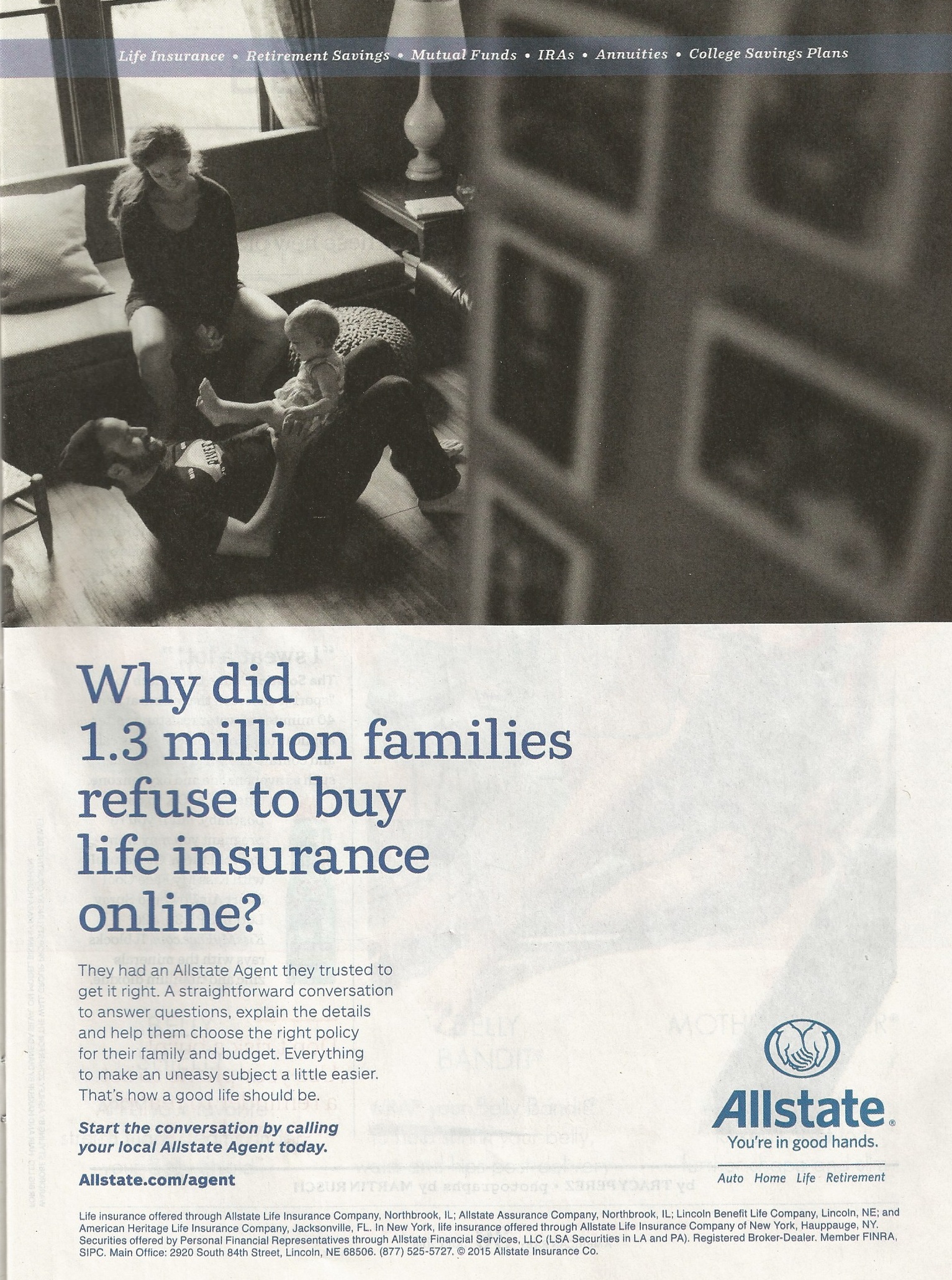
allstate1The other featured is a display ad from Allstate found in the July 2015 American Baby magazine (click to enlarge). It not only addresses all of its potential customers by using the word “families,” but it includes a photo of a family where dad is holding the baby.

So, if you’re a dad and in the market for insurance, or even a college savings plan, where are you more likely to turn? To whom is Gerber and Allstate trying to “promote something in order to sell?”

Allstate’s approach is a positive one. Companies so often follow the supposedly “safe” marketing path, misbelieving that mom is the primary household decision-maker. Allstate knows that the days of “mom-stays-at-home, dad-goes-to-work” are ancient history. Indeed, caring for the family is a responsibility handled by both mom and dad.

Gerber, on the other hand, doesn’t want to change. Keeping an iconic, recognizable logo is a wise marketing move, but ignoring potential customers isn’t. Neither is having a college savings plan that gets dubious reviews.

Ever since our first post about Gerber in January 2014 (and again later in October), it began blocking us on Twitter. It’s the only company we’ve written about who has done so, proving that in Gerber’s world, communication is a one-way street.

Allstate, on the other hand, has won dads over. Dads are in good hands, indeed.

A fine ad, but what’s with Walmart Moms?

mixedsignalsIf you’ve been following this website since the beginning, you know we’ve focused on a variety of ways in which dads are portrayed in marketing, advertising and media.

We’ve featured companies, media channels, sports, entertainment avenues, service organizations, as well as some general ideas of our own.

When it comes to the products we buy and consume every day, it is the retailers who exert immense power. Their prices affect our overall budget. They decide what’s on sale. They decide where it’s placed in the store. They shape our buying habits, and often turn items that “I want” into “I need.”

The retailer at the top of the list, of course, is none other than Walmart. With 4,779 stores nationwide, it’s responsible for $482 billion in annual sales, and no other store comes even close.

When we wrote about Walmart on January 7, we were disappointed by an ad featured in the October 2014 American Baby magazine.

walmart2But now, almost one full year after that magazine ad we discover a change in Walmart’s ways with an advertisement so impressive (featured left), it will no doubt get everyone’s attention in the retailing world. Hopefully it will turn heads and change the way others operate and market their products and services.

Check out this list of the top retailers from last year.  If you’re reading this Kroger, Costco, Target, Home Depot, et al, your friends at Walmart have officially raised the bar.

That doesn’t mean, however, that Walmart is officially the leader in dad-friendly marketing. This ad was a hit, but another part of its portfolio is a clear miss.

That’s because it still insists on offering “Walmart Moms,” a practice that wouldn’t seem so sexist if it offered a dadly counterpart. The old fashioned use of this biased name fosters the misbelief that mom is the lead parent, and dad is merely an assistant.

We call for an end to this chauvinist exercise by renaming the program “Walmart Parents.”

What do you say Walmart?

walmart5Walmart’s approach shows that it’s at odds with its own self. By offering a fantastic ad showing dad in a positive light as an involved parent, and then disregarding dad’s parental abilities through the exclusionary Walmart Mom program, it’s sending mixed signals to dads everywhere.

We’ve debunked the moms are the lead shoppers fallacy so many times over it’s hardly worth doing again, so we’ll let another group do it.

Again, Walmart here offers one quality ad and a fantastic step in the right direction. But as for Walmart Mom, it reminds us of another dad exclusionary marketing campaign that’s taken a beating this year.

Perhaps it’s time for Walmart to be proactive (like the Today Show), rather than reactive, and let dads know that they matter as consumers.

Curing the case of an upset stomach

tummycalm2We came across an interesting approach from Tummy Calm, who at one point was trying to play the “only-moms-take-care-of-kids” card.

Tummy Calm, distributed by TJL Enterprises of Long Beach, CA, is gas relief medicine for children.

The attached graphic appears in its tri-fold brochure, which judging by the tiny print, looks to have been produced in March 2015. (We can’t confirm this for certain, but it seems like a plausible deduction.)

However, over on the front page of its website, we find the word “mommy” removed.

The change is a positive one, as it should come as no surprise (it’s 2015, after all) that a website is a company’s primary communication piece.

But what’s with the sudden change?

Is the brochure targeting a certain segment? That’s conceivable. We came across this piece in a doctor’s office, and we all know that marketers don’t seem to believe that dads can actually transport children to appointments. Either that, or they believe that moms simply adore tri-fold brochures. Or, dads can’t read.

Is it a case of disjointed marketing-speak? That’s always possible. It wouldn’t be the first time we’ve noticed varying approaches – depending on the medium – by products marketed to children.

Could it be that the company is just being inconsistent, and simply forgot to use the word “Mommy” on the website? That’s less probable, especially since there’s unlimited space on the Internet, unlike tri-fold brochures.

Or, did TJL wise up in recent months after reading the latest news at dadmarketing.com?

If so, hats off to a marketing team that stopped exclusionary marketing dead in its tracks and recognized fathers for the work they do.

Keep an eye out for that newly revised brochure at a doctor’s office near you.

Welcome to the ‘hood

similac9Overly drenched in heaping layers of crippling irony is the headline from Similac’s latest display ad (right) which preaches, “There’s no ‘one-formula-fits-all’ for babies, or for parenting, either.”

Calling this marketing-speak odd would be an injustice to the word odd, instantly giving it a meaning never originally intended. It might just make something we all currently agree upon as odd, say, Miley Cyrus’ antics, seem almost girl-next-door normal.

Thus, we here at dadmarketing can’t call this latest advertisement odd. Rather, Similac’s ad proclamation is off-the-charts anomalous.

Here’s why: Similac, by way of its marketing message, slogan and ad copy (below), is saying that only moms are parents, yet its headline (above) tries to tell us something otherwise.

Again, did you notice the slogan from which it can’t seem to let go? “Welcome to the Sisterhood of Motherhood”? There’s nary a dad in the universe who can relate to that, and we’re talking about a product called baby formula, not breastfeeding, nor a feminine item. Dads should be every formula makers’ dream, a sure-fire built-in customer for life, but Similac doesn’t seem to want it that way.

Abbott, makers of Similac, has been touting this exclusionary “Sisterhood/Motherhood” slogan for several months now, and by it saying “there’s no one-parenting-fits all,” it sure seems to want it both ways: mild use of the word “parent” hidden behind its unilateral, sexist slogan.

Besides, check out the exhortation at the end of the ad: why would dads even bother taking Similac up on its invitation to visit Facebook?similac10

Dads aren’t moms!

It’s time to give this old-fashioned slogan a rest, and for Similac to consider that dads just might be part of its customer base, too. It’s no fun for dads to get ignored month after month. It’s campaign preaches a non-judgmental approach, but it has judged dads loud and clear:  they don’t count.

When it comes to taking care of babies, it’s not just a motherhood. It’s also a fatherhood.

And above all, it’s called parenthood.