Marketing holidays differently

It’s Mother’s Day Weekend, and that’s exciting for a lot of us.

No matter your family dynamic in today’s modern world, we all have a mother, whether you know her or knew her — or not. And like Father’s Day, that makes it a day that we can all acknowledge in some way. Truly, these monthly back-to-back, parental-rejoiced days are unlike any other on our calendar.

Think about some other big holidays. Easter isn’t celebrated by all. Neither is Christmas. Even with Independence Day, it’s not like everyone in our melting pot has American citizenship.black&decker.jpg

But Mother’s Day? It doesn’t take having children to make this day meaningful. It’s relevant to every one of us, and few holidays can say that. Regardless whether or not you have a relationship with your mother, the day still has a connection for us all, because we all have a mom that shared with a dad in giving us life.

That’s what makes the marketing of Mother’s Day and Father’s Day so significant. And because they occur in back-to-back months, it makes them easy to compare.

Just yesterday we received an email from Black & Decker (right). The ad doesn’t acknowledge any stereotypes about females or males. It doesn’t feminize with flowers or pink – it’s just an ad geared for Mother’s Day. You’re certain to see something similar for dads when Father’s Day nears.

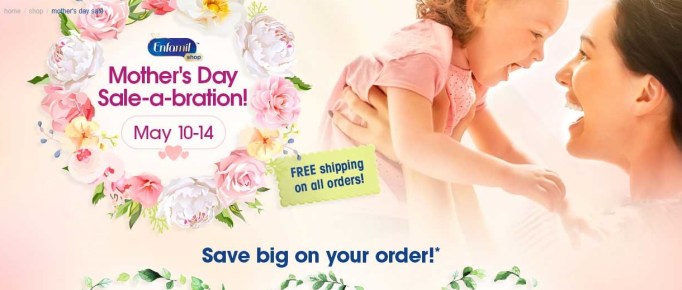
Now look at the Enfamil ad (below). It’s also wonderfully done, but when viewed alongside Black & Decker’s piece, you can’t help but wonder: will there be a comparable ad for men on Father’s Day? Based on our monitoring of formula makers and their past marketing history, chances are you won’t. In fact, it’s doubtful you’ll see anything from Enfamil on Father’s Day.
enfamil3.jpg

Black & Decker sees an opportunity for growth and revenue. It embraces the other half of the consumer population the rest of the world ignores because it knows power tools aren’t just for men. They’re proving that even an industry dominated by one gender can find ways to cash in on the other gender’s purchasing power.

There’s no reason Enfamil can’t do the same.  But will they?  We’ll be watching.

 

Properly reaching dads means using the right photos

Just as words are so crucial to showcasing the active role of today’s dads as true and competent parents in advertisements, so are images – and realistic images say it best. Smart brands should keep in mind authentic representations of dads in marketing. It’s true that those images of dads fishing, hunting, and working on cars are all fair and accurate, but so are those of dads cooking, shopping, and picking kids up from school.dadhug2.jpg

Even better images might be those of dad nurturing, holding, hugging, cuddling, and kissing – all semblances that portray relevance and authenticity of genuine, loving fatherhood. The latter are not just likenesses of what dads should become, nor do they represent a minority of dedicated dads – this is fatherhood today. It’s alive and well in every community around us.

The modern father views himself as skilled and devoted to his household in every facet of family life. He’s not trying to replace mom in the way society perceived him and labeled him as “Mr. Mom.” He is dad and equal parent. He identifies as a parent in the same way a mom does – sympathetic, caring, and wants to have stronger, intimate relationships with his children far more than the stoic, unresponsive dads portrayed in the media.

When marketers demonstrate these emotional bonds and challenges with parenting, it makes instant connections with customers. The need to reach a certain segment must be efficient.

Ignoring dads is never in fashion

It’s one thing to exclude dads by accident, and another to omit them intentionally.

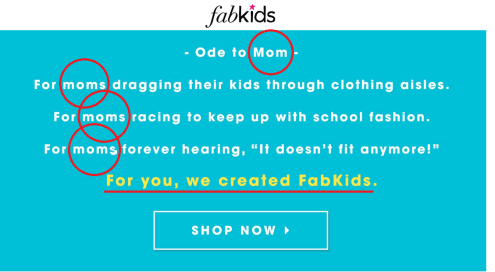
But it’s an entirely different ballgame when a company tells the world it wasn’t even created for dads, nor intended for them. Never mind the fact that the product it sells is children’s clothing, which has nothing to do exclusively with motherhood. Dads are certainly capable of shopping. Dads care how their kids look.fabkids.png

So what gives?

FabKids was created in 2011 to offer stylish clothing, good selection and competitive pricing. Its Twitter page promises you’ll spend less by skipping the mall and shopping with them.

Yet if you’re a dad who wants to purchase its products for your kids, FabKids apparently doesn’t want you as a customer. Don’t believe us? It says so right on its about page under “Ode to Mom.” There you’ll find a cute message to which moms can relate – but so can dads. In reality, it’s an “Ode to Parents” that regrettably alienates dads right from the start.

You’ll also find confirmation of this on its customer satisfaction page which proclaims, “FabKids was created to help busy moms shop for kids,” not to mention one-sided testimonials from the “Let’s hear it from the moms” section.

All of it sends a contradictory message when you scan further, because FabKids seems to want it both ways. It insists FabKids is only for moms, but professes to be progressive by “revolutionizing the shopping experience” and for all parents on other pages.

  • From its front page: “Kids shopping designed for the modern family.”
  • From its how it works page: “Become a VIP (Very Impressive Parent)” and “Hear it from our customers.”

Judging by the FabKids team photo, the company seems to employ a fair number of fabkids2.pngmales. It’s hard to guess why these men haven’t stepped up and made a swift change to stamp out the overall exclusion, but let’s hope someone will. Dads matter to today’s modern families, and they’re not only equal, competent parents, but valuable shoppers in today’s online world.
FabKids also utilizes the faces of many boys to sell its products, boys who will likely one day become dads. Let’s hope they’re not being used today, only to become ignored later by the very company they represent.

To become a truly global, meaningful brand, it can’t continue this trend of ignoring fathers. How about it, FabKids?


All things being equal, some campaigns aren’t

There’s a lot of talk about equality these days, and with good reason. Exclusion is on the rise. People are being left out. Groups are ignored.p&g11.jpg

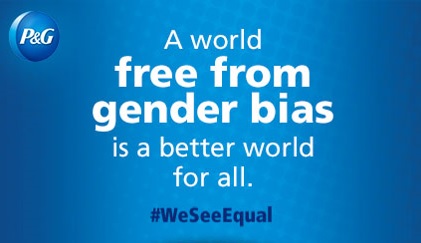
It’s no wonder that the mega, multi-national consumer goods corporation P&G started a #WeSeeEqual campaign, a push well-timed in today’s society of #MeToo and #TimesUp.

The campaign aims for a world free of gender bias that offers equal representation and voices for both women and men. It’s a powerful message that deserves praise and attention. Frankly, it’s hard to argue with or dispute any of its pleas. You can debate a lot of things in life, but equality isn’t one of them – it’s necessary and needed in a world filled with exclusion.

p&g8.jpgBut the campaign runs a bit contradictory when compared to another P&G effort, “Thank You Mom,” which resurfaces during each Olympics, as it did again during last month’s Winter Games. In it, we see an effort aimed at celebrating just one half of the parenting duo.
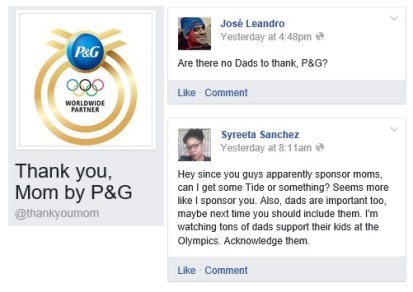
It’s one thing to market to a certain segment – as it’s doing with the “Mom” promotion – but another to want it both ways, as P&G emphatically implores us that “a world free from gender bias is a better world for all.”

Imagine what sports-loving dads were thinking when they watched regular nightly exclusion during the 17-day PyeongChang Games, as only mothers were thanked for helping athletes achieve their dreams. Meanwhile, these same dads would simultaneously encounter the #WeSeeEqual declaration, and another occasional P&G effort, #LoveOverBias – both exhorting humanity to treat everyone equally. Everyone, that is, except customers.p&g3.jpg

These conflicting messages aren’t just confusing, they’re actually illogical; it’s impossible to pair the word “equality” with brands that concurrently exclude fathers, but P&G has indeed done the impossible.

Media writers have praised the effort of #WeSeeEqual – and rightly so. On its own, it’s an incredibly commendable campaign and well-executed. But there’s no denying the mixed message it sends to dads and the parenting community.

If equality is going to mean something, the corporate world needs a genuine effort with a real, authentic backing – in word and in deed.

Otherwise a company is just selling products on a shelf, not a mission.

Is NUK failing dads?

If you’ve ever brought a child into the world, chances are you’ve used NUK products. Whether it’s bottles, teethers or tableware, NUK is easy to be found in the childcare world.nuk2.jpg

Yet for a company that’s been around for almost 60 years, NUK doesn’t appear to be listening to its customer base.

That’s because its marketing team has positioned its business as one of the more dad exclusionary companies around. On its website – nuk-usa.com – you’ll find repeated instances of an unrepresentative approach:

  • A trademarked “You’ve nuk3.pngGot This” slogan which offers wonderful parental assurance, but only for mom. Observe its one-sided slogan description: “Congratulations, mom! You just did the amazing and brought a beautiful baby into the world.” Wording like this ignores the indisputable fact that dad also just did the amazing and brought a beautiful baby into the world.
  • There you can also view a brief, inspirational video that expands on the “You’ve Got This” notion by not only repeatedly speaking to mom in name, but forgets to include even one moment of footage of a father in action.
  • NUK employs use of the exclusionary hashtag #NUKMoms.nuk4.jpg
  • It offers the “More for Moms Rewards Program.” And just in case you missed the program’s logo on the front page, there’s a box on the bottom right corner of nearly every page offering “Exclusive Savings Just for Mom.”

Interestingly, if not predictable, you won’t find a single image of a dad anywhere on its site, nor on social media. That’s where unquestionable irony sinks in. There are numerous cute faces of male babies and young boys used to sell NUK products. But then consider how those same faces will be ignored by the very company they represent once they become fathers later in life.

Its Twitter feed reinforces the notion that moms are its intended audience by insisting, “With some patience, creativity and expertly engineered products from NUK®, you can nuk.jpgtackle this mom thing.”

Imagine you’re a dad and reading, “…you can tackle this mom thing.”

If there were any further doubt as to whom it wants as customers, NUK seals the deal on its About Us page by declaring, “And we listen to the real world experts – moms just like you – to meet and exceed your needs.”

Dad knows what he’s doing every bit as mom. In today’s online shopping world where customers are sometimes only known by credit card numbers, it’s time that NUK takes a moment to embrace the other parent who knows a thing or two about nurturing.

McDonald’s ‘Playdate’ commercial plays with old dad stereotype

Can this really be what McDonald’s thinks of today’s modern father?mcdonalds2.png

In one of its latest ads, an “in over (his) head” dad apparently can’t handle a sleepover, nor manage to feed the girls while his wife is out of town — so he visits a McDonald’s.

Judging by reaction from dads on social media, the ad sends not only a message of insensitivity to fathers who supposedly can’t handle children nor prepare food, but it also inadvertently tells moms they’re the primary cooks in the home.

It’s another controversial approach for the fast food giant fresh off the heels of a similar contentious ad also involving fatherhood. Last May, it pulled a United Kingdom commercial after backlash from viewers who insisted it was insensitive to grief-stricken kids. In the ad, a grieving son hears how he and his late father shared a love of Filet-O-Fish sandwiches. McDonald’s promptly removed the ad after 150 people complained.

An email inquiry to the McDonald’s Media Relations Office went unreturned.

In today’s modern world where advertisers are increasingly evolving past “choosy moms” and “mother-approved” slogans, McDonald’s latest message trends backward.

Can’t dad handle a fun sleepover involving five adorably cute girls? Can’t dad manage to feed these girls without his wife being present? Is it necessary that dad needs to call his wife? What message does this ad send to all parents — that moms can be working women as long as they still maintain control at home?

Put another way, would McDonald’s ever run a similar ad with the roles reversed? Imagine the scenario:  a woman realizes she’s in way over her head when her daughter has four friends over for a sleepover and her husband is out of town, which means she has to feed and entertain a group of hyper little girls.

It’s highly unlikely that McDonald’s would go this route.

And that’s the moment you realize an old, timeworn, unfair stereotype has been employed — and you’ve insulted fathers (also your customers) everywhere.

It’s time for change, McDonald’s. Dads deserve better.

Waiting for Fisher-Price to acknowledge dads

For many Christians, the four-week Advent season is time of expectant waiting and preparation for Christmas. The strong emphasis on waiting is similar to how Jesus’ parents – Mary and Joseph – waited for their child to be born, which is, of course, fully comparable to any parent today waiting on the birth of a child.

Waiting isn’t always fun, but that’s exactly what dads have been doing for several Christmases now, and it has nothing to do with pregnancy. They’re waiting for Fisher-Price to acknowledge them as equal parents and users of their products.

It’s at the Fisher-Price website where it showcases a video (scroll about halfway down) undermining dad as not only a parent, but also as a customer – a cardinal sin of any business.

fisherprice1.jpg

The video warmly thanks moms for choosing Fisher-Price as the most loved and trusted brand — a wonderful gesture — yet Fisher-Price happens to forget someone. Awkwardly enough, the video highlights two fathers during its one minute montage.

All of it is like being at a party where the host only greets and speaks with the wife, not the husband.fisherprice4.jpg

But equally surprising is that this video was based on a 2015 survey, which begs two immediate questions:

  1. Why survey only moms? In today’s dual-income, online shopping world, dads have a major impact on the state of today’s retail industry. Modern families have progressed to the point that it’s not just mom spending the family’s income – it’s dad, too. In addition, statistics prove that holiday shopping is consistently shared by both parents who want to have equal input on gift buying.
  2. Why has this video remained active for two years? That’s a long time for Fisher-Price to thank only one-half of its customers and ignore the rest, especially when we’ve tweeted them several times over the years, with no response.

Unfortunately, the video isn’t the only exclusion Fisher-Price exhibits. Its online commerce store remains consistent in ignoring fathers as important nurturers and members of the family (photo right).fisherprice2.jpg

Fisher-Price was founded by three individuals, two of whom were men, and together devised a mission to “keep enriching the lives of young families.”

If they’d like to honor their past and fulfill that mission, perhaps Fisher-Price could make a quick revision and respect the many breadwinners whose income went toward the purchase of a Fisher-Price product.

Dads have waited long enough. It’s time for change.

Milking an old stereotype for all it’s not worth

Whenever dads are used in commercials, they’re often portrayed as comic fodder: goofy, bumbling, inept, clumsy. The dad joke isn’t just something humorous your father once said – he is the joke. We’re not laughing with him – we’re laughing at him.

realcaliforniamilk2.png

The California Milk Advisory Board recently featured dad in a TV spot, and while he’s not the butt of jokes, its marketing decides to take a different approach. Here they attempt to offer dad props, but it turns out to be nothing more than backhanded praise with an open belief that mom is the real, primary parent.

You’ll be surprised at how many insults can be leveled toward dad in this 30-second ad.realcaliforniamilk

“Welcome to Saturday,” the ad’s voiceover slowly declares. “Sure, mom does all the heavy lifting during the week, but on this day dad makes flapjacks dripping with hot, melting California butter. And somehow dad’s the MVP: Most Valuable Parent. It’s just not fair.”

A gaggle of kids then scoot by with assurance: “Love you mom.”

Let’s look at the script piece-by-piece.

“…mom does all the heavy lifting during the week…” – Really? All the heavy lifting? In today’s modern dual-income families, don’t dads contribute a little more than the old-fashioned stereotypes of the ‘50s? Besides, why discount dad’s role as a breadwinner that provides for the family? Whether you’re stay-at-home or employed outside the home, both roles are equally important no matter the gender.

“…somehow dad’s the MVP…” – Did the ad just say “somehow,” as if to imply it was a fluke that he could be equally, competent and valuable to a family as a mom? Let’s stop keeping score as if parenting and/or housework is an equal 50-50 split. That’s a fallacy, and completely unfair to the spouse who works outside the home to provide. This kind of talk only creates a parenting divide.

“It’s just not fair” – This line might be the kicker of them all. Is it not fair that dad could possibly be an equal parent? It’s as if the California Milk Advisory Board is afraid they might have offended moms, so they have to offer assurance by way of the kids declaring, “Don’t worry, we still love you mom.”

Two other factors are at play in this ad. One is that you never actually see dad’s face. Granted, the food is the real star, but the child’s smile was shown. Couldn’t there have been better acknowledgment of dad, perhaps by showing the same warm grin on his face?

What’s more, the ad closes by declaring that its milk is delivered “from our family farms to your table.” Family includes everyone – even dad – and isn’t it ironic that the very people who deliver this product have been discounted by the product it represents?

If some company told women they don’t know about sports, home repair or cars, they’d be considered sexist. There’d be public uproar. And all of it would be justified.

But when another says that dad doesn’t do as much as mom, he’s not as valuable to a family as mom and he’s simply not an equal parent – we’re good?

Spilling drinks on dads

As a national voice for the non-alcoholic beverage industry, the American Beverage Association (ABA) sure doesn’t seem to represent the national voice.

Founded in 1919, this trade organization includes producers and bottlers of soft drinks, bottled water and other non-alcoholic beverages. Unless you’re a sports history fan, you may not recognize the ABA acronym, but you know some of the drinks it represents: Pepsi, Coca-Cola, Dr. Pepper.

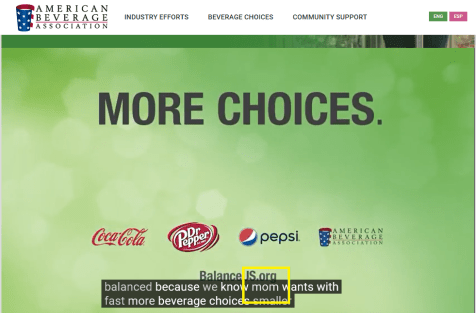
These major brands appear in a commercial together – that’s right, together – to help tout how the ABA is offering more drinks with less sugar and smaller portions.americanbeverage2.png

Only a message as important as this could help competing brands join forces for a greater cause. That greater cause, of course, is selling more drinks. However, that’s still a tough sell for soda makers who regularly come under fire for contributing to America’s obesity and overall health problems — items of concern to parents everywhere.

So who does the ABA enlist as a voice of reason in its ad?

Not both parents, who in today’s modern world share influence over their kids’ nutrition. Instead, they tout only mom as the one who watches everyone’s diet. That national voice should include dads if that’s indeed what the ABA represents.

Instead, the 30-second ad remains stuck in time and saddled by old-fashioned stereotypes that undermine fathers as equal, competent parents while the narrator explains:

“Everyone’s gotta listen to mom when it comes to reducing the sugar in your family’s diet…because we know mom wants what’s best.”

The ABA’s work is important, and their message is vital to winning back customers for its members. But ignoring the contribution of dads to families is an unfortunate oversight for these major drink manufacturers and its lobbying group. Again, dads are very much part of the national voice.americanbeverage1.png

There’s simply no reason to suggest that dads aren’t involved in raising children and taking care of families. Besides, it offers an incredible disservice to mom by heaping all of this responsibility on her shoulders while indirectly implying that a mom’s place is in the kitchen.

Its leadership owes parents a swift apology. Modern families want new choices when it comes to drinks, accompanied by equally progressive ads they represent. They also want to be treated like valued customers. To be sure, the topic affects both parents, not just moms.

A change in approach for these beverages will signal a refreshing, new era that appeals to everyone — and everyone certainly includes fathers.

Parental equality made easy

Dads are often told they’re inadequate in varied ways. They didn’t do the diaper correctly. They didn’t fold the laundry properly. The dishwasher wasn’t loaded right. And of course, the ever-popular dads don’t know how to cook.

Deep down, we all know this is absurd. When dads are “corrected” for doing things wrong, that’s unfair because they didn’t do it wrong; they may have done it different, but different isn’t necessarily wrong.

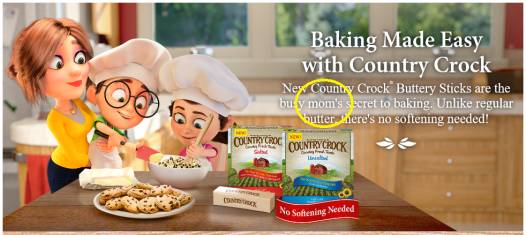
So now we have Unilever, the world’s largest consumer goods company and operator of Country Crock, telling us not countrycrock1.pngonly that dads can’t bake, but can’t even handle easy baking.

It’s true that home cooking is more often associated with women than men, but that doesn’t mean companies should exclude dads. If anything, there’s a missed opportunity to covet an untapped market. Companies would be wise to target fathers just the same.

Via stereotypes and old fashioned attitudes, home repair is more connected with men than women, but Lowe’s regularly employs women in its marketing. There’s not a single female player in the NFL, but the league still spends millions trying to reach women and moms. Harley-Davidson has benefited greatly by pursuing female customers.

Couldn’t the rest of the marketing world learn from these success stories and apply them to fathers?

Ironically, in the culinary world, professional, high-status cooking is a male-dominated sport. According to Ann Cooper, author of “A Woman’s Place Is in the Kitchen: The Evolution of Women Chefs,” 55 percent of people working in the culinary industry are men.

The dads can’t cook myth also does an equal disservice to women by inferring that a mother’s place is in the kitchen. The reality is that it’s really not that hard to follow a recipe. Yet countless food manufacturers refuse to include dad on their websites, in promotions, or on commercials. Even micro meals — arguably the easiest food prep of all — don’t speak to fathers.

countrycrock2.jpgWe implore Unilever and Country Crock to take a strong look at how dads are treated and used in their marketing. Now is the time for its creative agency to view dads with a clean slate by erasing all the myths and misguided labels, which drag fathers down from being viewed as equal and adept parents.

Companies who’d like to increase revenue and brand loyalty need to implement a different marketing strategy if they want to reach dads.

Women will never be treated with equality in the workforce until we start to treat dads the same at home. The two are intertwined. Exhibiting a gender bias in both is wrong, but the good news is that it’s fairly quick and easy to start making website edits. The rest of the company culture will follow and positively affect its other family of products.

You can make that happen today, Unilever. Families are watching.