The case for marketing to dads

Marketing to dads is a way to motivate and challenge dads to create a higher standard of parenting involvement with their children.

As the expectations for greater parental involvement increases in professional and personal lives, dads will also spend more time with children. A prime example is the participation in dads’ clubs. Dad’s involvement at school does not diminish productivity and/or quality of work at the dads’ place of employment. A happy dad makes for a more productive and happy employee.

affection-children-dad-1470109.jpg

A dad’s involvement also means less time that children remain supervised by a television, video game, or worse, surfing the Internet alone. Instead it means more time in the care of a dad who loves them.

The truth is that the current generation of children are the future business professionals who will champion marketing messages, journalists who will shape our attitudes, teachers who will instruct the next generation, doctors who will perform surgeries years from now, and leaders who will be voted upon someday. These children will more than likely also become parents. This makes this task of marketing to dads both very public and very necessary to building stronger families. And today’s generation of parents are their role models!

The case can be made that our very health depends on it, too. Health and wellness begins with parents at the birth of their children. When health care professionals consider dads as equal parents, they allow dads to get even more immersed in their child’s well-being. This could be as simple as calling dads by name in waiting rooms, speaking to and making eye contact with dads in appointments, or reminder calls that address both parents. It could also mean that companies allow employees greater flexibility for both parents to simply attend child well-check visits.

The overall parenting community itself also stands to benefit greatly by including dads in marketing. Rather than pitting one parent’s expertise as superior to another, parents will see each other as allies and not as adversaries who are competing with one another. Dads won’t feel like outsiders, and that improved unity means everyone will work together more effectively and learn from one another. Unity between moms and dads will also help online parenting websites expand and deepen their discussions about store brands, schooling, medicine, nutrition, or simply seeking general parenting advice.

It’s a positive sign when moms and dads work to build greater unity and more cohesive parenting – and it will leave a better parenting legacy for children.

Don’t formula makers realize that dads feed babies, too?

No matter how often we view it, it’s always a surprise to see formula makers ignore dads as equal parents. Dads can’t physically breastfeed, but they certainly can formula feed. And they buy formula. A lot of it.

enfamil5

As such, one would think dads should be huge targets for laser-focused marketing that capitalizes on the influence of fathers and formula feeding. Dads could be the primary ambassadors for a product that formula makers could woo in order to assist them in promoting healthy formula feeding.

Nope. Almost every formula manufacturer still disregards dads as parents who feed babies. Take a look at the site revamp of Enfamil, where you’ll find a bit of irony on its Better Together page.

First, it exclaims: “The world outside is full of things that divide us.” Yep, things like websites — and marketing campaigns, hashtags, imagery and menu tabs. In fact, there isn’t much to find that’s inviting on its site for fathers looking for content about the products they’re using to feed their children.

Second, it indicates that “…we are raising the next generation of extraordinary men and women.” Also true. But these eventual extraordinary men will be disregarded upon becoming dads by the very company that celebrates them.

Third, it speaks of “uniting” throughout its website. Um, right. Most of it looks like a divide. Dads are creating, expecting, growing, feeding and nurturing babies every bit as moms, but you wouldn’t know that by looking at the Enfamil site.

Perhaps Enfamil could invite some of its paying customers to talk about their experiences as parents.

Enfamil won’t have to look far. Those customers are the same ones who get up in the night and take on feedings whenever needed. They’re the ones who read nutrition labels and care about exactly what they’re feeding their children. They’re the ones who want support and want to share it. They’re the ones who work at a job that helps to pay for the formula.

They’re dads.

Marketing innovation starts with acknowledging the modern world

Company evolution and innovation is the hallmark of any successful operation, but such progress is muffled when weighed down by a tagline that harkens to a bygone era. While companies create slogans to market their products, many remain convinced that dads haven’t changed, and so the simple solution is to keep the communication the same. dadcooks.jpg

The message never changes.

Therein lies the problem: society has changed and today’s dad is an involved consumer like never before. More importantly, he’s an active parent. With that brings a vocational conviction that stretches beyond serving merely as a breadwinner and secondary parent. Dad is an equal family player and meaningful parent in every way, shape, form and instinct – every bit as mom.

As a result, the consequences of ignoring dad as an equal and competent parent are catching up to the corporate world. While competitors offer new brands that speak to evolving and discriminating purchasers, companies are realizing that they cannot rest on the laurels of past success and generations of loyal customers. Customers are changing, both in terms of age and demographics. It’s clearly a different ballgame now, and a failure to keep up with today’s modern parenting realm means a loss of precious revenue and market share.

There are also unintended negative effects on the matron targets of current corporate campaigns. The harm here is that it places unwanted pressure on mom, who of course is now increasingly found in the workforce. No, she doesn’t want to have to place her stamp of approval on everything. She doesn’t want to be the sole decision-maker, nor does she want to be forced into the habit of thinking that becoming a better mom involves choosing the proper peanut butter.

While the 1950s mom ran the household almost entirely alone as dad provided the monetary support, the world is different now. Today, mom has a balanced counterpart in the parental world. Neither is in the lead or usurps the other.

This person, of course, is dad.

Another consequence of ignoring dad in marketing is not only the degradation of fatherhood, but also motherhood and parenthood. Continuing to portray dads as incompetent shoppers, substitute parents for moms, or part-time sidekicks is an insult to moms. It questions the mom’s choice she made to become a professional woman. It’s she who desires to focus on providing the best for her family and reach her utmost career potential instead of staying at home with the kids. It also belittles her decision to marry the man she chose to be her husband and father of their children. No matter how you add it up, the commutative law of addition still yields the same result. Motherhood + fatherhood or fatherhood + motherhood – both equal parenthood.

The good news is company and marketing executives have the power to change how they view dads as parents, as well as consumers of products and services. Even better news is that dads continue to be an evolving and growing target market.

An open letter to dads – the problem with influencer marketing

Back in the spring – March 7 to be exact – National Cereal Day was celebrated from sea to shining sea.

OK, that’s exaggerating. Our entire nation didn’t honor it. It was largely done so by Twitter users. And it’s not really National Cereal Day, it’s more like #NationalCerealDay.

These aren’t real holidays – they’re hollowdays – they’re empty, there’s not much to them. They’re days often set up by marketers to help sell industries or products, and they’re primarily celebrated only on social media. If your workplace, school, or home isn’t really celebrating and you’re spending more time tweeting about it than actually observing it, then it’s a hollowday.kix9.jpg

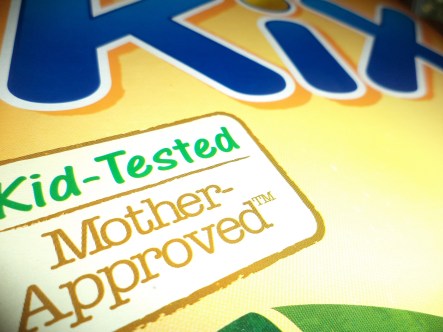
Still, they serve a purpose and can be a lot of fun on social media. We sometimes join in the fun ourselves. And while this obscure cereal occasion was celebrated, we noticed a disturbing trend: dads advertising for companies like General Mills and Kellogg’s, companies who have a regular history of ignoring fathers through slogans, general marketing and even on cereal boxes.

So why would dads plug a company that doesn’t place value in them?

Who’s an influencer?

Influencer marketing can be powerful and it certainly has its place. We all know how it works: companies identify individual “influential” people – rather than a certain market – and intentionally use those people by controlling the content of their blog stories, testimonials, social media posts and photos.frostedminiwheats2.jpg

These companies are asking those people to purposely write about a brand in order to exert influence over possible buyers. Along the way those influencers gain income, kickbacks and plenty of attention – that is, adulation in the form of likes/follows. It’s true that all of it can result in an inflated ego, but welcome to the world of influencers.

Is influencing always what it seems?

At the same time, influencer marketing can also offer deceit. It’s common practice for influencers (though, not all) to buy followers that represent bots to make profiles appear more impressive. Most people don’t buy it, but interestingly, a lot of companies overlook it all in the name of numbers.

Some influencers have real followers and they worked hard to gain every one of them. So, it’s easy to see that dad bloggers have sway more than ever before, but with great power comes great responsibility.

If dads want to be recognized as fully competent parents and equal to their parental counterparts in the world of influencing, spending, retail and commerce, know this: they’re contributing to the problem.

Dads can’t be supporting dad-unfriendly companies in the name of freebies, likes, media attention, more followers, or even in the name of fun. That’s called selling out.cheerios.jpg

If you’re a dad helping to promote, say, General Mills, have you thought about what you’re helping to endorse? Some of its brands, for example, continue to ignore and discount you with exclusionary messages and slogans stamped on the front of every box.

So when you plug these companies, you’re offering a stamp of approval to what they do – and that’s wrong.

Self-respect is key

If men truly want to be valued as prime influencers and be treated equally everywhere they go online and in person — schools, doctor offices and even by the children in their own homes — it’s time to speak up and take a stand.quakeroats3.jpg

All of those goodies, swag and likes aren’t worth it if they’re feeding the monster. Those companies who disregard fatherhood will continue to get away with exclusion and won’t value true purchasing and parental power if influencers give in.

Being an influencer carries weight, and if dads really want to influence someone, stand up and speak out. Tell them that not all parents are moms. Tell them that you matter as a parent and a customer. Hollowdays aren’t worth it.


Properly reaching dads means using the right photos

Just as words are so crucial to showcasing the active role of today’s dads as true and competent parents in advertisements, so are images – and realistic images say it best. Smart brands should keep in mind authentic representations of dads in marketing. It’s true that those images of dads fishing, hunting, and working on cars are all fair and accurate, but so are those of dads cooking, shopping, and picking kids up from school.dadhug2.jpg

Even better images might be those of dad nurturing, holding, hugging, cuddling, and kissing – all semblances that portray relevance and authenticity of genuine, loving fatherhood. The latter are not just likenesses of what dads should become, nor do they represent a minority of dedicated dads – this is fatherhood today. It’s alive and well in every community around us.

The modern father views himself as skilled and devoted to his household in every facet of family life. He’s not trying to replace mom in the way society perceived him and labeled him as “Mr. Mom.” He is dad and equal parent. He identifies as a parent in the same way a mom does – sympathetic, caring, and wants to have stronger, intimate relationships with his children far more than the stoic, unresponsive dads portrayed in the media.

When marketers demonstrate these emotional bonds and challenges with parenting, it makes instant connections with customers. The need to reach a certain segment must be efficient.

Parental equality made easy

Dads are often told they’re inadequate in varied ways. They didn’t do the diaper correctly. They didn’t fold the laundry properly. The dishwasher wasn’t loaded right. And of course, the ever-popular dads don’t know how to cook.

Deep down, we all know this is absurd. When dads are “corrected” for doing things wrong, that’s unfair because they didn’t do it wrong; they may have done it different, but different isn’t necessarily wrong.

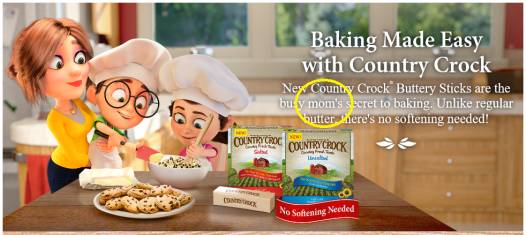
So now we have Unilever, the world’s largest consumer goods company and operator of Country Crock, telling us not countrycrock1.pngonly that dads can’t bake, but can’t even handle easy baking.

It’s true that home cooking is more often associated with women than men, but that doesn’t mean companies should exclude dads. If anything, there’s a missed opportunity to covet an untapped market. Companies would be wise to target fathers just the same.

Via stereotypes and old fashioned attitudes, home repair is more connected with men than women, but Lowe’s regularly employs women in its marketing. There’s not a single female player in the NFL, but the league still spends millions trying to reach women and moms. Harley-Davidson has benefited greatly by pursuing female customers.

Couldn’t the rest of the marketing world learn from these success stories and apply them to fathers?

Ironically, in the culinary world, professional, high-status cooking is a male-dominated sport. According to Ann Cooper, author of “A Woman’s Place Is in the Kitchen: The Evolution of Women Chefs,” 55 percent of people working in the culinary industry are men.

The dads can’t cook myth also does an equal disservice to women by inferring that a mother’s place is in the kitchen. The reality is that it’s really not that hard to follow a recipe. Yet countless food manufacturers refuse to include dad on their websites, in promotions, or on commercials. Even micro meals — arguably the easiest food prep of all — don’t speak to fathers.

countrycrock2.jpgWe implore Unilever and Country Crock to take a strong look at how dads are treated and used in their marketing. Now is the time for its creative agency to view dads with a clean slate by erasing all the myths and misguided labels, which drag fathers down from being viewed as equal and adept parents.

Companies who’d like to increase revenue and brand loyalty need to implement a different marketing strategy if they want to reach dads.

Women will never be treated with equality in the workforce until we start to treat dads the same at home. The two are intertwined. Exhibiting a gender bias in both is wrong, but the good news is that it’s fairly quick and easy to start making website edits. The rest of the company culture will follow and positively affect its other family of products.

You can make that happen today, Unilever. Families are watching.

Let’s stop telling dads they’re not parents

A clear shortcoming of excluding dads from marketing is how it diminishes his ability as a capable consumer.dadshops6

Of course, moms possess no more instinctual ability to purchase items than dads, who are fully fit shoppers. The current message and stigma about dads, however, has trained us to think otherwise. It’s that same messaging that influences moms while they shop on their own. It’s curious to contemplate that while some people believe everything outside the home is a man’s world, the marketing community firmly believes otherwise when constructing messages in relation to everything inside the home.

With all of the emotion, empowerment, and authenticity of advertising directed toward mothers, how constructive are advertisements which speak only to them?

armandhammer1.jpgIn other words, is society really taking mothers seriously when all the focus is placed on them to the exclusion of fathers? Do mothers really want this heap of responsibility when scores of moms incessantly plead for help in the home and caring for children? Do mothers really want it all, as ads so often suggest: motherhood, career, and control of the household and family? Is it fair to portray women solely as happy homemakers in half of the ads and as sex objects in the other half?

Viewed collectively, these ads seem to be at odds with how women are regarded in society and inadvertently places unwanted labels on them.

The subjective conception of such marketing means that women pay a price beyond labels and undesirable pressure.

Humanity will never achieve overall equality for women, particularly at work, until the same equality for men is achieved as parents. The two are intertwined.

When gender stereotypes unfairly discount men as true parents and view women as instinctual caretakers of children, it conveys a message that it’s a man’s world everywhere but home.

Start spreading the news

Ever since Dad Marketing was founded, we’ve always preached that it’s both the mom and dad who are expecting, not just mom. newyorkbabyshow2.jpg

That might sound strange to some, not just because it’s women who physically carry children, but it’s also because of the way media and marketing shape our thoughts. They’ve conditioned us via advertising imagery and word choice that moms are primary parents:

“More Moms choose the Similac Brand.”
“Thank You Mom by P&G.”
“Moms around the world trust Johnson’s to safely care for their babies.
“See what Moms are saying about the Gerber Grow-Up Plan.”

These words are prominent messages in the public eye telling us that moms are the full-time parents, and dad is merely a part-time helper, at best.

newyorkbabyshow.pngAnd yet, every so often we encounter an organization who Gets It, who realizes that dads matter every bit to the parenting world as moms – and the idea speaks to dads, and markets to them, and listens to them. Suddenly, dads matter and are valued as true parents and customers.

We offer our highest Seal of Approval to the New York Baby Show, who fully acknowledges dads as equal parents. There they exclaim that “parents” are expecting, not just mom.

Keep up the good work New York Baby Show. People notice your inclusion, and someday, everyone will want to be a part of it.

Seahorse of a different color

Every good invention is born out of necessity.

So when Don Hudson created Seahorses – America’s first and only retail store geared toward fathers – nothing surprised him about the process, his concept and its need. What surprised him was that no one had ever thought of it before.seahorses4.JPG

“That’s what blows my mind,” he said. “That no one has done this before. How am I the first? That no one noticed this huge, gaping market before?”

That huge, gaping market – as Hudson knows all too well – belongs to dads.

“When you market to that dad like he’s a mom, you build up a wall,” said Hudson. “He doesn’t want to talk to you.”

Yet every bit an equal parent who nurtures, raises, feeds, shops and provides for his family, dad remains ignored by marketers who either don’t know how to reach him, or purposely avoid his presence based on habit. Old fashioned stereotypes and labels may die hard in the world of marketing and media, but it’s ancient history at Seahorses in Portland, Ore., where Hudson’s progressive shop has skyrocketed to notoriety since opening in June 2015.seahorses1.JPG

His shop celebrates the unique needs and challenges of parenting as a father in a world that traditionally caters to mothers.

What makes men uncomfortable in stores? Not having products with which they can’t relate as fathers. At Seahorses, you’ll find plenty of baby, child and parental items necessary for raising a family – but with an eye on dads.

So while big box baby stores have nursing equipment, Seahorses offers Leatherman multitools and shaving kits. Traditionally diaper bags are frilly and pink; no dads want to carry those, and some moms don’t either. Hudson curated diaper bags that are masculine and stylish enough for fathers to sport. Other baby stores offer organic clothing, but dads don’t care about that; they want things to last. So, Seahorses offers Carhartt kids clothing. No maternity tops here – try matching dad and child shirts.

seahorses6.jpgA lack of those items meaningful to fathers, combined with a prejudice toward dads, is what drove Hudson to bring his idea to fruition. He experiences a bias all too often while together with his wife, raising their four children.

“Dads are (treated like) a sideline parent, and they are not marketed to,” he said. “And let me tell you, I did all the shopping when I was stay-at-home. When you walk in to these baby stores, they’d say, ‘What did mom send you in for? Where’s her list?’ It’s a turn off. Has no one noticed that dads are being alienated? You’re creating a subconscious culture of bias toward dads.”

His store even reaches beyond tangible products and the overall shopping experience by serving as equal part gathering space. There you’ll find an enclosed play space with seating, free Wi-Fi and a community meeting area for classes, workshops and events. And there’s even free coffee.

“It’s a space for anybody,” Hudson said. “The idea is that it’s more of an atmosphere that’s comfortable for dads. I have darker wood and subdued colors. It’s a masculine and man-cavey kind of feel so you’re like, ‘This is a baby store, but it’s for dads.’”seahorses2.JPG

Hudson assures his store is for both moms and dads, and gets plenty of customers of each, along with some hesitancy. Moms sheepishly ask if they can come in, while dads’ tendency leans toward tentative, mostly due in part to other store experiences, but also because of how they’re treated as second-class parents in stores of any kind.

“(Dads) come in and look around and say, ‘This is really cool; this is my place,’” Hudson said. “You can see this weight melt off of them when they walk halfway through the store.”

Hudson gets a lot of dads and moms who come in to hang out, work on their blog or social media, or just want a simple five-minute break. His intimate, personal community has even helped nurture some lifelong friendships, which he loves to see.seahorses7.jpg

As the business grows and soon-to-be e-commerce takes off, Hudson hopes to expand his concept further:  “I think this kind of resource needs to be available for every community and every parent, where moms and dads are both allowed.”

His store’s name is derived from the sea creature who takes care of its offspring entirely. Male seahorses undergo pregnancy and care for the young as they grow.

“In nature, I think the seahorse is probably the world’s most perfect father,” he said. “If you’re a seahorse, you’re a perfect father.”

Unfortunately, society and commerce tend to alienate dads before they even become one. So, Hudson is just happy to be offering a place to help dads become better dads, because he knows that process is shaped well before the actual birth.

“Moms have plenty of places to go, dads don’t,” he said. “Having dads marketed to properly and involved in the marketing process give them that foundation for being involved with kids.”

Words matter: why ignoring dads in ads is baloney

Nearly every day, words spoken by Hillary Clinton and Donald Trump make national headlines.  Of course, some quotes are more shocking than others, and yet the level of scrutiny is often over a few select words.

Why the fuss?

Because words matter.oscarmayer4.png

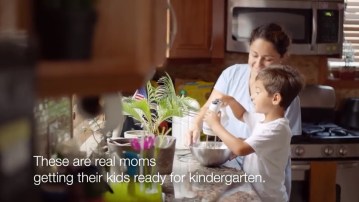
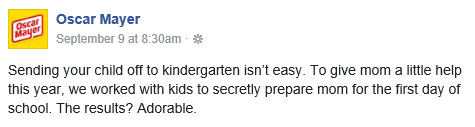
Oscar Mayer recently introduced an ad about sending young children to school for the first time.  At first glance, it’s touching.  It looks great.

Note we said looks, because if you re-watch the ad with the volume muted, most everything looks good.  It looks like a touching ad involving the entire family, even if dad plays a rather minor role.oscarmayer1.png

But cue back the volume and notice the complete omission of “dad” in speech, and that changes the ad’s marketing breadth entirely.  No longer is dad playing a token cameo at best, but rather, he’s been excluded from the message – a sad, recurring theme among lunch makers who only believe mom’s pack lunches.

Oscar Mayer’s eschewed use of the word dad is an unfortunate practice for a company with dads at its roots.oscarmayer3.jpg

After all, what does this ad say to the late Richard Trentlage, the man who created the venerable Oscar Mayer Wiener song, who died Sept. 21 at age 87?  As a dad, Trentlage used his living room as a recording studio and had his children sing audition tapes.

It’s part of a rich Oscar Mayer legacy, which was founded in 1883 (perhaps Mayer was a dad?).  But 1883 is a whopping 133 years ago.  It’s high time this prominent company gets back to the basics if it wants to be perceived as the leader in lunch meats for the next 133 years.

Even if its marketing research suggests a majority of women purchase its products, there’s no point in senselessly alienating the other part of its customer base, and being perceived as a company who places a greater value in one gender – thus creating a bias, and all over useless, old fashioned stereotypes.

Besides, we all know sexism is wrong.

Oscar Mayer may have a way with b-o-l-o-g-n-a, but it also has a regrettable way with excluding dads.  Let’s hope that practice comes to a quick end before the next school year rolls around, because dads do indeed get kids ready for school and pack lunches, too.

And they love their kids every bit as moms.