Let’s Talk About How Mental Load Affects Dads

A community potluck had brought together neighbors, friends, and families for a shared meal. Among the crowd was a father named Sam – a friendly, mild-mannered man who worked as a software engineer by day and devoted himself to his two young children at night. Sam loved his family deeply and took pride in being a present and engaged dad.

At the potluck, Sam overheard a group of parents chatting by the dessert table.

“Ugh, my husband forgot to pack the kids’ lunches again,” one woman groaned.

“Typical,” another chimed in, rolling her eyes. “It’s like they need a checklist for everything.”

“Right? My partner has no idea what I do behind the scenes. The mental load is 100% on me.”

Sam felt a twinge of discomfort as their laughter carried across the room. It wasn’t that he didn’t understand their frustration – he did. But the conversation painted an unfair, familiar picture of dads as disengaged, forgetful, and oblivious to the invisible work of managing a household.

The story of Sam highlights a crucial, often-overlooked reality in conversations about domestic labor: the way we talk about fathers and their contributions can perpetuate harmful stereotypes, hindering progress rather than fostering it.

In recent years, the concept of the mental load has gained widespread attention – and rightly so. It’s the invisible, perpetual task of planning, organizing, and anticipating the needs of a household, typically falling disproportionately on one gender. However, the accompanying narrative has too often cast fathers as lazy, clueless, or unwilling to step up, creating a blanket indictment that does more harm than good.

Efforts going unnoticed

Sam’s story underscores a common experience for many fathers: doing meaningful work for their families yet feeling invisible in the broader narrative. When their contributions are dismissed or ridiculed (keep in mind how many fathers work eight hours a day to provide for their families) it creates resentment and discouragement rather than motivating collaboration.

Societal expectations around parenting have shifted dramatically in the past few decades. Fathers are increasingly expected to be hands-on caregivers and equal partners in managing a household. And this is difficult when working outside the home to provide for a family. Yet, they still step up.

Double standards

Imagine the outrage if fathers were to collectively stereotype mothers as perpetually overbearing or dismissive of their efforts. The truth is that parenting and household management are deeply personal and unique to each family. Broad generalizations about either parent diminish the individuality of their contributions and the nuances of their challenges.

Moreover, women have rightly advocated for decades that they shouldn’t have to “do it all.” Yet, some of these same discussions frame men as inadequate for not carrying the load from the start. Marketers perpetuate the problem in ads. It’s an impossible standard that ignores the reality of current roles, shared growth and mutual support.

Reframing the narrative

To truly achieve equity in parenting, the conversation needs to move away from blame and frustration and toward collaboration and understanding. Instead of criticizing dads for what they aren’t doing, we should:

  • Acknowledge Efforts: Recognize and celebrate the ways fathers are contributing, despite the demands of their time outside the home.
  • Encourage Partnership: Approach the division of mental load as a team effort, where both parents learn to communicate, delegate, and adjust as needed.
  • Challenge Gender Stereotypes: Push back against media and cultural narratives that portray dads as bumbling or incapable. Representation matters, and it influences how dads perceive their roles.

A call for understanding

Fathers like Sam are not the exception. Look around and you’ll see they’re the norm. Yet the outdated “clueless dad” stereotype persists, overshadowing their efforts and reinforcing the very inequities we’re trying to dismantle.

Together we can build a culture where the mental load is not just a burden, but an opportunity for connection, collaboration, and shared pride. It’s time to stop badmouthing dads and start working with them – for the good of families everywhere.

Because when the load is shared, everyone carries it better and with more grace.

Do You Approve This Message?

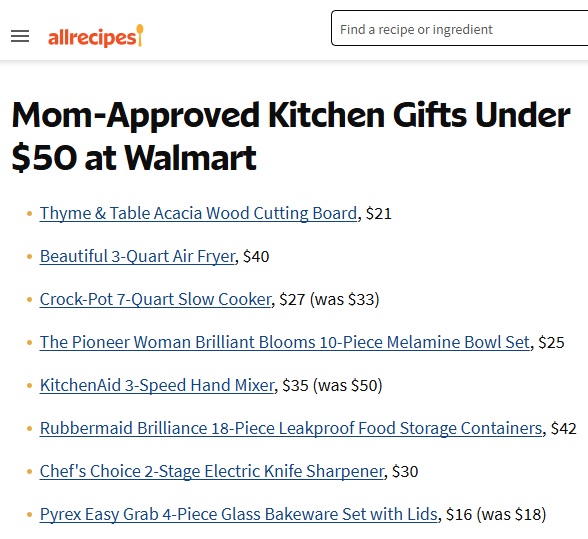
We’re a quarter through this new century, but the term “mom-approved” remains in use. It perpetuates a subtle yet significant exclusion of fathers from the parenting conversation. This exclusion is worth examining, particularly as societal norms shift toward recognizing the importance of parents as equals.

At its core, “mom-approved” is a gendered phrase that assumes mothers are the ultimate arbiters of what is best for children. This assumption reinforces the outdated stereotype that mothers are inherently more capable or involved in parenting decisions than fathers. While many mothers do play a central role in childcare, the same is true for fathers. Modern dads are indeed engaged in parenting. Yet, phrases like “mom-approved” suggest that their contributions are secondary or even invisible.

This language not only marginalizes fathers but also places undue pressure on mothers. By positioning moms as the default decision-makers, the phrase reinforces the idea that they bear the sole responsibility for their children’s well-being. This can perpetuate the “mom guilt” phenomenon, where mothers feel they must constantly prove their parenting competence, often at the expense of their mental and emotional health.

The exclusion of fathers in terms like “mom-approved” also has broader implications for how society views parenting roles. It subtly reinforces the idea that parenting is women’s work, making it harder for fathers to assert their role as equal partners. This can deter companies from creating products or services that explicitly cater to dads, further perpetuating a cycle of exclusion.

To build a more inclusive parenting culture, it’s crucial to rethink the language we use. Terms like “parent-approved” or “family-approved” are simple, gender-neutral alternatives that acknowledge the roles of all caregivers. These shifts in language might seem minor, but they can have a significant impact on breaking down stereotypes and fostering a more equitable view of parenting.

By moving away from “mom-approved” and adopting more inclusive terminology, we can celebrate the diversity of parenting experiences and ensure that all parents feel seen and valued. It’s time to recognize that the parenting world isn’t just a “mom’s club” – it’s a shared journey where everyone’s contributions matter.

All Dads Want for Christmas is Their Due

Dads don’t want a lot for Christmas,
There is just one thing they need.
And they don’t care about the presents,
If they’re discounted or free.
Just a change that’s overdue.
More than you could know is true.
Make their dream break through,
All dads want for Christmas is their due.

[music picks up]
Dads don’t always seem included,
Left out of conversations, it’s true.
All they ask this holiday,
Is a bit of fairer view.
They don’t want to be excluded,
Forgotten, left out every day.
They are parents, don’t forget it,
Stereotypes do not portray.
Just please change, it’s overdue.
More than you could know is true.
Make their dream break through,
All dads want for Christmas is their due.

They won’t ask for much this Christmas,
They won’t even wish for snow.
They’re just gonna keep on waiting,
For brands to change names and logos.
They are more than backup parents,
More than sidekicks. Aloof? No way!
They can do anything, it’s instinct.
Anything that’s in their way.

They want change that’s overdue.
More than you could know is true.
Make their dream come into view.
All dads want for Christmas is their due.

Oh-oh, dads have done the shopping,
Household chores, it’s nothing new.
So why do companies claim,
Dads can’t deal with simple doo doo?
And everyone is clinging,
To an old-fashioned ‘50s upbringing,
Santa, won’t you bring dads
The thing they really need?
Inclusion in word, photo, and deed.

Oh, dads don’t want a lot for Christmas,
To be remembered is all they’re for.
Include them, name them, don’t forget them.
That’s the gift to make them whole.
Just a change that’s overdue.
More than you could know is true.
Make their dream break through,
All dads want for Christmas is their due.

Can You Tell When Social Media is Written By and For One Parent?

Scrolling through social media feeds, you may find that some posts aren’t directed to you. That’s nothing new – not every post is intended for everyone. So why should anything different matter? It does if you’re a parent and feel as though you’re not being talked to or respected.

One dad recently took to Reddit to share his frustration from a doctor office, but sometimes the message is more subtle. That’s because at times companies wear their gender on their sleeves. That’s not necessarily a bad thing, but it can lead to alienation of potential customers.

Don’t take our word for it

Look at nearly any maker of baby products who tend to exclude fathers in language, tone, themes, and visual cues, such as photos. One Father’s Day, for example, Munchkin ran a post aimed directly at moms: “Get the new father figure a gift he’ll love.” But on Mother’s Day it didn’t speak to dads for ideas about gift buying – again, only moms: “Mama, you deserve the best.”

Another Father’s Day post exclaimed, “Happy Father’s Day to all the moms who are on dual duty as mom and dad today.”

In both cases, it seems apparent the author was a female and the company was intentional in selling its products to mothers. Of course, this makes no sense – sippy cups and diapers are for children, actively used by both parents.

Voice matters

This is why copywriters should consider the voice when crafting ads. What would motivate a father to purchase a product when they’re not being spoken to in the first place?

The product’s usefulness, its practicality, or its ability to make their tasks as a parent easier can override the fact that they weren’t explicitly spoken to in the ad. Fathers today see themselves as equals in decision-making processes. Products become a joint consideration for the family rather than a gendered one.

Being ignored hurts in more ways than one

When parenting content speaks exclusively to one gender, it reinforces outdated stereotypes about who is responsible for caregiving. This can leave fathers feeling unacknowledged. It’s not just about being ignored; it’s about the subtle message that one’s role or contributions aren’t seen as valid or important. This lack of representation can feel like a dismissal of the effort and care they invest in their families.

When you’re not being spoken to in parenting content, it can also impact your sense of community. Social media, for many, is a place to find camaraderie, share experiences, and seek support. For parents, it’s a space to connect with others who understand the challenges, joys, and intricacies of raising children. But if the content encountered is always framed as a conversation between moms – that of the company author and the reader – it can make a dad feel like he’s on the outside looking in. This absence of inclusivity can prevent fathers from feeling welcomed into these shared spaces, leaving them without a sense of belonging or a platform where their perspectives are valued.

Unintended outcomes

Feeling left out of parenting conversations on social media isn’t just an emotional issue – it can have practical consequences as well. Parenting advice, product recommendations, and discussions about children’s needs often get disseminated through these platforms. If these discussions only cater to one type of parent, the information and resources might not fully resonate or apply to those who don’t fit the assumed mold. A father, for instance, might feel hesitant to follow or engage with a platform that only speaks to mothers, even if the advice is relevant to him. In this way, the lack of inclusivity not only isolates but also limits access to valuable resources and advice that could benefit all parents.

Words matter, and so do customers

Ultimately, when you scroll through social media and find that you aren’t being spoken to as a parent, it matters because it suggests that your role is undervalued. It’s also a lost opportunity for company sales.

Parenting is a shared human experience, yet when the voice in the conversation excludes someone, it sends a message – intentional or not – that only certain voices are worth hearing. And for any parent trying to navigate the complexities of raising a child, feeling unseen or disrespected can make that journey lonelier and more challenging. This is why inclusivity in parenting content is crucial, not just for mothers, but for fathers and anyone involved in the beautiful, messy, and rewarding experience of raising the next generation.

In marketing, you can’t leave any stone unturned – or ignored.

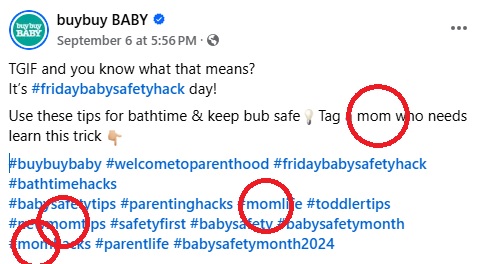
If Buy Buy Baby Wants to Thrive, It Can’t Without Dad

Buy Buy Baby, once left for dead following its parent company’s bankruptcy in 2023, rose from the ashes late last year. At its peak it operated 137 stores across the US, but last year there were only 11 remaining. Then Bed Bath & Beyond closed them indefinitely. However, Dream On Me bought the stores via auction and has plans to resurrect the brand.

All 11 locations are slated to open in November, with over 100 more arising in the next three years. Although it had disappeared for several months, you may have noticed its online presence slowly inching back onto your social media feed.

During its initial go-around it had been a brand who included fathers in advertising more prominent than others. It also employed inclusive parenting language. Its marketing team wasn’t perfect but appeared more progressive than others in the baby world.

Now in its incarnation, Buy Buy Baby seems to have taken a step backward. Notice some of its recent posts, which tend to forget a father’s indispensable contribution to the family. It even offered an oddly timed declaration of praise toward mothers – in August.

Buy Buy Baby is moving at rapid speed to resurrect a relatively new (founded in 1996) and still unknown brand (its 111 stores were less than half of the former Babies “R” Us 260-store chain).

If it wants to survive, it must get this right in its second life.

It needs to take baby steps, and know that it can’t do this without dad.

Dads Shouldn’t Have to Applaud What Should be Routine

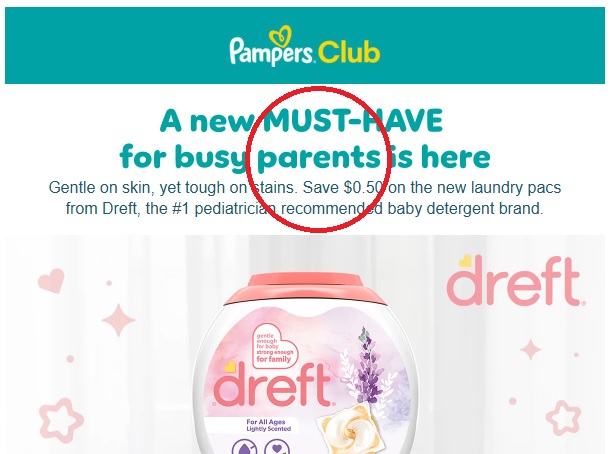
Occasionally our site posts instances of ads and social media which employ the word “parent.”

This, of course, is an attempt to celebrate how dads weren’t excluded.

When we do this, we’re highlighting a small but meaningful shift in how families are represented. This language choice is often seen as a win for inclusivity, especially for dads, who have historically been overlooked in discussions about parenting. By using “parent,” these ads acknowledge that caregiving is not solely the domain of mothers, which is a step toward recognizing the authentic and diverse ways in which families function.

However, it shouldn’t have to be this way. The fact that we feel the need to celebrate when dads aren’t excluded from the narrative points to a deeper issue. It reveals that the default assumption in society often still leans toward mothers being the primary caregivers. This expectation not only marginalizes fathers but also reinforces outdated gender roles that limit both men and women.

The use of “parent” should be standard practice, not an exception worth noting. In an ideal world, all parents would be equally recognized and valued in their roles, without the need for special mention or celebration. The use of inclusive language shouldn’t feel like a victory but rather a reflection of the reality that parenting is a shared responsibility. The true goal is to reach a point where the word “parent” naturally encompasses all who take on the role, regardless of gender, without us needing to pause and appreciate that dads were included.

Why Dads Need to Be Seen in Ads

You’ve seen the vicious cycle but never realized it. Moms want dads to help out more. Moms criticize them on social media. Mainstream media writes stories about how dads don’t do enough. Advertisers perpetuate the problem by selling products only to moms.

For true equality in household responsibilities, it is crucial that dads are included in advertisements and media with more accurate and positive representation. If mothers want men to be more involved with chores around the house (note: they already are, but that’s another topic for another day), the truth is, they’re barking up the wrong tree. Moms need to take issue with the media and advertisers, not their spouses. Shifting the media narrative to showcase fathers as active and capable participants in domestic tasks is essential.

Doing so portrays reality, because the truth is dads are already helping. They’re also competent parents. Women are no more instinctually capable of caring for children, but it’s the media who would never let us think otherwise.

Historically, advertisements and media have predominantly portrayed women as the primary caretakers and homemakers, reinforcing traditional gender roles. This skewed representation perpetuates the belief that household chores and childcare are predominantly women’s responsibilities. As a result, it’s no wonder men may feel less inclined to participate in these tasks, leading to an unequal distribution of domestic labor. Advertisers have been saying it’s a woman’s job for decades.

Including dads in advertisements and media as equal partners in household chores can help break down these stereotypes. When men see positive portrayals of fathers engaging in tasks like cooking, cleaning, and caring for children, it normalizes their involvement, not just for men, but for women. This representation can also shift societal expectations, fostering an environment where women see men as equals inside the home. Moreover, seeing dads involved in chores and childcare can provide young boys with positive role models, shaping their perceptions of gender roles from an early age.

Brands and advertisers have a powerful influence on societal norms and behaviors. By creating campaigns that feature dads as competent and engaged in household tasks, they can promote a more balanced and realistic view of modern family life. This shift not only benefits women, but also supports men in embracing their roles.

Ultimately, better representation of dads in media and advertisements can contribute to a more equitable distribution of household responsibilities. It reinforces the idea that chores and childcare are not gender-specific but are shared responsibilities that both parents can and should undertake. This change is vital for fostering healthier, more balanced family dynamics and promoting true gender equality in all aspects of life.

Helping Children Exude Patriotism Year Round

It’s not hard to feel American pride every 4th of July, but what happens the next day?

It seems to all disappear. No more flags, no more red/white/blue – the public display of national patriotism fades away until next Memorial Day, at best.

However, there’s something to be said for helping our children display patriotism throughout the year, not just one day or week in July. Think about ways we offer year-round support for other things we love – now imagine your kids calling the grandparents only once a year.

We love America, right? Let’s show everyone there’s more than one Captain America.

Wave flags

It’s the easiest, most time-honored way to show your pride. Let your kids raise it, or display it, every single day of the year. Consider installing a flagpole, but if funds or space prevent that, add one to your porch or balcony – or wherever people can see it. There was a resurgence in flag interest following 9/11, but that has faded with time. How unbelievable would it look if every home in America displayed a flag? Don’t forget that flags must be illuminated if kept out overnight.

Respect the office of President

Whether you like Biden or Trump or whomever, you have to respect the position they hold. It’s not as if you need need to endorse the person or what they stand for, but rather, just the office. Here’s an idea: the next time you want to spread negative energy about a specific person on social media, instead use that moment to say something positive to your children about the importance of the Oval Office and to their future. Your kids will have plenty of time to shape their own political opinion when they’re older. After all, some child their age will be President someday. For now, help them understand that even if we don’t share the same values or ideals we need to respect one another. Drop the negativity around your kids. Respect starts with you.

Visit D.C.

There’s no better place to learn about our history and patriotism than in the District of Columbia. And if time or money makes that impractical, perhaps settle for a visit with your kids to your state capitol or local courthouse. There you’ll at least see American government clicking on a local level. You could also try to meet your U.S. representative, who is often accessible at fairs and events.

Thank a vet

You can’t always tell the veterans walking among us, but if you happen to meet one, show your children just how much they mean by thanking them, buying them a meal or cold drink, or showing some other gesture of gratitude.

Read history books

You can teach your children a lot about American pride and dignity with a simple trip to the library. Let them pick the topic, as there’s plenty they can learn about our monuments, historical moments and figures who made America so great.

Obey our laws

What kind of message are we sending to kids when we break traffic laws, then top it off by bad mouthing law enforcement who issue tickets? Our laws are there to keep us and everyone around us safe. We would do well to set an example for our children by respecting the law and those who enforce it.

Get involved

When we serve others, we’re serving a greater cause than our own. That doesn’t mean we need to necessarily work at a local food kitchen. Often libraries have volunteer opportunities for pre-teens, or at school or church. You also could simply clean off gravestones at a cemetery or pick up litter on a family walk. Opportunities abound to help our fellow Americans.

Let’s Abolish the ‘Dad Joke’ in Father’s Day Ads

Marketers tend to be a creative bunch. Just look at the Super Bowl commercials we enjoy every year. Or the clever ads we enjoy before movies. Or those ingenious jingles stuck in your head.

But then comes June and things tend to get rote.

That’s because Father’s Day – in all its grandeur, distinction and variability – gets treated the same whether a company is marketing clothes, ice cream, or (sigh) grilling tools.

Behold, the dad joke. It’s the go-to schtick for advertisers of all ages. It’s a surefire way to check the box and let the world know you’ve got this holiday covered in a fun way.

Make ‘em laugh, right?

More like, make ‘em gag. It’s all well-intentioned, of course, but It’s. Getting. Old.

Mother’s Day ads contain feeling and heart. And Father’s Day ads? Usually, some mention of the dad joke. It’s become so commonplace we’re not sure if marketers are laughing with dads, or at them.

Think of the words employed throughout Mother’s Day ads, and you’ll discover dads are hardly getting their fair share of sentimentality.

Dads are funny, yet they’re also loving, patient, caring, sacrificial, nurturing, supportive, wise, thoughtful, involved, compassionate, hard-working, empathetic, hopeful and loyal. The adjectives are infinite, and humor isn’t the only way to connect with dads. Yet marketers continue to use the same stereotype every June.

This Father’s Day let’s incorporate some meaning into our ads. Let’s get the creative juices flowing while showing dads how much they matter.

Please don’t reference the dad joke. By now, no one’s laughing.

Unnecessary Post Leaves Dad in the Dust

When radio was still a thing, shock jocks ruled the airwaves. These were provocative hosts known for exaggeration and aimed to offend. It’s how they got noticed and improved ratings.

Of course, radio is hardly what it was but the formula for attention remains the same: say anything you want for ratings – or clicks.

Which is exactly what websites do today. And you’ll find no better example than this post at What To Expect’s site. Here the commenter – yellow01 – poses a situation that shouldn’t be up for discussion: “Letting dad take baby alone to his parents house.”

Yellow01’s thoughts radiate a sexist, demeaning and controlling vibe:

  • “…I still don’t feel comfortable going out alone and leaving baby” (with dad, implied)
  • “…I said you’re not taking him alone anywhere till he’s older”
  • “…I don’t trust anyone but my mom”
  • “…I never said his parents couldn’t see the baby I just said no to him taking him alone”

There’s no point in arguing the unacceptable nature of these comments. We all know they’re off the mark, as validated by the numerous commenters who politely suggest yellow01 is out of line.

What’s equally wrong is how What To Expect allowed this post to appear in the first place. Every forum has a moderator, and permitting this one to go live is like letting a shock jock’s poorly trained tongue say anything in the name of ratings.

But as you can imagine, What To Expect absolves itself from any offense with the convenient disclaimer, “The views expressed in community are solely the opinions of participants, and do not reflect those of What to Expect” (plus the handy omission that it may make commissions from links on that page).

It’s all evocative of the adage, just because you can say something doesn’t mean you should.

For most shock jocks, things don’t end well. As they push the envelope of decency, they show a lack of regard for others. Many have been fired, censored, created social outrage, or caused their employers to be fined.

They’re the equivalent of tabloid newspapers, and we know how those are regarded in society.

Dads deserve better. Show empathy.