When you don’t even realize you’re being sexist

If you haven’t heard of What’s Up Moms – you should. It claims to be the #1 moms channel on YouTube, and that’s no small feat.

This groups of mom friends aims to produce short, funny videos geared toward women, and throughout it all has been featured nationally while garnering over 550,000 subscribers.

whatsupmoms3There are plenty of items to watch, but check out the video titled, “Dad’s First Time Alone With Baby.”

If you can get past the fact that this sketch is one long commercial for GLAD Press ‘n Seal, you’ll find a video that generally offers a warm, clever look at a dad’s ingenuity and resourcefulness. We enjoy how its creators celebrate the fact that dads parent different.

That’s refreshing and important to see!

However, the title – “Dad’s First Time Alone With Baby” – certainly implies something different doesn’t it?

It implies that dad isn’t an equal parent, and that mom is in charge when it comes to raising children.

That title would have never been written about a mom; imagine: “Mom’s First Time Alone With Baby.” Thus, its current title comes across as sexist and demeaning.

So does mom’s question to dad and baby at the beginning of the video: “Are you sure you guys are gonna be ok?”

Would anyone ever question whether mom could handle a baby alone for the first time or not? Why turn it into an event, and why make it an issue with dads?

The only time someone should ever utter the phrase, “Dad’s first time alone with baby,” is when it’s one of these tearjerking, soldier-meets-baby-for-the-first-time moments.

This video’s sexist approach is so wrong, we’d like to see the title changed and the beginning of the video edited. Keep the funny, just not at dad’s expense.

How about it, What’s Up Moms?

Drefting away

When Similac unveiled its “Welcome to the Sisterhood of Motherhood” campaign this past January, there was a faction of dads and moms who lauded the inclusion of fathers in the commercial. It seems they were so ecstatic over not only actually seeing dads in a TV ad – but dads wearing babies – that they might have even been blinded by that awkward, old-fashioned tagline.

Alas, it’s doubtful there’s even one dad who can relate to “the Sisterhood of Motherhood.”

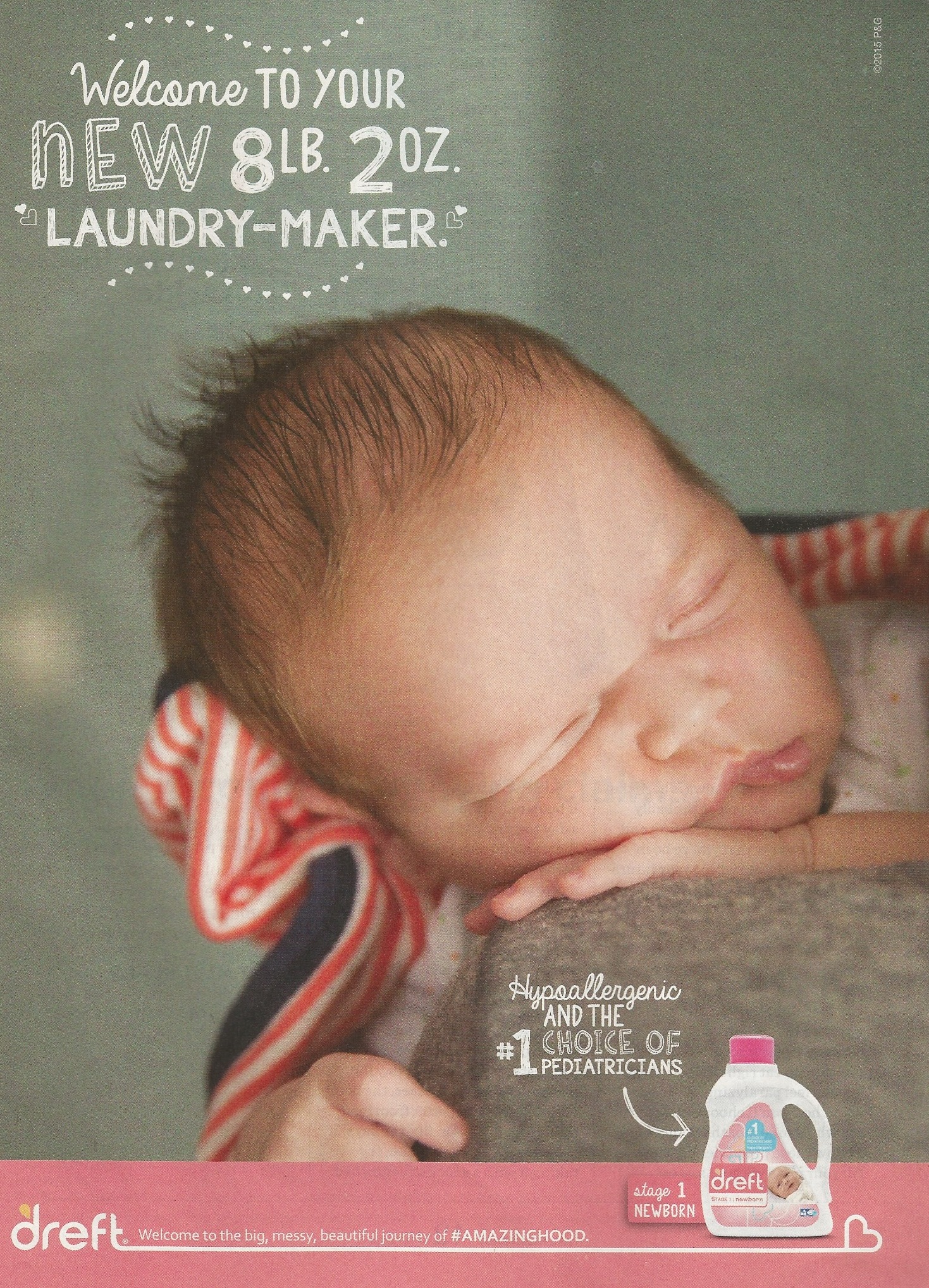
The video was only part of an exhaustive campaign over which we had even stronger thoughts, but unfortunately, Similac uses the same promo yet today as evidenced by its recent full page ad in the July 2015 American Baby magazine.dreft3

In that same magazine (page 41, to be exact), you’ll also find an ad for Dreft laundry detergent, which uses the slogan #AMAZINGHOOD.

That hashtag is a refreshing antidote to the exclusionary tagline used by Similac.

Imagine how different Similac’s campaign might have been if it – rather than using sister and mother – had simply used amazing, or even parent.

We’re not going to give Dreft a total free pass, as it still wants it both ways. Take a gander at dreft.com and click on “Our Story,” where it continues to believe that dads don’t exist. And its maker, P&G, has a steady practice of ignoring dads elsewhere, too.

But we’ll give credit where it’s due, because #AMAZINGHOOD is a fine word choice that doesn’t exclude dads – dads who care for their children and buy Dreft laundry detergent.

Dreft likes to tout that its product “has been trusted by moms for over 80 years,” but we suspect a dad or two has also placed its trust in Dreft over that time.

So, maybe in the next 80 years ahead, Dreft will finally begin to place trust in dads.

Now that would be #amazing.

After 26 years, Boppy may know how to hold a newborn, but it doesn’t concede that dads can, too

boppy4Boppy’s marketing remains ever dad-unfriendly, and its latest display ad dishes some jarring irony.

Note the headline: “After 26 years, we know how to hold a newborn.”

Well, after 26 years, it should also know that dads exist – and shop, and make purchases, and care for babies, and use Boppies. Yes, dads use Boppies!

But the company won’t acknowledge that.

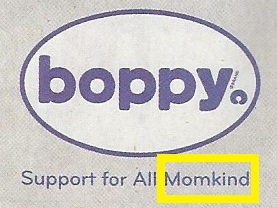
If it did, it might start to recognize dads and adopt a new slogan instead of “Support for All Momkind.” It’s rare to find a business like Nike that boppy5can stick with one motto and make it work for a lifetime. In today’s world of marketing, it’s smart business to unveil a different saying in order to introduce a fresh campaign, kickstart a product, or inject new life into the old.

It would be easy enough to swap out momkind for something like parentkind, or babykind, or childkind, but that wouldn’t really solve the other part of its problem. Maybe the play on “mankind” was too easy fare for Boppy, but isn’t that term – mankind – so antiquated and completely out of use that no one would dare to use it nowadays? Have you ever heard of “mankind” spoken anywhere? No one would even touch it.

So why make reference to it?

Unfortunately, Boppy appears to be stubborn in employing the same tired, worn out mentality of, say, Jif, by implying that parenting hasn’t changed, likely afraid to admit that fathers have never been more actively engaged in raising babies.

There are plenty of companies who have changed with the times. It’s necessary for business survival.

We wrote about Boppy back on Oct. 10, 2014, and they squarely ignored our commentary, refusing to even dialogue boppy6despite repeated attempts on Twitter. And since then, its website — www.boppy.com — hasn’t changed much, and continues to perpetuate the belief that only moms care for children.  Could adding a “Dad Center” be such a bad thing, or is Boppy really afraid it will turn off moms, or send an improper message, or it’s bad for sales?

At least that slogan is rather small in the ad, but it’s there, reminding dads that they don’t matter to Boppy as customers.  Even that word “support” means the company is eager to dish it to moms, but not to dads.  Yes, the word support is likely in reference to breastfeeding, but as the company exclaims everywhere, a Boppy has far more uses that that.

Twenty-six years is a fine accomplishment for Boppy, but unless it can adapt with a changing world, it’s plausible that today’s new customers will go elsewhere for baby pillows – or do without.

A picture is worth a thousand hugs

toysrusSure, this featured email promo from Toys”R”Us is a gratuitous Father’s Day message which ran this past June 21, likely the lone time during the year you’ll see a dad-specific message from the giant toy retailer.

Today, however, that’s not of our concern.

Take another look at the ad. The copy is creative. The design is clean. The look is simple.

And, whoa, is that a child is hugging a dad?

That act – the hug – is the kind of thing normally unassociated with the stiff, rigid, unexpressive, stereotypical father, right? So often we typically see hugs and kisses for mom at Mother’s Day, and a lot of tools and neckties for dad on Father’s Day. It’s unfair labeling where we’ve been conditioned by companies to think that only moms are the caring, nurturing ones at home, while dad’s true love must be work since he’s there most of the day, hence the tie.

So when it comes to expressions toward dad, it’s less common to see hugs in advertisements. You might see hand holding or a shoulder ride at best, but a hug for dad is rare in ads.

We applaud the creative team at Toys”R”Us for presenting what others can’t: a deep tenderness and affection toward dad.

This is exactly the kind of move that tells dads, “We know you’re out there, and we value you; we’re talking to you, and we want you as customers.” It presents dads in a caring light as the nurturers they really are, and speaks to them through solid marketing messages that evoke emotion.

Nice work Toys”R”Us, and we look forward to seeing repeat performances not just in June, but throughout the year.

That’s because rumor has it, more than one dad has visited all of your 865 stores before.

What to expect when you’re expecting to be treated like a parent

whattoexpect1If WhatToExpect.com truly offers information, as it says, on “pregnancy and parenting,” then why is it singling out one gender and hosting the annual “Moms Love-It” Awards?

It’s confusing how things ended up this way.

Originally, Heidi Murkoff conceived the idea for the famed book, What to Expect® When You’re Expecting, during her first pregnancy as noted on its website: “Determined to write a guide that would help other expectant parent (sic) sleep better at night, Heidi delivered the proposal for What to Expect® When You’re Expecting just hours before delivering her daughter, Emma.”

It’s admirable that the site uses the term “parent” when speaking about Murkoff’s original ambition. Murkoff seems like a fantastic, dynamic, successful woman on a mission to improve lives.

However, somewhere along the way, parent was replaced with mom, leaving dad as the one parent who apparently isn’t on equal footing. It’s a bias we’ve seen elsewhere and remains as unfortunate mistreatment.

Check out the “About What to Expect” page, where Murkoff’s commitment has wavered from its initial care for parents, to now only moms: “Heidi’s passionate commitment to moms and babies…”

And now with the relatively new “Moms Love-It” Awards (launched 2013), it makes expecting fathers feel like they simply don’t matter, underscored by the various award-winning companies from whom expectant dads everywhere will be purchasing their baby needs. Yes, indeed, dads shop too.

whattoexpect2What’s more, this is again yet another example of a website offering a “For Mom” section, with dad information buried elsewhere. Even the “Military Mom” section offers a one-sided look that ignores fathers. Why not offer a “For Dad” section with equal prominence instead of burying it under “More”? How about a “Military Dad” section?

If marketers so often like to falsely earmark dad as the parent who isn’t as smart when it comes to babies or who isn’t as involved, wouldn’t those fallacies be all the more impetus to offer solid information to fathers?

Everyone wants to be treated with respect and dignity, but how can dads find it here? Of course, dads aren’t actually carrying the baby, but that doesn’t mean they’re less important, or don’t matter to the pregnancy – they’re totally, equally important to the child. And the “Moms Love-It” Awards are only two years old. How about renaming them the “Parents Love-It” Awards before another company beats them to it?

Dads have a lot of options when it comes to parenting information, and those companies who choose to actively engage with them will be the true award winners.

KSN = Kraving Serious News

ksn1Remember the time when TV journalists simply reported the news?

Me neither.

That practice seems to have disappeared, because today we find newscasters and reporters performing, serving more as entertainers. They don’t exactly act like play-by-play announcers simply reporting the action on the field, but they’re also not full-time color commentators. They’re somewhere in between.

News is the reporting of recent events whereby the media provides us with information, and the media is the watchdog of us all. But just because freedom of speech offers us the right to say anything we want, doesn’t mean it should be said.

Think about it: as you watch the news – just after news stories and in between segments or commercials – how often do we hear those little banters, or commentaries, or jokes, or diatribes on some social situation or person among desk anchors? It’s supposed to be a segue to a different topic where we see the anchors’ personality and human side, but instead the power of the media is so often used to influence many via one person’s opinion – whether intentional or not.

It’s likely the “reporting hat” and “show host hat” morphed into one with the major increase of morning shows, mid-day shows, afternoon shows and talk shows, where features and lifestyle stories and commentary blended into one giant pot labeled “TV news,” all under the banner of the network.  This isn’t necessarily a bad thing.  Watching the lighter and softer side of news is enjoyable and breaks up the seriousness, but reporting has certainly become less sharing of factual information, more entertainment.

Take, for instance, this recent story featured on Kansas Today on July 8, 2015 on KSN in Wichita, Kan.

Kansas Today’s Katie Taube gave fellow reporter and dad-to-be Mark Davidson, her husband and also dad-to-be Dylan Hagen, as well as veteran dad Leon Smitherman, a list of items to find at Babies R Us. They were asked to work together to find each item in order while a KSN camera crew followed them along.

What’s not clear is why this piece occurred at all?

Was this supposed to be some fish-out-of-water premise, putting manly-men in an environment with which they’re not familiar as we watch hilarity ensue? Was the station trying to send some bumbling guys on a wild goose chase for some impossible-to-find items? Were we supposed to laugh at their overall ineptness?

After you watch the video, scroll below to read the comment from one perceptive viewer named Marissa:

“Why are you mocking dads? My husband could run circles around me when it comes to many of the so-called ‘mother roles.’ We’re living in 2015 people! Why don’t you start mocking gays along with it!”

Well said, Marissa, for we find nothing humorous or newsworthy about men going shopping, especially for items that they’ll use to co-parent these new children.

ksn2Even if these particular men weren’t familiar with a “Diaper Genie,” it’s not like anyone couldn’t find it after a common sense search. These dads are going to become parents, not babysitters, and it’s their equal responsibility to raise them just as the mothers will.

Taube, Davidson, Hagen and Smitherman are probably kind, friendly, stand up people who meant no harm, but as we’ve said before on this site – they weren’t thinking this idea all the way through. And that’s just the problem, we need to think about others and how they might feel. No one likes to be labelled, stereotyped, left out or excluded, but that’s what marketers, media and entertainment do with dads all the time.

Generations ago, it was the father who went to his work while mother stayed home with the children. So, yes, once upon a time dads were perceived as the secondary, assistant parent while mom squarely took the lead. But those days are over, and yet today, some still perpetuate this bygone era.

If KSN continues with this treatment of news, what’s next week’s segment going to be? Filming moms while they enter the work force, laughing at all their mistakes as they try to make it in the “real” world? Following girls around as they attempt to play sports? Taping men who actually try to cook a meal and clean the home?

Times have changed, we all need to treat dads with the love and respect they deserve as parents – being every bit equal parents as mothers. No one is more important as a parent than the other.  Those moms-to-be have no more instinctual ability to parent the child than the dads do. They’re both parents.  Equally.

And next time, hopefully KSN will be reporting the news, not creating it.

PS: Best of luck to all parents-to-be!

Is that a dad in a breastfeeding ad?

lansinoh1Check out this stellar ad from Lansinoh, makers of breastfeeding products and accessories. It features words like “breastfed” and “nipple” and “breast,” yet boldly places at dad at the center of its full page magazine ad.

That’s powerful. That’s wonderful. That’s making dads feel like involved parents!

But then, the company does a strange about face on its website – lansinoh.com – where it decides to bury dad’s importance down below on its home page. If it truly believes that dad is “critical to (the baby’s nursing) success,” as its website states, then why is dad minimized so greatly online?

How about a Lansinoh Dads’ Club?

Why not publish an article titled, “8 Benefits to Dads for Breastfeeding Moms”?

How about more photos of dads on its website (they’re hard to find) – and prominently feature them – like the dad in the magazine ad?

How about have a special dads-only section, which might dig deeper into a dad’s involvement with breastfeeding? Or have a different guest dad blogger featured every so often?

How about simply show the word “dad” more?

The magazine ad was so incredibly fantastic because it proved it can utilize fathers in an advertisement about breastfeeding products, and we were ready to give Lansinoh the highest dadmarketing Seal of Approval™, but then Lansinoh changed its tune online.

Oh. So. Close.

Let’s hope Lansinoh’s marketing professionals can get on the same page and mimic a magazine ad that’s beyond sensational, and thus lead the market among those companies insisting upon total parental inclusion.

Soggy cereal

What exactly does this Twitter bio say about dads? And if you are a dad, what is it saying to you?momsbestcereals1

In our estimation, it’s saying that you don’t count, the company isn’t talking to you, and it doesn’t want your business.

What’s strange about MOM Brands is that it adopted its exclusionary name in 2012. No, that’s not 1912, but 2012 – as in, three years ago!

Jif adopted its discriminatory slogan decades ago, and same for Kix’s mom-centric box, while Similac has been ignoring fathers nearly since its beginning.

But 2012? It’s hard to imagine a company looking so old-fashioned in today’s equality-hungry, politically correct world that strives to include everyone and even blur the lines between, say, toys and clothes. Alas, MOM Brands has found a way to make even cereal buying sexist, because dads apparently do not know best.

What’s equally bizarre about MOM Brands is how they proclaim to have made the name change to reflect “the company we are now. We’ve been family-owned since 1919…” and “We’re really proud of the fact that we’ve saved families over one billion dollars since 2007.”

But don’t families include dads, too?

Apparently not, according to MOM Brands, or it might recognize them by name – or at least on Twitter.

It’s hard to stomach this say-one-thing, do-another corp-speak, especially since MOM Brands seems like a rather progressive group. We admire its innovative packaging that’s helping to keep its cost (and customers’) down. Its variety and tastes are every bit good as the next cereal brand.

But that name. And that Twitter bio.

Both are enough to make dads reach for something else. Chances are, they already have, but it won’t be easy: marketers of the cereal industry seem insistent that only moms have the ability to put breakfast food on the table, and/or mom’s place is in the kitchen.

Alas, cereal makers are stuck in time (see #7).

It’s quite the reversal from the days when pa would gather and hunt for what the family needed.

MOM Brands says it’s taking the saying “’mom knows best’ to the next level,” and perhaps that’s a good thing.

Maybe, just maybe, that “next level” might include dads in the future.

Gender-biased Juice Juice ignores dads

When kids refuse to greet a friend or guest, that’s considered rude behavior. Similarly, if a child deliberately ignores its parents, many experts seem to agree that the child should be left alone.juicyjuice10

Based on this approach, Juicy Juice doesn’t deserve a word here, or a moment of our time.

Yet, those same experts also insist that limits, expectations and consequences must be spelled out more clearly at a calmer time so that offenders clearly understand what they’re risking.

Earlier this month – including right through the Father’s Day holiday – Juicy Juice unveiled a marketing campaign that ignored dads in every way possible. It discounted fathers through various tweets, hashtags and sayings which exclaimed again and again that dads don’t count. Sadly, this isn’t the first time we’ve seen it indicate that dads mean nothing to it as customers.  And Juicy Juice isn’t the only one.

juicyjuice11This exclusionary marketing this is a form of old-fashioned, reverse consumerism discrimination. Repeated tweets to Juicy Juice were ignored, which isn’t exactly smart business, because rather than talking to some of its customers and dialoguing about its approach (not that it could even be justified), it lost some instead.

Fathers 4 Justice eloquently spells out some of these limits and expectations, and the consequences of Juicy Juice’s actions have already been identified here.

Any mom should be embarrassed, too, by this discounted approach toward their husbands. What’s more, Juicy Juice was even awarding $5000 in prizes to celebrate the various ways in which dads have no involvement in providing kids nourishment through its juice.

Perhaps by next Father’s Day we’ll see a renewed approach at marketing and communication where dads can feel like they’re customers too.

Anything else is just rude behavior.

Would you tattoo Gerber on your arm?

Sure, this 2006 ad (featured) is a little old, but it’s BDM (before dadmarketing), so we feel it’s worth a little attention here today.harley

There’s something to be learned from the magnificence of Harley-Davidson’s marketing team. It’s difficult to name another brand where its customers are willing to permanently etch its logo on their bodies.

The ultra-cool aura of a Harley has moved beyond its outlaw biker days and found its place among a variety of customers – both genders included – that seek a certain image and freedom.

When you buy a Harley, you’re not really buying a motorcycle, you’re buying a lifestyle.

This featured ad proves that a classic, established brand steeped in tradition is willing to go non-traditional when marketing its product to customers.

You don’t have to overanalyze the ad – it speaks for itself in simplistic terms. No, that’s not just a man in the photo, it’s a dad! And a baby stroller? Whoa, would Johnson & Johnson, or Boppy, or Desitin, or Similac, et al, even dare consider putting anyone other than a mother in control of stroller wheels in one of its ads? Hardly, as those marketers can’t move beyond the fact that mothers have no more instinctive ability to care for children than fathers, yet their ads hardly reflect that fact.

Check out Juicy Juice’s “Moms Knows Best” promo it just unveiled today, a mere two days before Father’s Day.  Talk about a slap in the face to dads everywhere.

Whether you’re a parent or not, a male or female, it’s hard not to smile at the genius of Harley’s ad. Sure, this ad targets guys first, but Harley has no stereotypical customer.

It’s this kind of thinking that has made Harley-Davidson what it is today, and why so many other businesses should have that same mindset, rather than not speaking to dads when it comes to the big bucks it spends on marketing.

Nice work, Harley-Davidson, and keep on ridin.’