Times for a change

I’ve had a lot of ideas over the years.motherlode

Once I pitched a newsletter idea for a sanitation company in a town called White. My original thought was to name it “White Trash.”

Okay, okay, confession: that story and pun was made up.

But even though a pun may fit and might sometimes even seem too good to pass up, it doesn’t make it right.

Consider the New York Times and its Motherlode site. Its goal is “to cover the ways our families affect us, and the ways the news affects our families.”

We love the play on words if it were a moms-only site, and bear with us – we’re not comparing a term like white trash to Motherlode – we’re only using an analogy to make a point. Even its url is listed in web language as http://parenting.blogs.nytimes.com/.

Note the first word used is parenting, as in moms and dads.

Obviously, families include dads, and with a title like Motherlode, how can it possibly make dads feel welcome, or even make them want to check out the site?

Not surprisingly, the writing you’ll find there is fantastic – very fit to print.

After all, this is the New York Times, otherwise known as media royalty. Everyone in the newspaper world wants to be like the New York Times, winners of a record 114 Pulitzer Prizes. It has been the standard in journalism for 163 years, and of course, it is a wonderful act to follow.

Hardly anyone should ever question what they do because they’re as good as it gets, right?

In that vein, does it not seem like everyone’s giving the Motherlode name – surely a discriminatory one – a free pass, just because it’s the New York Times? As readers, do we even recognize its name’s chauvinistic tone, or have we become immune to the exclusion of dad in its title?

In the last 30 days, I counted just one Motherlode news story directed explicitly at dads and fatherly issues (while the “Deployment Diary” is excellent and referred to dad a lot, it’s not a dad-specific issue). And I only noticed three male writers. So, if “families” is its goal, it’s missing the mark in more ways than title alone.

NBC News, another highly reputable media source, became all the wiser when it suddenly renamed its TODAY Moms to TODAY Parents in June, a far more inclusionary and correct name for the news affecting, well, parents.

As it stands now, the New York Times would rather use the word mother as a generic term for parent, like Kleenex is for facial tissue.

Do you ever ask someone, can you please hand me a Puffs?

In the same way, let’s not let this attitude lead to a society where office forms simply state “mother,” but we have to assume the office wants us to list both the mom’s and dad’s name.

Dads know this oft-forgotten tale all too often.

After all, it was only two generations or so ago that dads were not even allowed in the delivery room. While that practice has changed for the better, let’s be honest, doctors still mostly speak only to moms at child well checks as if they’re the lead parent, making dad to feel like an assistant at best, nonexistent at worst.

Being one of the leaders in journalism means setting an example and acting like it, from top to bottom, side to side, and tiny little bit to Motherlode.

Get real, Hilton

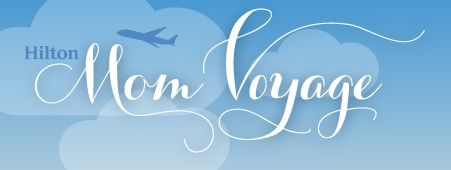
Mega hotel chain Hilton claims to offer a blog about “real families and their travels.”

But there’s just one small problem with that description, because if Hilton’s world is truly reality, then only about 7 percent of dads are traveling. Among its team of 15 bloggers writing about so-called “real families and their travels,” hiltonit’s only authored by one dad.

One dad!

But what we find even more disturbing is that the blog is called, “Hilton Mom Voyage.”

If that title doesn’t strike a nerve with moms and dads alike, it should. In Hilton’s realism, the word mom has become the generic term for parent, strong enough to stamp out the word dad from even existing.

We received news of this messed-up marketing campaign from an email titled, “Real moms give real travel tips,” a partnership with P&G, who has an Olympic-sized history of banishing dads from marketing through its self-proclaimed tagline, “Proud sponsor of Moms.”

We have no problem with real moms giving real travel tips. If moms want to give other moms, or even dads, some tips or advice, have at it. Both genders can benefit from a motherly perspective.

However, when the site’s focus is to offer experiences about real families, and pair it with a blog title that outright excludes dads, that’s when Hilton is sorely missing the mark.

Hilton may want to have a conversation with NBC News and The Today Show, where this past summer its online “TODAY Moms” web section was replaced with the less offensive and more inclusive, if not more modern, “TODAY Parents.” Its rationale is outstanding, but still, why did it take so long to make the change?

Back in the 1950s and 60s, the show employed “Today Girls” (no, they didn’t use all-caps then), who discussed fashion and lifestyle, reported the weather, and covered lighter-fare stories. The last woman to hold that position was Barbara Walters, who said nobody would take a woman seriously reporting hard news back then.

Yet, here we are some 50-60 years later, and dads are not taken as serious parents by Hilton.

When will Hilton make the easy fix that TODAY wisely did? Only Hilton can answer that.

In the meantime, the reality is, there are plenty of other hotel chains where dads and moms can take their business until Hilton realizes that dads like to voyage, too.

One year old

As far as we can tell, there’s not a single entity or individual on the Internet devoted to exploring and analyzing how businesses market their products and services to fathers.oneyearold

It wasn’t until we unveiled dadmarketing.com on December 14, 2013, that history was made.

Like with any new venture, there was some uncertainty about the amount of writing material, how readers might respond, and just what we might achieve.

There was never any question as to its need and relevancy. Dads remain left behind in so many facets of life, and most men don’t realize this until they become fathers themselves.

Consider the following:

  • Why are stay-at-home dads not taken seriously by media and society?
  • Why can’t marketers simply include dads in their messages and advertisements?
  • Why must old-fashioned, anti-dad slogans remain in a society that demands equality?
  • Does it really matter which gender predominantly shops for and feeds children?
  • If kids eventually grow up and leave the nest, at what point do dads become instantly capable of fending for themselves in a store, or in a kitchen?

Questions matter, and we’ll keep asking them. It’s part of our mission, our duty, and our purpose. So are all of your needs, and we plan to keep on listening to them, which help to keep us on target.

We’re smack in the middle of the holiday season, where dads and moms inevitably take part in various parties, some easier to stomach than others. But can you dads imagine attending a party where no one spoke to you the entire time?

Marketers do this all the time with word choices they make, and it’s more than disturbing.

One year is in the books, and as long as dads roam the earth, we figure we have many more to go. Thanks to all of you for your unwavering support, tireless goodwill and unmatched appreciation.

Our continued growth depends on feedback, so please keep it coming.

Here’s to the past year, and the years ahead!

With a little help from my friends

Last week dadmarketing had the pleasure of interacting with the excellent Tiny Blue Lines, a wonderful website we’re helphappy to have discovered. Highly recommended.

In our conversation, she brought up an interesting point.

You can head to our Twitter site if you want to read our discussion, but she made a comment worthy of further exploration when she said, “…props to all the dads who don’t think of (handling baby’s night feedings) as ‘helping’!”

That made us think.

In fact, it was enough to make us look up the true definition of help, which can be defined several ways, as noted at dictionary.com. Those most applicable in this case would be:

  1. To give or provide what is necessary to accomplish a task or satisfy a need; contribute strength or means to; render assistance to; cooperate effectively with; aid; assist;
  2. To make easier or less difficult; contribute to; facilitate;
  3. To be useful or profitable to.

However, when put in context with night feedings and caring for a baby – a role most associated with mom – it seems to puts dad back in the assistant/helper role, doesn’t it?

Consider the converse: if a dad was working on a car in the garage all day and mom said, “I helped my husband work on the car today,” wouldn’t that also connote feelings that she was merely an aide, or an assistant?

And then it hit us that this is one of the many reasons dadmarketing exists.

The more we can all rid the world of these labels, stereotypes and preconceived notions, the more we’ll be able to say, dad helped to feed the baby during the night, and it will simply sound like he provided what was necessary to accomplish a task, or contributed to something, or was useful.

Period.

And it won’t sound like he was only assisting his wife with one of her jobs during the night. And when a dad cooks a meal it won’t sound like he was being a good husband and helping mom out in the kitchen. And, maybe, just maybe, we can rid the use of that absurd “Mr. Mom” name.

Tiny Blue Lines’ comment was indeed thought-provoking, because props for sure, to those dads who don’t think of it as helping, but further props to those moms and dads who don’t categorize it a mom or dad job in the first place.

Search your feelings

So many people had been waiting for this weekend all year.

The anticipation was high, many combed the Internet first, and when the moment finally arrived, it was met with great enthusiasm – if not simultaneous screaming heard across the land – at the instant when people were finally allowed to obtain what they desired all along.

The new Star Wars trailer was unveiled.

In my circle of life, I don’t know any mothers who care about Star Wars. There must be plenty of fanmoms out there, but I think it’s a safe bet that they’re in the minority.starwars

The Star Wars culture is especially dominated by men and boys who grew up emulating Luke Skywalker, Darth Vader and Yoda.

Let’s face it, you’re far more likely to find a boy wearing a Star Wars t-shirt than a girl, and theater seats at next December 18’s midnight showings will mostly be males, many of whom dads who will no doubt bring their sons and impart lifelong movie fandom to their younglings.

Yet, is it not interesting how movies like Star Wars don’t try to market solely to dads?

Of course, the film’s inherent aggressive tone will appeal to a more masculine side, but movie marketers aren’t trying to seal the deal with forced pleadings to dad in the same way Jif and Kix think that shopping and feeding children must be mom’s solitary birthrights.

A mega-successful franchise like Star Wars certainly has its chances.

For sure, its movie marketers have multiple opportunities to play the father-son card with Luke Skywalker supposedly taking on the wise Obi-Wan-type master role, its interminable Jedi master-student themes, and the ever-quotable “I am your father.”

Rather, Star Wars appeals to everyone with a trailer that does not disappoint and leaves fans of all genders and parental entities feeling a part of the Force.

This Black Friday will go down as the best in history thanks to Star Wars, for it didn’t even involve the overused and illogical term doorbusters, nor did it disrupt and creep into anyone’s Thanksgiving.

And Star Wars didn’t make dads look or feel like turkeys.

Vote of thanks

We’ve certainly read enough “what I’m thankful for” messages in the past week, so all of creation hardly needs another.thanks

However, since we focus a lot on word choices that advertisers make, if there’s one that gets overlooked and underused, it is this: thanks.

That word has the power to praise, motivate and cheer.

In a marketing world that so often targets individuality and me-first, all the while leaving fathers out of the message, it’s nice to overuse that simple word as much as you can.

Yes, dads especially love hearing it. They repeatedly get ignored by marketers who prefer to speak only to moms, thus making them feel like second-class parents who don’t matter.

We believe this week’s annual exhortation to give thanks is overstated. Giving thanks seems like such an internal, individual, private affair done only in our minds, or perhaps just before Thursday’s big meal.

And all of that is fine.

But giving thanks is one thing.

Saying it is another.

Comparing bad apples to good oranges

We’re all looking to eat healthier in life, and judging by smarter food options that seem to be growing more readily halosavailable in the grocery and at restaurants, businesses are listening.

That’s making harder work for marketers, who’ve spent a lifetime selling the “sizzle” to generations who think only of their taste buds first, and taste buds second. Many still want instant gratification and happiness, and if that comes in the form of ridiculously unhealthy junk food, then so be it.

Most grocery stores spend little time on produce name brand offerings, and simply stock them accordingly with what they can get available through their distribution channels. The selection is all good, but as consumers, we don’t necessarily look on a pear for a brand label that doesn’t exist.

Enter Halos, and its promise of pure goodness grown inside the tiny wonder of the mandarin orange, perhaps nature’s even more perfect food than the ever-venerable banana and its once ubiquitous tagline.

I love and eat a lot of fresh produce, but I have to admit that I have never really cared much for the mandarin orange.

But the way Halos markets its fruit made me purchase some specifically from them, and isn’t that what marketing is supposed to do?

For starters, check out its addicting, sensational commercials with an entertaining, simple attitude that turn out to be memorable, and downright funny.

Halos could have easily taken the tired Jif approach and targeted only moms, but guess what – it included several dads in its brilliant Super Bowl quality spots – validating what we’ve been saying all along: fathers have the intellect and capacity to shop, and the instinct to feed their kids.

Go figure.

Now, wander over to its pleasant website – halosfun.com – where you’ll find a refreshing minimalism and uncomplicatedness in full force, reminiscent of the simple mandarin itself. There you’ll see plenty of words backing up what Halos presented visually in their commercials.

Like so many grocery store foods prior (yes, we’re looking at you again, Jif), Halos had plenty of chances to exclude dads, but it didn’t by using words like people, families and even a story about good ‘ol pops. Here’s a sampling:

“Liz Coulter works with Wonderful Halos to help people make healthier snack choices.”

“For snacking, kids’ lunch boxes, and families on the go, Halos are nature’s perfect treat.”

“My Dad always told me about receiving an orange in his stocking at Christmas each year, and that they looked forward to that kind of treat.”

“In fact, families like yours have made Wonderful the fastest-growing brand in America’s produce aisles.”

The fact that half of the energy for Halos’ packing facility comes from green energy generation ultimately confirms what we’ve seen since the beginning: Halos is a winner.

The Halos brand may be relatively new to the grocery store aisle, but judging by their dad exclusion-free attitude, we think they’ll be around for a long time.

Keep up the heavenly work, Halos.

Quality marketing is their recipe

How refreshing is this latest email campaign from Wendy’s?wendys

In a world where marketers often perceive moms as the parent-in-charge, here’s an invigorating approach from a company that’s simply giving both parents their rightful due. It was plain and simple, but it got the job done.

There’s no special web tab titled, “For moms.”

They don’t overdo it in the other direction with some out of place, one-time deal for dads so often seen only in June.

Their website doesn’t look overly frilly or feminine, as baby websites so often do.

They did their own way, and did it right – by focusing on family.

Like so many companies before them whose stories have been revealed right here at dadmarketing, Wendy’s had every opportunity in the world to exclude dads and put moms solely in the spotlight.

Rather, they use the words parent and family at every chance they get. While it’s not exactly a shared 50-50 equivalency among photos of moms and dads, we don’t think it’s necessary.

Their mission and focus is carefully crafted by a team who stuck to a game plan by highlighting the adoptees, and in turn, present some touching stories with class and dignity that make all parties feel welcome. They realize that families come in all shapes and sizes, and they didn’t exclude anyone in the process.

It was only one little email, but Wendy’s has dadmarketing’s highest Seal of Approval, and others should take lessons from them.

Wendy’s goal here wasn’t about hamburgers or the bottom line, but it all makes perfect business sense.

Well done, Wendy’s.

It starts at the top

You’ve seen these kind of ads in the back of magazines before. They’re a collection of magazine advertisers, sort of a parentsclassified ads section.

What gets me is how Parents magazine wants it both ways.

On one hand, they’re trying to appease to moms and dads by giving the magazine the name it has, yet when it comes right down to it, both stories and ads in nearly every issue largely speak only to moms.

It’s laughable how editors don’t even realize what they’re doing. Note the small print at the top: a Parents magazine logo, followed by the words, “Must-haves and must-dos for mom and family.”

So is this section for parents, or just moms?

Then you have the “Baby Depot Savvy Mom, Happy Baby Sweepstakes.” (The contest title is goofy enough: are dads not savvy, resulting in unhappy babies?) But here’s the real kicker:  the contest was open to any legal resident 18 years and older – that means dads were allowed to enter a mom contest! Kind of reminds you of this weirdness, doesn’t it?

So, in one fell swoop we have dad exclusion, a contest not fully thought-out, and a marketing blunder that leaves egg on the face of both Parents magazine and Baby Depot.

It just goes to show you that it starts at the top.

Parents magazine could have talked to the advertiser about their contest gaffe, but without practicing what they preach (as in the magazine’s name), it’s hard to put the blame entirely on Baby Depot.

Let’s get back to the basics, Parents magazine. If you’re truly a mag for both mom and dad, start acting like it – and your advertisers will, too.

A for-letter word

4moms is a robotics company founded in March 2006 which makes high-tech baby gear. 4momsAmong several other items, it offers for example, the world’s only power-folding stroller.

If that isn’t cool enough you should check out its infant tub which fits in most single and double basin sinks, where a side drain allows dirty water to drain out as fresh water flows in.

Or dig the infant seat and its five unique motions that mimic the natural movements parents make to comfort a baby.

All of the ultra-nifty technology is enough to make mom and dad put down their smart phones, and…

Wait … not dads.

This gadgetry is only for moms, right?

Well, yes and no.

Recently, we had a pleasant 140-character conversation with the friendly folks at 4moms, who enlightened us that its company name merely comes from an initial focus group held that consisted of four mothers.

Cute and unique, indeed, but in a baby world where businesses purposely leave dads out of the parenting mix, it’s a saying that’s well-worn.

Had the name been 3moms or 5moms, we never would have taken issue with anything. Imagine that the wildly-successful burger-maker franchise Five Guys had been named 4Guys – that means something else entirely, doesn’t it? We’d all perceive them differently, and wouldn’t women be deservedly up in arms?

We’re sure the desire of 4moms to match true company history with the play-on-words was too good for them to pass up, but you know who gets passed up in the process?

Dads.

Oddly enough, the company was founded by two dads.

4moms assured us that they “definitely know” that dads count too, but there’s little proof of that by way of the website and anything on the product proving otherwise. If anything, it’s just the opposite, with a 4moms logo adorned vividly.

Sure, they could add a special section honoring dads or put some extra wording on their website somewhere, but that would do little to market to the in-store shopper.

What would a company called 4dads be about? We have a few ideas, but we doubt baby products is one of them, and that’s our point.

Dads are parents too, and it’s time businesses start listening to fathers everywhere.

Judging by its products alone, 4moms seems to have a bright future ahead, and eight years in the books for a company like 4moms is kind of like eight months in baby years. 4moms is still very young.

Which is why we think it’s plenty early and not too late to consider a name revision: how about 4moms+4dads?

Such a name would pay homage to its founders, Thorne & Daley, who must deep down care a thing or two about dads.

And speaking of care, if 4moms really cares – as its charity’s name suggests – how about starting with its customers?

As in, all of them.