TEAM: Together Everyone Achieves Marketing success

applegateI think we’d all agree that sports involve some measure of teamwork. Even so-called individual sports like golf and tennis have caddies, coaches and often an army of behind-the-scenes aides to help athletes achieve their best.

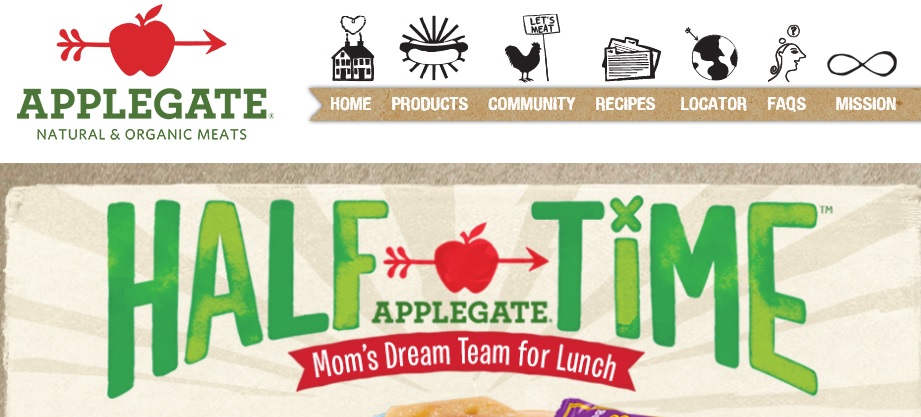
Applegate could have used their sports analogy quite well in its recent cross-promotion with Stonyfield and Annie’s, but instead completely drops the ball by forgetting one of its teammates.

As we’ve seen so many times before, dads were not just left on the sidelines, they weren’t even invited to play.

Applegate calls their latest pairing with Stonyfield and Annie’s “Mom’s Dream Team for Lunch,” then uses more words to make sure dads really feel the hurt:

  • “We invited Stonyfield and Annies (sic) over for lunch!”
  • “As friends and teammates, we share the same goals.”

Let’s take a look at some of these words that must surely pain dads: invited, friends, teammates, share same goals. Applegate clearly places moms on the team, because this new pairing was already referenced earlier as Mom’s Dream Team for Lunch. Dads on the other hand, as was already established, weren’t even invited.

So, as we decipher this ad further we find that Applegate not only excludes dads, but they classify dads as playing on a different team: dads aren’t friends with Applegate; they aren’t teammates; they don’t share the same goals.

Ouch.

In sports or in business, winning is hard work. But spread around to everyone it lightens the load.

Hopefully Applegate won’t realize that too late, because losing hurts even more.

Mytake on Myworld on Mytime

I once heard someone say that there are no new ideas in marketing, just old ideas being reused over and over again.

Who can really argue with this?mygerber

Today’s version of the already 21-year-old “Got Milk?” campaign is the “Keep Calm” slogan, now printed on a t-shirt near you.

But in this personalized, me-first world, none of that is enough. Marketing must go deeper, right down to the individual user.

Today we have nearly every company tagging their business name with “My” on the front, in an attempt to individualize the customer experience, and make everyone feel like they count through their own separate, customizable world.

The My epidemic is real, and it’s everywhere: My Yahoo, My MSN, MyPanera, MyFitnessPal, My Ebay, My Apple, My Verizon, My Coke Rewards, My Garmin, My Best Buy, My Cloud, My AOL, MyLife, My Starbucks, Myspace, myHerbalife, MyScouting, My American Heart, My Dish, My NASA, myEarthLink, My Wells Fargo Rewards, My Xbox Rewards, My Cub Rewards, myPLACE, My Bayer, MyWedding.

My. Oh. My.

And when exactly did My become a positive word? Starting at a very early age, most parents are trying to rid that term from their toddlers’ language: My toy! My clothes! My cookie!

Even the overused expression selfie – an act which is hardly novel – has connotations of self-absorption.

I long for the day when a company uses the word My in less possessive, more playful sense, such as the motto, “I Want My MTV” or “My Little Pony.”

Customization isn’t anything new. Once upon a time, Burger King offered us their famous “Have It Your Way” campaign of the 1980s. But now it isn’t enough to be talked to, as Burger King once did by telling us we could have it however we wanted it – perhaps a prelude to this growing narcissistic ad world. Today’s companies are obsessed with the notion that customers must want to have it the other way around, as if we the customers are talking directly to the company by calling the shots through our own personal account and unique website.

It seems that no one wants to have it both ways and simply carry on a conversation, despite what companies may claim.

And that includes the ever dad-unfriendly realm of Gerber, who now offers the senseless MyGerber using the distinctive tagline, “For mom. For baby. From the beginning.”

This case of Gerber My disease is tragically comical. After all, there must be a dad or two employed at Gerber somewhere, yet not one of them spoke up to offer the premise that perhaps MyGerber’s tagline should also include “For dads,” too? Aren’t dads involved from the beginning through the conception of their babies?

Perhaps if companies started thinking in terms of “we,” there might be increased dialogue, mutual respect and greater understanding between businesses and customers; the label “we” would by default include dads, too.

It might even give all of us one less key fob to carry, and one less username and password to remember.

Cake loss

Trying to rid the world of dad exclusion regarding anything kitchen related is like asking a Kardashian to stay away from a camera lens.

It’s a challenge, but dadmarketing came into being just for this.

(The dad stuff, not the Kardashians.)bettycrocker2bettycrocker1

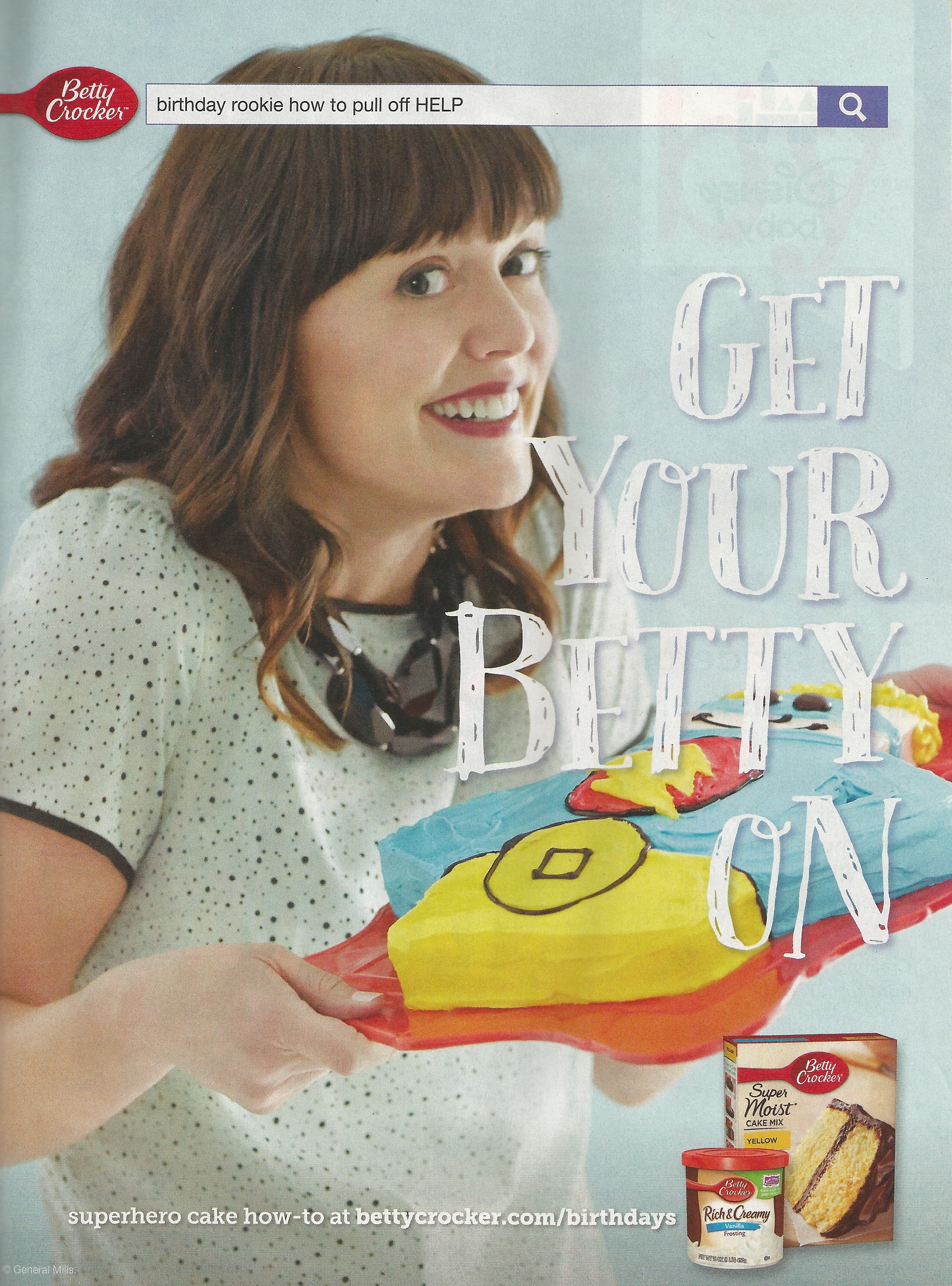
Our latest offender is Betty Crocker, which should not come as all that surprising. But what is surprising is how Betty Crocker did it, and so very unnecessarily.

A quick look at the ad reveals nothing glaringly wrong. There aren’t any Kix-like, dad-excluding slogans plastered front-and-center. There aren’t any “Attention Mom” banners adorned at the top. The word “mom” really isn’t anywhere noticeable.

For a few brief moments we were actually overjoyed about the possibility of a column lauding Betty Crocker for not pushing the “baking is only for moms” agenda.

But then we read the fine print.

If you took the time to dig all the way through this copy-heavy, two-page spread from the September 2014 American Baby magazine, you’ll find that it’s really not directed at dads whatsoever, because Betty Crocker assures that after a day of baking, “you will look like Wondermom!”

How’s that for a red-spooned slap in the face, dads?

You see, venerable Betty Crocker, you may be surprised to know that some dads like to bake for their families. Dad doesn’t come home from work with mom waiting there and hot food on the table like it happened a few generations ago. What’s more, boys like to bake too, and you could learn a lot from Hasbro, makers of the Easy Bake Oven, who developed a boy-friendly version of their classic toy after one young girl simply spoke up.

Betty Crocker has been around for almost 100 years, and has been moderately progressive in modernizing their female likeness over time. But their treatment of dads in today’s modern world where fathers clearly do more than past generations makes them look stuck in the past.

No one should know better than Betty Crocker how the tiniest ingredient can alter an entire recipe. That’s exactly what happened in BC’s latest ad blunder.

We’ll be surprised if we ever hear from Betty Crocker, seeing how they’re operated by General Mills, makers of two of the most dad unfriendly brands around: Cheerios and Kix. We’ve tweeted them before, and they’ve ignored us like a stale cookie crumb.

Still, we’ll keep trying, because a small change in marketing approach would require “no superpowers needed,” and then we can all celebrate together with a Betty Crocker dessert.

Until then, we’ll just keep using another brand actually created by a man who knew a thing or two about cakes.

Really cheesy

If roughly 64 percent of mothers are working moms, and the proportion of working moms has gone up 800 percent since 1860, then who’s feeding kids after-school snacks?babybel

Not dads, according to the marketing team at Babybel.

We found another discouraging ad in the October 2014 Parents magazine which makes dads feel like they don’t count. That ad is from Babybel, who used two simple words (“Attention Moms!”) to change the entire focus and feel of this print ad.

It’s not like we see Babybel advertising during primetime TV or in USA Today, so when they do spend their advertising dollar we suspect they need to get a hit during every at-bat. That’s what makes this ad even more disappointing. They placed it in, not a mothers-only magazine, but Parents magazine, where they had a chance to market to both moms and dads. Instead, they came up flat.

Ironically, Babybel’s website proclaims their cheese to be “the snack your whole family will love.” That seems difficult to believe, as they single-handedly made dads to be nonexistent when it comes to providing the after-school snack.

At the bottom of the ad, Babybel’s message ends with “Let’s be friends.”

That’s a tough request for dads to consider. They weren’t even asked in the first place.

Bad medicine

Change is hard for products stuck in the past, but for a company that’s brand new it may be easier to look drcocoamodern and get things correct right from the start.

Take for instance, sports nicknames. If I started a new professional sports franchise, do you think there’s any chance I’m going to choose an antiquated and offensive team name like the Redskins, Indians, or Chiefs?

No. Way.

So what in the name of Jif Peanut Butter is going on with new children’s medicine Dr. Cocoa?

If you’ve been unlucky enough to get your hands on a copy of the October 2014 Parents magazine, you’ll notice that there’s an ad for a new kids medicine called Dr. Cocoa (pictured). In Dr. Cocoa’s advertising world, dads simply don’t count.

Dr. Cocoa continues to perpetuate the unfortunate notion that dads don’t really take care of sick kids at night. That’s supposedly what moms do, and dads are pinch hitters at best.

There’s nothing like introducing a new product with a decent premise and completing blowing the premiere by alienating dads right from the start.

And I thought owls were supposed to be “wise” creatures.

Beyond words

Parent-type magazines seem to regularly flub up the whole dad thing. Whether it involves headlines, photos, stories, or ads, these magazines seem to consistently fail in execution. Our latest discovery is no exception.parenting

At parenting.com you’ll find a “Just for Dad” section, along with a “Just for Mom” section. There’s no denying that dads and moms are different people and can operate as parents differently, so each section seems reasonable in terms of need.

Our problem comes in their description of each section. Let’s take a closer look at what you can actually find posted for real at parenting.com under the menu tab “parenting advice”:

  • Just for Mom: Mom is supposed to know it all, all the time. But what if you don’t? With some tips from experts and the wisdom of other moms, we can figure it out together.
  • Just for Dad: Guys, need guidance on dad issues like out of control diapers and surviving a trip to the store with kids? When your partner isn’t around, let us be a resource for all your parenting questions.

Here at dadmarketing, we decided to translate this hidden, marketing-driven-speak so we can all compare apples to apples. Here’s what each description really says:

  • Just for Mom: Mom isn’t just supposed to know it all, all the time; she does know it all, all the time – and dad is not expected to, because mom usually does the parenting. That’s right, don’t trouble asking the dad in your household, because he simply doesn’t know what to do. Ever. That’s why we have tips from experts and wisdom from other moms available here, because dad doesn’t handle the kids as much as mom. He cares too much about his job. We’ll figure it out together without the help of dad, who doesn’t bother to help you anyway. Even when he’s not at work, that lazy, bumbling guy is too busy watching sports in his man cave, anyway, right?
  • Just for Dad: Guys, need guidance on dad issues like out of control diapers, because we all know dads don’t know how to change diapers. Dads usually let moms handle that stinky stuff. Even if they handle a rare diaper change, most dads dry babies’ bottoms with automatic hair dryers in bathrooms, so that says something about their parenting skills. They don’t even know how to do those pull-tab things or clean up when the dirty work is done. And dads, don’t even attempt to take your kids to stores, because you won’t survive it. Note that we don’t say you won’t be able to endure it – you simply won’t survive it. It’s truly a matter of life and death that you don’t go to the store with your kids. So, turn to this section for resources when mom (swallow hard) actually grants you permission to be home with the kids alone.

How about that original word choice by parenting.com? Who says mom is supposed to know it all? We know who: only those saddled by old-fashioned stereotypes which parenting.com continues to perpetuate. An informal dadmarketing office poll found that no one in our circle of friends or family thinks like that.

And dads needing guidance to survive a trip to the store? Would anyone ever dare say that to a mother? Ever? Then why say it to a father? It’s demeaning. It’s belittling. It’s condescending.

The irony in all this is that parenting.com’s tagline is: Modern families + fresh ideas. We don’t see anything modern or fresh about their choice of words.

Remember parenting.com: words are your business. Without them, you don’t have a magazine or a website.

Let’s hope for a revision soon.

Jif, ignoring the problem only makes it worse

We seem to be on a Jif Rift lately.jifad

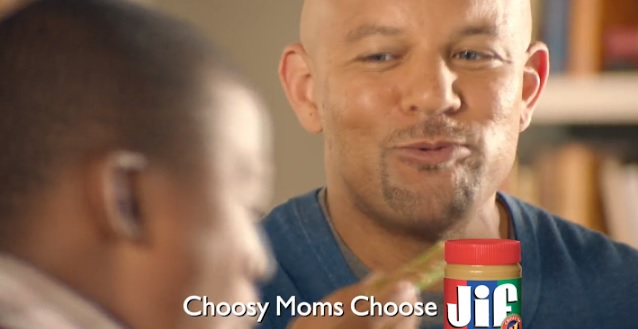
Part of it has to do with Jif ads on TV. They’re continuing to use the outdated, old fashioned choosy slogan that further validates they are the “Washington Redskins of Ad Slogans” (refusing to change when others say they need to). Their new ads during prime time bring back the unpleasantness into the limelight once again, so in effect they’re creating their own problems.

Another complaint has to do with their blatant snubbing of our inquiries. We’re simply trying to chat with them via Twitter, but they’re flat-out ignoring us. Herein lies the principal reason we were formed – to stop dad exclusion in marketing and advertising. It doesn’t matter how good a product is, if Jif doesn’t even listen to its consumers (i.e., dads), they’re not maximizing their potential. Period.

Odd as all that may seem (and believe us, Jif continues to get more odd everyday as they press on with this ridiculous slogan in today’s world), the fact they added their only-audible, non-print dad-add-on, “Choosy moms and dads choose Jif,” makes things even more peculiar.

Here’s what Justin Aclin of the excellent Hunter PR blog wrote on February 22:

“‘Brands get in trouble when they think having a dad in the commercial necessitates calling out that it’s a dad,’ said Chris Routly—who gained national attention when his blog The Daddy Doctrines called out a Huggies ad campaign to the point where the ads were eventually pulled—on a panel discussion called ‘Marketing to Today’s Dad.’”

As if this quote wasn’t enough, notice the image featured in this blog post. Doesn’t the photo make Jif look like a confused company when coupled with their slogan? And as we pointed out on July 17, this silly add-on only draws more attention to the fact that Jif has excluded dads for a long time.

It’s been 56 years since Jif was introduced in 1958, but it’s not too late.

Jif, please make things right and be a brand of the future, not your past – because as we consumers see it now, your past is your present.

Labor over this

In many cases, dad remains as the provider for the family. Statistics show that men traditionally make more money than women (which I think we all can agree is unfair), therefore making dad the unofficial breadwinner.

But no matter whether you’re a dad or a mom, there remains the ugly truth that many are workaholics. We put in hours-upon-hours after work, staying late, working on the weekend, all to try and get ahead or impress the boss. So often it doesn’t even result in more pay, just more time away from loved ones.

If you’re a casual sports fan, you may have heard that James Harrison, a five-time Pro Bowl linebacker and former NFL Defensive Player of the Year, just retired from football last week. Harrison spent 10 years with the Pittsburgh Steelers and one final season with Cincinnati. He was a great success on the field.

But did you see what he said upon announcing his retirement?

“I have made the difficult decision to retire as of today,” Harrison’s statement said. “My love for my family and the need to be there for them outweighs my desire to play the game. I have missed too many experiences with them because I devoted SO much time to my career.

My love for the game isn’t strong enough to make up for missing one more birthday or first day of school.”

Harrison is only 36, yet I’ve heard some share these same sentiments at 63. Admittedly, there are some professions where working long hours are part of the business, and most know that when they get into it in the first place.

But imagine how many dads go an entire lifetime focusing more on work than anything, to the neglect of their family. No one on their death beds ever said they wished they had worked more. Work is important in our lives, but do you live to work, or work to live?

Perhaps this Labor Day all dads can take a moment to rest, and do it with family. Your kids don’t want gifts, money, or entertainment – they want your time.

Reel influence

For as many superhero movies as have been created in Hollywood, you’d think by now the industry might take heed of their own advice, “With great power comes great responsibility.”mrmom

The movie industry wields immense power in more ways than one because we love our movies. We watch them in the theater, we rent them, we buy them, we subscribe to them, we quote them, we wear them, we sleep on them, we tattoo them on our bodies.

Movies have huge fan-base followings with week-long conventions. Movies have specific theme park rides. Movies spend millions on advertising campaigns, in fast food restaurants, on billboards. 

Some movies will be eternally watched by the next generation on different formats, living on forever in pop culture fame. Others may never be watched again.

Most are probably in between, but their influence remains.

Take “Mr. Mom,” for instance, and the lasting legacy it has left on dad stereotypes.

The film was made 31 years ago, enjoyed quite decent success, and was clearly a product of its times. In the early 1980s women were making fantastic strides in various arenas. Sandra Day O’Connor was named the first woman justice of the Supreme Court. Sally Ride became the first U.S. woman in space. Geraldine Ferraro was the first woman nominated by a major political party to run for vice president of the United States.

These historic events brought about major changes to women. It opened up doors to professions that had normally belonged to men, and demanded equality in nearly every walk of life. It wasn’t perfect and still isn’t, but the gender balance was becoming more balanced.

Given all these events, it was no wonder that famed movie writer John Hughes came up with a mom-dad role reversal movie that many found hilarious. Three decades later, stay-at-home dads are still not the norm, but it’s easy to find humor in the storyline.

The name itself is so self-explanatory, that one hardly needs to see the movie poster or even watch a clip to wonder what it might be about. Its title has been used over and over so many times that it alone demonstrates the power of the movie industry, and overall media influence.

Nearly any reference to a stay-at-home dad, whether in media or informal conversation references the movie title. A label was born, and it will never go away. “Back to the Future” is another over-referenced movie title that comes to mind, and seems to work its way into language anytime someone needs a catchy reference to the future.

If the “Mr. Mom” movie had been given a different title, say, “Switcheroo,” would the movie have slipped out of our pop culture consciousness a long time ago? If Hughes were able to bring back the original cast for a sequel, would a title and premise such as “Mrs. Dad” have the same effect?

I have no issue with the “Mr. Mom” movie concept. But we must all remember the thought, “With great power comes great responsibility.”

Truly, the next time you’re ready to tell a story – dear movie industry – and spend money on actors, sets and marketing, consider that you’re not only investing in millions of dollars, but also into the human psyche, for which there is no price tag.

And the only sequel to that is the next generation of consumers, of whom you apply great influence.

You can’t fault them for trying

We came across an interesting magazine ad the other day by American Family Insurance. At first glance, it seems as though they’re one of the few companies to get it right, but let’s take a closer look with a dadmarketing eye. 

All dads, no moms?amfam

You might be thinking, can’t dadmarketing just be happy with this all-inclusive dad ad? Yes and no. Yes, because it’s refreshing to see what might be a record number of dads (three) in a magazine ad. No, because it’s not necessary, and not what we believe in. You see, our main focus is to stop excluding dads from marketing campaigns, not make them the only focus. Moms belong in ads every bit as dads do.

If this was an ad for a male-only product – face shaving cream, suits, underwear, etc. – we’d see the need. But an ad for insurance is every bit a “mom” product as a “dad” product – it’s a “family” product, a word that’s a third of their name. Bring on the moms, we say!

The role fits the part too much

We’ve watched, heard and seen other insurance ads, and yet another stereotype is that insurance is the guy’s domain. Dads are the protectors of the family, right? So, moms supposedly let dads handle this department, just like dads supposedly let moms do all the diaper changing.

Having only dads featured in this ad reeks of formulaic cliché.

Stereotypical roles

Indeed, dads can perform all the roles as featured in the AmFam ad – buying sports equipment, going fishing, painting – and there’s certainly nothing wrong with these tasks. But aren’t they being a bit typecast here? We think dads should be featured in real, everyday roles, too. If anything, one of the photos could have shown a dad doing a task normally classified as what most think of as “belonging” to a mom: baking, making crafts, grocery shopping. After all, dads do these things too, right? Right.

All in all, much can be learned from American Family Insurance’s valiant attempt, as we have to believe it was good-intentioned.