Yes, dads change diapers: why this degrading story needs to disappear from Huggies’ website

As dads continue to strive for equality in parenting, modern day media persists in poking fun at the so-called incompetency of bumbling fathers. We’re not talking about 1983’s “Mr. Mom,” but far more recent works.

You may recall that in 2012, Huggies started a marketing campaign titled, “Have Dad Put Huggies To The Test.” The series of ads portrayed dads as inattentive caregivers, and thus, propagated old-fashioned stereotypes. Huggies received a heavy dose of backlash from dads, who shared their disappointment over the ads.huggies7.png

The marketers at its parent company, Kimberly-Clark, were forced to embark on some serious damage control after one father started a “We’re dads, Huggies. Not dummies” petition that garnered more than 1,000 signatures in less than a week. Social media fervor grew – Huggies learned a quick lesson the hard way and swiftly pulled the ads.

Despite all the profuse and warranted apologizing that followed, Huggies didn’t seem to learn from its unfortunate experience. To this day, its website still contains maintains a “Mommy Answers” page with no comparable dad counterpart. Huggies print ads also continue to speak only to mom by name, and there’s gender biased language on its site throughout.

Yet, one of its worst jabs is even more recent – which harkens to its “dad test” campaign – and you can find it live at huggies.com.

There you’ll find an article offering the unabashed advice, “4 Ways to Get Dad to Do Diapers.”

It’s almost unthinkable to believe a headline like this could exist anywhere, but it does. Imagine seeing a story titled, “4 Ways to Get Dads to Cook,” if you’re looking for a comparable headline that would too cause an uproar.

Like so many other “parent/baby” companies, Huggies will claim to speak to both moms and dads. Huggies has even taken steps to sponsor the At-Home Dads Convention, donate diapers to the National Fatherhood Conference, and has an ongoing relationship with the City Dads Group – all noble and noteworthy causes.

Between Huggies’ generous donations and disparaging story – it creates a strong disconnect we can’t ignore.

Huggies’ lack to change its marketing strategy towards dads and genuinely embrace them as valuable shoppers is an example of how respect for dads seems to continue to take a massive backseat to the unwarranted stigma about dads.

Gender equality can never be achieved without dropping the sly innuendo that degrades and belittles the institution of fatherhood.

Right about now, dads could use a hug. What do you say, Huggies?

Boy meets world: new toy maker proves boys, dolls mix

The year was 1985 when the third largest toy maker in the world, Hasbro, unveiled its new My Buddy line – a doll geared toward young boys.  The toy was relatively masculine in color (red, blue) and clothes (overalls, sneakers, ball cap), and was marketed as a buddy tagalong during playtime, not unlike man’s original best friend.  Its resemblance and feel to that of a Cabbage Patch Kid was no accident as Hasbro was trying to capitalize on the then-intensely popular doll designed largely for girls.

Not much remains from My Buddy’s short-lived tenure as it disappeared sometime in the 1990s, though you can certainly find vintage dolls at a web browser near you.

Perhaps more curious is a visit to its concise Wikipedia tribute page, where one small line reveals just how little progress society has made regarding toy stereotypes and breaking gender barriers:

“The (My Buddy) idea was both innovative and controversial for its time, as toy dolls were traditionally associated with younger girls.”

For its time?  That was 32 years ago, and has anything really changed?  Take a walk down any toy aisle and it seems the answer is barely.

However, one progressive company is looking to make good on lost time, and from the neglect of our toy forefathers and their shortcomings.

That’s my boyboystory3.png

Boy Story, launched in 2016, offers high-end 18″ poseable action dolls, plus a book series, built to last and blast through modern day stereotypes.  Think American Girl Doll finally meets boy – similar to how Barbie has Ken – an idea by design to ensure Boy Story dolls are fully make-believe compatible with other equivalent girl dolls.

“We want to make it easy for boys to feel comfortable playing with dolls and get rid of some of those gender stereotypes that we see as harmful,” said Kristen Jarvis Johnson, co-founder.

The concept arose through a Kickstarter campaign and has blossomed into a full-fledged boy doll company set to make serious noise at next month’s famed New York Toy Fair, as well as through a partnership with the UN Women’s solidarity movement, HeForShe.

In the beginning

Boy Story founders Johnson and Katie Jarvis are a robust and inventive sister-duo who boystory4founded their enterprise out of frustration.  When Johnson became pregnant with her second son, she wanted to purchase a doll for her older son – one that could help him get accustomed to the future arrival.  She visited store after store and found none that could withstand serious play, nor offer true masculine features.

Johnson would eventually leave her law career to raise her two boys full-time, and fully immerse herself into the Boy Story concept.  Throughout the Kickstarter phase and initial sales, which began this past October, Johnson has heard plenty of positive feedback from parents who believe her toy is long overdue.

“Moms love it for the most part, and grandmothers love it,” Johnson said.  “A lot of dads like it, but a lot of them are skeptical about it.  When they see it in person, they think ‘That’s so cool.’”

All dolled up

Boy Story dolls are not only sturdy, but they have plastic sculpted hair (ideal for clean-up after, say, sandbox play), heavy canvas material for their bodies and each comes in large, sturdy boxes.  There are even dolls of different skin and hair color.
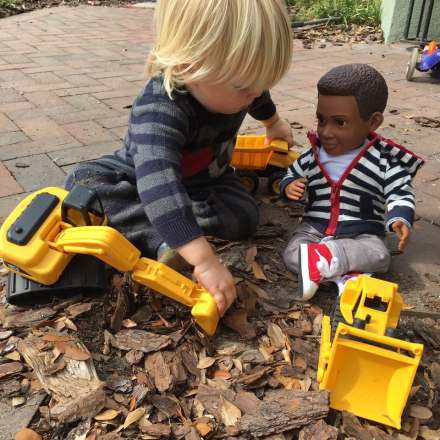
boystory1.pngThe dolls’ primary target age is 3-8, and they’re designed for both boys and girls.  Boys, in particular, appreciate finally having a relatable toy that helps them celebrate boyhood, while girls appreciate having a companion to go with their female dolls.

The concept is also unique in that it may be the only toy currently on the market which allows boys to embrace and grow their natural desire to become nurturers.  Girls have plenty of feminine baby dolls to make-believe being a mother, but boys have nearly nothing by way of masculine toys that allows them to mimic being a daddy.

Boy Story now fills that void.

“We haven’t seen (a boy doll) partially because society, for a long time, said we have women in the home who took care of that turf,” Johnson said.  “And boys weren’t really considered to be in the home and nurturers – and the toy market catered to that, and that developed over time that boys don’t play with dolls.  But we’ve seen that boys play with dolls when you give them dolls.”

Play time diversity

Johnson fully believes their concept is changing with the way the family dynamic has evolved.boystory2.png

“As we see our society changing and families sharing the load and balancing our lives, it’s just doing what we do and taking care of life,” she said.  “The idea that boys don’t play with dolls is less relevant.  The reality is that we have hands-on parents, and it negates the idea that boys don’t play with dolls.”

Boy Story, she believes, finds a proper balance between the real world and the toy market, which hasn’t caught up to the times.

“The toy market, like it or not, has said that pink is a girl color and blue is boy color,” Johnson said.  “And if you try to give a pink baby doll to a boy, it kind of goes against the grain of the trend that the market is pushing on children.  So, we’re trying to erase that cycle in a way that recognizes that there is that conditioning in society, and that boys want things that are boyish.  You’ve got to break down that barriers before you can play in the sandbox.  Let’s give him a doll, and once they’re comfortable with that, we’ve made the sandbox more equal.”

Keeping masculinity real

Johnson realizes not everyone is a fan of the Boy Story concept.  Some tell her it’s not needed, some insist it won’t sell, and others condemn her for “trying to turn all of our boys gay.”

Millennial parents tend to warm up to Boy Story because they’re tired of the hyper-gender, pink-blue issues with toys.  Generally, older parents don’t approve of the product, and some men’s rights activists think Boy Story is pushing feminism down their throats.  If anything, Johnson contends, they’re trying to bring more authentic masculinity to toys without action figures needing to appear ultra-muscular, wield violent weapons, or don a superhero cape.

“I get reactions all over the map,” she said.  “Some will want it and some won’t, and that’s fine.  If someone says, ‘Boys already have dolls, they have G.I. Joe dolls’ – my response is that the dolls we make are completely different.  We’ve had really positive sales and have a lot of parents who appreciate having a boy doll available to them.  For us, it’s about expanding diversity in the toy market.”

More than just toying around

Johnson said that American Girl Doll once sold a boy doll that was only sold in a set with twins, and the size was smaller.  It discontinued that product in 2016.

So, she’s thrilled to bring this new, modern idea to the illustrious New York Toy Fair held Feb. 18-21, where Boy Story stands to gain a huge leap in legitimacy and recognition.

“You can really feel out the market there,” Johnson said.  “You get a much stronger sense to feel what other retailers are interested in you.”

Boy Story has also partnered with HeForShe, where it will launch a special edition doll in honor of International Women’s Day on Mar. 8.  Johnson believes that Boy Story’s mission to engage men and boys as agents of change aligns perfectly with HeForShe’s work.

“It’s a huge opportunity for us, but also for us to really tap into distribution networking to get our dolls out there so we’re accomplishing our mission,” she said.  “It’s great for legitimizing our company, but also for helping HeForShe and its work.”

Games people play

The toy industry, Johnson believes, loves the divide between boy and girls toys.  By boystory5.pngpainting one bike blue and another pink, companies make more money when they find a way to separate products by gender – they’re creating demand even though there’s no difference in the two bikes.

“A doll is a little bit different,” she said.  “Dolls represent people, and they have genders associated with them.”

But the divide was never fully appreciated by Hasbro in 1985.  Strangely, the My Buddy box never proclaimed the toy as a doll, nor called it a boy.  It almost seemed uneasy about admitting reality, something that Boy Story proudly declares:  this doll is indeed a boy.

Where are the dads in the Disney galaxy?

For all the positive mojo Disney cranks out on a regular basis, it appears to have a genuine problem with finding – how shall we say it – balance.

Last week a story circulated on the Internet titled, “Where Are the Moms in the Star Wars Galaxy?”  The writer argued that while mothers do play a role in the Star Wars universe, they don’t receive as much thematic prominence as father-son/child relationships.  It’s a thought-provoking piece with strong merit – highly recommended.

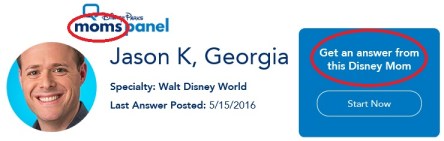
Then, just two days later, Disney Parks revealed the members of its 10th annual Moms Panel – an online forum for everyday people to share helpful tips and vacation planning advice.disneymoms6.png

The problem is, the panel isn’t a representative sample of everyday peopleit’s overwhelmingly comprised of only moms.  Of course, this is not a bad thing, but the imbalance is; it’s important to remember that dads are part of families, and vacation planning involves them, because they too have plenty to share with potential travelers about the topic.

But Disney awkwardly placed a lone dad on this year’s Moms Panel, thereby disrespecting and ignoring his parental title and thus cutting last year’s dad total – if you can believe it – in half.

Its actions disregard fathers as fully competent, equal parents, much in the same vein that Jif Peanut Butter’s long-standing catchphrase excludes dads as dedicated customers.disneymoms1

We wrote about the Disney Parks Moms Panel last fall and received positive feedback from readers who also implored Disney to catch up with the modern world and to better represent what families mean today.

We realize that equality takes time, so we didn’t expect Disney to instantly even out the number of women and men on the panel, although doing so would rightfully provide a true representation of all parenting travel issues.  However, we thoughtfully anticipated a name change in the spirit of authentic, modern parenting.

Unfortunately, Disney let us all down, because it’s not just dads that end up on the short end of the stick.  It’s the kids and the spouses who deserve a vacation planned at least partly through a fatherly perspective.  But they’ll hardly get that, because instead, dads are being treated like second-class parents who simply don’t matter.

Hilton also operates a similar travel panel with a comparable name – Hilton Mom Voyage – and it has a mere three dads among 30 panelists.

Echoidisneymoms4ng the words of the Star Wars column, dads deserve better.

The members of next year’s Disney panel will be announced soon enough, but why wait that long to properly rename the panel?

Disney, let’s make things right, because families are stronger – and vacations are more magical – when we’re united as parents.

Armour has gone under

There’s no question that moms deserve heaping praise for all they do as parents. However, running a six-month contest that ignores dads as equal parents? Well, that leaves a bad gender bias taste in our mouth.

Thisarmour3.jpg kind of exclusionary practice has no place in the parenting world. Simply put it’s sexist, and it sends many poor messages to fathers:

  • You aren’t the lead parent; you’re only an assistant to mom, at best.
  • You don’t matter to Armour as customers.
  • You don’t shop, cook, or raise your kids.
  • You aren’t worthy of our praise.

Had this promotion been conducted as part of a Mother’s Day contest and then followed up with a comparable Father’s Day sweepstakes, we’d say – fantastic.

But instead Armour chooses the stereotypical, old-fashioned path that suggests moms handle the kids and everything in the kitchen. Dads – as they tell us all the time – are actively involved with their families and remain on an equal plane every bit as their spouses. And awkwardly enough, even a dad can win this Great Moms Sweepstakes.

It’s time that Armour reconsiders its approach and makes things right. Now.

Seahorse of a different color

Every good invention is born out of necessity.

So when Don Hudson created Seahorses – America’s first and only retail store geared toward fathers – nothing surprised him about the process, his concept and its need. What surprised him was that no one had ever thought of it before.seahorses4.JPG

“That’s what blows my mind,” he said. “That no one has done this before. How am I the first? That no one noticed this huge, gaping market before?”

That huge, gaping market – as Hudson knows all too well – belongs to dads.

“When you market to that dad like he’s a mom, you build up a wall,” said Hudson. “He doesn’t want to talk to you.”

Yet every bit an equal parent who nurtures, raises, feeds, shops and provides for his family, dad remains ignored by marketers who either don’t know how to reach him, or purposely avoid his presence based on habit. Old fashioned stereotypes and labels may die hard in the world of marketing and media, but it’s ancient history at Seahorses in Portland, Ore., where Hudson’s progressive shop has skyrocketed to notoriety since opening in June 2015.seahorses1.JPG

His shop celebrates the unique needs and challenges of parenting as a father in a world that traditionally caters to mothers.

What makes men uncomfortable in stores? Not having products with which they can’t relate as fathers. At Seahorses, you’ll find plenty of baby, child and parental items necessary for raising a family – but with an eye on dads.

So while big box baby stores have nursing equipment, Seahorses offers Leatherman multitools and shaving kits. Traditionally diaper bags are frilly and pink; no dads want to carry those, and some moms don’t either. Hudson curated diaper bags that are masculine and stylish enough for fathers to sport. Other baby stores offer organic clothing, but dads don’t care about that; they want things to last. So, Seahorses offers Carhartt kids clothing. No maternity tops here – try matching dad and child shirts.

seahorses6.jpgA lack of those items meaningful to fathers, combined with a prejudice toward dads, is what drove Hudson to bring his idea to fruition. He experiences a bias all too often while together with his wife, raising their four children.

“Dads are (treated like) a sideline parent, and they are not marketed to,” he said. “And let me tell you, I did all the shopping when I was stay-at-home. When you walk in to these baby stores, they’d say, ‘What did mom send you in for? Where’s her list?’ It’s a turn off. Has no one noticed that dads are being alienated? You’re creating a subconscious culture of bias toward dads.”

His store even reaches beyond tangible products and the overall shopping experience by serving as equal part gathering space. There you’ll find an enclosed play space with seating, free Wi-Fi and a community meeting area for classes, workshops and events. And there’s even free coffee.

“It’s a space for anybody,” Hudson said. “The idea is that it’s more of an atmosphere that’s comfortable for dads. I have darker wood and subdued colors. It’s a masculine and man-cavey kind of feel so you’re like, ‘This is a baby store, but it’s for dads.’”seahorses2.JPG

Hudson assures his store is for both moms and dads, and gets plenty of customers of each, along with some hesitancy. Moms sheepishly ask if they can come in, while dads’ tendency leans toward tentative, mostly due in part to other store experiences, but also because of how they’re treated as second-class parents in stores of any kind.

“(Dads) come in and look around and say, ‘This is really cool; this is my place,’” Hudson said. “You can see this weight melt off of them when they walk halfway through the store.”

Hudson gets a lot of dads and moms who come in to hang out, work on their blog or social media, or just want a simple five-minute break. His intimate, personal community has even helped nurture some lifelong friendships, which he loves to see.seahorses7.jpg

As the business grows and soon-to-be e-commerce takes off, Hudson hopes to expand his concept further:  “I think this kind of resource needs to be available for every community and every parent, where moms and dads are both allowed.”

His store’s name is derived from the sea creature who takes care of its offspring entirely. Male seahorses undergo pregnancy and care for the young as they grow.

“In nature, I think the seahorse is probably the world’s most perfect father,” he said. “If you’re a seahorse, you’re a perfect father.”

Unfortunately, society and commerce tend to alienate dads before they even become one. So, Hudson is just happy to be offering a place to help dads become better dads, because he knows that process is shaped well before the actual birth.

“Moms have plenty of places to go, dads don’t,” he said. “Having dads marketed to properly and involved in the marketing process give them that foundation for being involved with kids.”

Sexism has no place anywhere, especially in the grocery

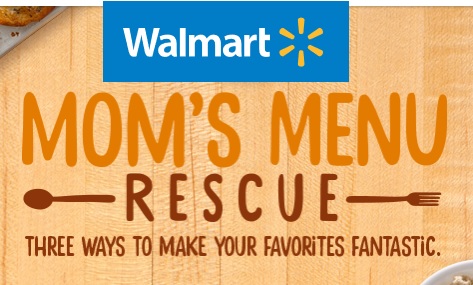
See this seemingly innocuous graphic used by Walmart in a recent email promotion?  It’s purporting a gender bias that mom is the lead parent, and essentially, runs the proverbial show.walmart6

It’s terribly offensive to dads who spend equal, more, or all of their time running the show.  In today’s modern world, parenting is one of those equally shared duties, and suggesting anything otherwise is wrong.

Period.

Amazon wisely caught its error when it quietly renamed the awkward Amazon Mom as the more inclusive Amazon Parent.  Yes, families involve both mom and dad — as does shopping and cooking — and you’d never catch an auto parts store or sports league saying that those stereotypical male realms are “dad’s domain.”

So why does Walmart continue with this practice when it should know better?  Why did Walmart actively promote a Walmart Moms program with no dads’ counterpart?  Why does Walmart ignore our staff when we try to communicate with them about these topics?

We expect a little more from the nation’s largest retailer, and it should certainly notice a sexist promotion when it sees one, because a mother’s place is not in the kitchen, and dads can indeed cook.  Truly, with this kind of message, no one looked good — not moms, not dads and certainly not Walmart.

Walmart has since dropped the use of this graphic, but it’s never too late to let Walmart know how it can treat dads in the future as equal, competent parents.

All of which might make dads more interested in shopping there.

Now that’s some serious food for thought.

Words matter: why ignoring dads in ads is baloney

Nearly every day, words spoken by Hillary Clinton and Donald Trump make national headlines.  Of course, some quotes are more shocking than others, and yet the level of scrutiny is often over a few select words.

Why the fuss?

Because words matter.oscarmayer4.png

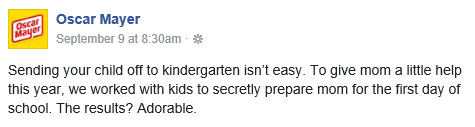
Oscar Mayer recently introduced an ad about sending young children to school for the first time.  At first glance, it’s touching.  It looks great.

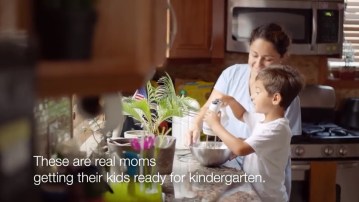
Note we said looks, because if you re-watch the ad with the volume muted, most everything looks good.  It looks like a touching ad involving the entire family, even if dad plays a rather minor role.oscarmayer1.png

But cue back the volume and notice the complete omission of “dad” in speech, and that changes the ad’s marketing breadth entirely.  No longer is dad playing a token cameo at best, but rather, he’s been excluded from the message – a sad, recurring theme among lunch makers who only believe mom’s pack lunches.

Oscar Mayer’s eschewed use of the word dad is an unfortunate practice for a company with dads at its roots.oscarmayer3.jpg

After all, what does this ad say to the late Richard Trentlage, the man who created the venerable Oscar Mayer Wiener song, who died Sept. 21 at age 87?  As a dad, Trentlage used his living room as a recording studio and had his children sing audition tapes.

It’s part of a rich Oscar Mayer legacy, which was founded in 1883 (perhaps Mayer was a dad?).  But 1883 is a whopping 133 years ago.  It’s high time this prominent company gets back to the basics if it wants to be perceived as the leader in lunch meats for the next 133 years.

Even if its marketing research suggests a majority of women purchase its products, there’s no point in senselessly alienating the other part of its customer base, and being perceived as a company who places a greater value in one gender – thus creating a bias, and all over useless, old fashioned stereotypes.

Besides, we all know sexism is wrong.

Oscar Mayer may have a way with b-o-l-o-g-n-a, but it also has a regrettable way with excluding dads.  Let’s hope that practice comes to a quick end before the next school year rolls around, because dads do indeed get kids ready for school and pack lunches, too.

And they love their kids every bit as moms.


Why is Disney making dads out to be moms?

Sometimes it appears as if Disney can do no wrong.

Most of its movies are hits.  Disney TV is generally squeaky clean and safe.  Media acquisitions seem to be financial steals.  Its merchandising knows no bounds.  And a visit to one of its theme parks has become a consensus family destination of a lifetime for many.

But at least one part of it is a major letdown.

That’s because Disney Parks, a subsidiary responsible for the conception, building and managing of its theme parks and vacation resorts, offers a rather dad exclusionary feature on its website, disneyparks.com.

Click on the Vacation Planning menu tab, and you’ll find a section offering a Moms Panel, an inexcusable practice that leaves dads out in name, and in other unfortunate ways.disneymoms1.png

First, Disney Parks offers no Dads Panel counterpart, thus ignoring a father’s contribution and unique perspective for vacation planning.  By presenting no voice for dads and the viewpoints they might lend while families prepare for a dream destination, it directly ignores the indispensable influence of fathers.  Disney is also clearly saying that dads don’t handle this vacation planning facet of family life, and that dads don’t matter.

But wait – you say – there are some dads on the panel.

And therein lies problem number two, where it uses the term “mom” as an equal synonym for “parent” – a faulty, exclusionary approach when marketing to families, families which include dads.  There are very few products exclusively intended for one gender as parents, and vacation planning certainly is not one of them.

Alas, the term gender bias comes to mind.

Disney makes matters worse by trying to rationalize its practice of replacing the word parent with mom:

We understand that the role of “mom” is met differently from family to family, so we made sure to fill our panel with enthusiastic, dedicated and diverse individuals—moms, dads and other in the know family members—to help guide you with your vacation planning.

Note how the word mom is placed in quotes.  Here, at least in Disney’s world, all dads are no longer equal parents, they’re moms!

Let that sink in for a moment:  Disney is calling dads, moms.

Don’t dads matter to Disney more than this?  Must dads’ presence as equal parents be demeaned, it not outright ignored?  It’s wrong.  Dads matter every bit as moms.

Now take a look at those actual dads serving as Moms Panelists:  don’t these dads have a problem with this concept?  If one was called a mom at a public function, wouldn’t he correct the speaker?  Let’s hope so.  So why let it persist online, in print, for the entire world to see?  disneymoms2.jpg

This whole discomfiture is not just literally inaccurate – it’s gauche, inappropriate and disrespectful.

And ignoring the contribution of a father by way of exclusion in its name – Moms Panel – doesn’t exactly feel welcoming to fathers seeking information.  It leaves them out of the discussion, and makes them feel like outsiders – that is, if they even bother to find and examine the site in the first place.

What’s more, among its entire 27 panelists only two are dads?  That’s hardly representative of the population, nor its customer base.disneymoms3.jpg

Third, it’s beyond disappointing that the Moms Panel was unveiled in 2008, during these politically correct times.  It’s not like we excuse Jif for prolonging use of its old fashioned motto, but at least it was born during a time where its slogan was representative of a bygone era.  That slogan, too, is inappropriate and Jif is taking steps to minimize (perhaps eliminate) its use.

But 2008?  That’s a mere eight years ago.  In this so-called modern, gender sensitive, all-inclusive, equality-seeking world, doesn’t Disney have some high level PR officer who would’ve screened this before it even happened?

This entire Moms Panel endeavor reflects a huge lapse in judgement for a global mass media and entertainment conglomerate that considers its parks “the Happiest Place on Earth.”

Dads can’t be happy with this kind of treatment.disneymoms4.jpg

Whether or not you’ve made it to Disneyland or Disney World before, at least we can all say we’ve enjoyed its movies over the years, and we continue to be enthralled with its new Star Wars handiwork and future plans.

But that’s what makes the rub hurt even more, because with Disney, we expect more.  We don’t just want our expectations met, we want them to be exceeded.  Sure, that’s a lofty desire, and maybe a bit unfair, but that’s the standard Disney has set.  We expect greatness.  Perfection.  Happiness.

All of it makes Disney’s use of the Moms Panel name indefensible.

Not long ago, Amazon – the largest Internet-based retailer in the United States – finally responded to the PR nightmare known as Amazon Mom by quietly and suddenly changing its name to reflect dads’ contributions as parents.

Let’s hope Disney can make a swift change, too, and thereby stake its claim as the Happiest Panel on Earth.

Surprise – a dad could win this mom contest

Stereotypes, media and long-held assumptions might make you believe that more men buy power tools than women – and maybe that’s true.  Maybe it’s not.

But either way, you’re certainly not going to find major home improvement retailers running campaigns which target only men.

It’s bad business.  It alienates customers.  It’s sexist.  It’s wrong.armour

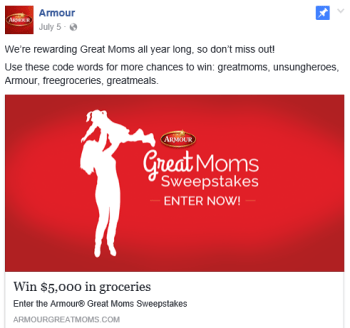
Unfortunately, that’s not the way business works at Armour, which makes various food products, most notably meats.  There, it unveiled the exclusionary Great Moms Sweepstakes, running now through November.

No, it has nothing to do with Mother’s Day, and yes, anyone can enter – which means that a dad could be named a “great mom” and receive $5,000 in free groceries.

It’s hard to fathom just how Armour – founded in 1867 by two men – could create a campaign that ignores fathers contributions in today’s equality-seeking world.  Digital salt is rubbed in the wound when Armour uses its website to try and justify its oddly named contest:

Join us as we honor Great Moms – the everyday unsung heroes who give their all for their family and ask for nothing in return. We are celebrating and surprising deserving moms nationwide all year. Follow along on our website and Facebook Page for news and updates from our events.

To be sure, moms deserve those kind words in entirety – but so do dads.

Imagine you’re a dad who’s just read that text, and you’re thinking about all the work you’ve done to help raise your kids:  diapers changed, stories read, baths given, shopping trips made, youth sports attended, gifts bought, meals cooked, snacks made – and it has all been overlooked.  Your contribution means nothing.  So why should you continue buying its products?  You probably won’t, which is unfortunate.armour2.png

Ignoring dad’s contribution as an equally unsung hero disregards his status as a true, equal parent.

Armour even awkwardly uses photos of men (dads?) on its Facebook page to promote the contest.  And how strange will it look if a dad ends up being its winner?

The entire Armour campaign is a missed opportunity to celebrate parenting – not just moms – because we all know that roles are different in families now, and that they all come in different shapes and sizes.

Someone needs to tell Luvs that dads change diapers

When Huggies unveiled its infamous Dad Test campaign in 2012, the negative reaction was swift enough for Huggies to make an immediate change in its marketing approach.  The ripple effect was wide, as plenty of ad agencies learned an abrupt lesson:  dads are not buffoons.

But just because dads were being used less and less as the butt of advertising jokes doesn’t mean they had instantly achieved equal footing with moms.  Nearly five years after the Huggies debacle, dads have yet to be treated like true parents in the world of marketing.

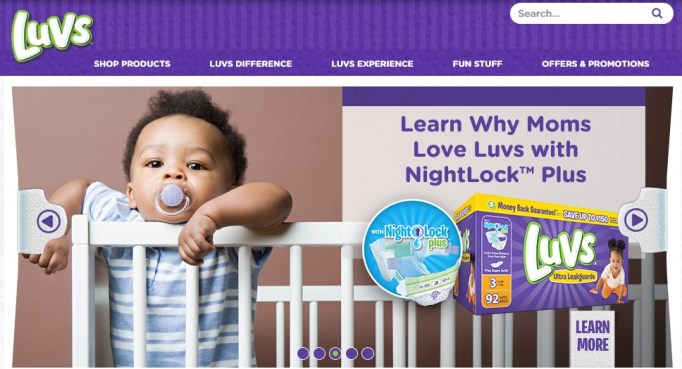
luvs2.jpgTake a look at the website of Luvs diapers, which unveiled material putting the emphasis on mom as the lead parent.  In today’s modern, dual-parenting, two-parent-working-world, it’s hard to imagine Luvs would actually relegate dads to the backseat quite like this.

luvs1.jpgLuvs’s website speaks only to moms on exactly three of its front page sliders by excluding dads as equivalent, equal, identical parents in more ways than one – even to the startling point of exclaiming its diaper as the “Official Diaper of Experienced Moms.”
None of this comes as much of a stretch when you realize that its parent company – P&G – also brought us the highly exclusionary Thank You Mom Olympic campaign, which no doubt made dads cringe while being disregarded as equal child-raising parents during the world’s largest athletic competition. More likely, it sent shockwaves down the spines of dads, who like moms, spent many late afternoons, evenings and weekends shipping their children to incessant practices and games.

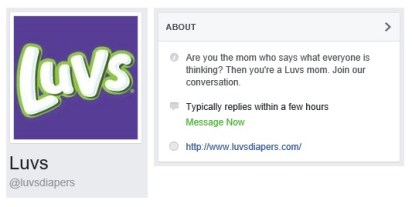
luvs5.jpgThe exclusion continues on its Facebook page, where it gracelessly invites only mothers to join in on the Luvs conversation, leaving dads everywhere in the dust.  Moreover, it offers Momojis as part of its “Official Keyboard of Experienced Parents.”  Here Luvs makes the unpleasant mistake of insisting that mom is an exact literal synonym for parent, when we all know that parents luvs4include both moms and dads.

In other words, all parents aren’t only moms.

With competitors Huggies and Pampers also offering mom-only sections on their respective websites with no comparable dad counterpart, they too insist that only moms change diapers, leaving dads to wonder what it takes to get respect in the parenting world.

It’s a surprising slow-to-change world when it comes to marketing to parents, but here’s hoping Luvs will make some quick and easy edits by spreading equal amounts of its name to both genders before its curious approach reaches Huggies proportions.

luvs3.jpg