Baby food is important – and so are dads

Could it really be the business model of Beech-Nut to exclude dads as part of its beechnut1.pngcustomer base?

It’s a fair question when you visit beechnut.com and read its content.  After all, what else is one to think when you see a website which speaks only to moms and ignores dads as fully competent and equal parents?

Having a practice like this would be like showing up at a party where the host only speaks to your partner and completely ignores you.  Doesn’t talk to you.  Doesn’t even look at you.

It was a little like that with Beech-Nut’s CEO Jeff Boutelle, who used the word “moms” 18 times during this 2014 interview with Grocery Headquarters, with nary a mention of “dads.”

beechnut2.jpgNo one likes to be left out, but sadly, this belief is penned right within its mission, where it insists only moms prepare food for families.

Yet even if Beech-Nut claims that research proves the majority of its customers are moms, why exclude the dad segment as if it doesn’t matter?  Stereotypical dad-products (e.g., tools, cars), or even sports, doesn’t hone its marketing exclusive to men.  So why must Beech-Nut craft its message to the exclusion of equally capable parents like dads?beechnut3.png

It’s a gender bias, which is sexist and wrong.  Dads cook.  Dads buy baby food.  Dads feed children.

We’re calling for Beech-Nut to treat dads like true parents and make some quick edits to its website and social media.  If its values include “real food for everyone,” then it must think not only about current dads, but the future ones who are eating its product right now – and will want to be valued as consumers someday when they become dads, too.

Where are the dads in the Disney galaxy?

For all the positive mojo Disney cranks out on a regular basis, it appears to have a genuine problem with finding – how shall we say it – balance.

Last week a story circulated on the Internet titled, “Where Are the Moms in the Star Wars Galaxy?”  The writer argued that while mothers do play a role in the Star Wars universe, they don’t receive as much thematic prominence as father-son/child relationships.  It’s a thought-provoking piece with strong merit – highly recommended.

Then, just two days later, Disney Parks revealed the members of its 10th annual Moms Panel – an online forum for everyday people to share helpful tips and vacation planning advice.disneymoms6.png

The problem is, the panel isn’t a representative sample of everyday peopleit’s overwhelmingly comprised of only moms.  Of course, this is not a bad thing, but the imbalance is; it’s important to remember that dads are part of families, and vacation planning involves them, because they too have plenty to share with potential travelers about the topic.

But Disney awkwardly placed a lone dad on this year’s Moms Panel, thereby disrespecting and ignoring his parental title and thus cutting last year’s dad total – if you can believe it – in half.

Its actions disregard fathers as fully competent, equal parents, much in the same vein that Jif Peanut Butter’s long-standing catchphrase excludes dads as dedicated customers.disneymoms1

We wrote about the Disney Parks Moms Panel last fall and received positive feedback from readers who also implored Disney to catch up with the modern world and to better represent what families mean today.

We realize that equality takes time, so we didn’t expect Disney to instantly even out the number of women and men on the panel, although doing so would rightfully provide a true representation of all parenting travel issues.  However, we thoughtfully anticipated a name change in the spirit of authentic, modern parenting.

Unfortunately, Disney let us all down, because it’s not just dads that end up on the short end of the stick.  It’s the kids and the spouses who deserve a vacation planned at least partly through a fatherly perspective.  But they’ll hardly get that, because instead, dads are being treated like second-class parents who simply don’t matter.

Hilton also operates a similar travel panel with a comparable name – Hilton Mom Voyage – and it has a mere three dads among 30 panelists.

Echoidisneymoms4ng the words of the Star Wars column, dads deserve better.

The members of next year’s Disney panel will be announced soon enough, but why wait that long to properly rename the panel?

Disney, let’s make things right, because families are stronger – and vacations are more magical – when we’re united as parents.

Seahorse of a different color

Every good invention is born out of necessity.

So when Don Hudson created Seahorses – America’s first and only retail store geared toward fathers – nothing surprised him about the process, his concept and its need. What surprised him was that no one had ever thought of it before.seahorses4.JPG

“That’s what blows my mind,” he said. “That no one has done this before. How am I the first? That no one noticed this huge, gaping market before?”

That huge, gaping market – as Hudson knows all too well – belongs to dads.

“When you market to that dad like he’s a mom, you build up a wall,” said Hudson. “He doesn’t want to talk to you.”

Yet every bit an equal parent who nurtures, raises, feeds, shops and provides for his family, dad remains ignored by marketers who either don’t know how to reach him, or purposely avoid his presence based on habit. Old fashioned stereotypes and labels may die hard in the world of marketing and media, but it’s ancient history at Seahorses in Portland, Ore., where Hudson’s progressive shop has skyrocketed to notoriety since opening in June 2015.seahorses1.JPG

His shop celebrates the unique needs and challenges of parenting as a father in a world that traditionally caters to mothers.

What makes men uncomfortable in stores? Not having products with which they can’t relate as fathers. At Seahorses, you’ll find plenty of baby, child and parental items necessary for raising a family – but with an eye on dads.

So while big box baby stores have nursing equipment, Seahorses offers Leatherman multitools and shaving kits. Traditionally diaper bags are frilly and pink; no dads want to carry those, and some moms don’t either. Hudson curated diaper bags that are masculine and stylish enough for fathers to sport. Other baby stores offer organic clothing, but dads don’t care about that; they want things to last. So, Seahorses offers Carhartt kids clothing. No maternity tops here – try matching dad and child shirts.

seahorses6.jpgA lack of those items meaningful to fathers, combined with a prejudice toward dads, is what drove Hudson to bring his idea to fruition. He experiences a bias all too often while together with his wife, raising their four children.

“Dads are (treated like) a sideline parent, and they are not marketed to,” he said. “And let me tell you, I did all the shopping when I was stay-at-home. When you walk in to these baby stores, they’d say, ‘What did mom send you in for? Where’s her list?’ It’s a turn off. Has no one noticed that dads are being alienated? You’re creating a subconscious culture of bias toward dads.”

His store even reaches beyond tangible products and the overall shopping experience by serving as equal part gathering space. There you’ll find an enclosed play space with seating, free Wi-Fi and a community meeting area for classes, workshops and events. And there’s even free coffee.

“It’s a space for anybody,” Hudson said. “The idea is that it’s more of an atmosphere that’s comfortable for dads. I have darker wood and subdued colors. It’s a masculine and man-cavey kind of feel so you’re like, ‘This is a baby store, but it’s for dads.’”seahorses2.JPG

Hudson assures his store is for both moms and dads, and gets plenty of customers of each, along with some hesitancy. Moms sheepishly ask if they can come in, while dads’ tendency leans toward tentative, mostly due in part to other store experiences, but also because of how they’re treated as second-class parents in stores of any kind.

“(Dads) come in and look around and say, ‘This is really cool; this is my place,’” Hudson said. “You can see this weight melt off of them when they walk halfway through the store.”

Hudson gets a lot of dads and moms who come in to hang out, work on their blog or social media, or just want a simple five-minute break. His intimate, personal community has even helped nurture some lifelong friendships, which he loves to see.seahorses7.jpg

As the business grows and soon-to-be e-commerce takes off, Hudson hopes to expand his concept further:  “I think this kind of resource needs to be available for every community and every parent, where moms and dads are both allowed.”

His store’s name is derived from the sea creature who takes care of its offspring entirely. Male seahorses undergo pregnancy and care for the young as they grow.

“In nature, I think the seahorse is probably the world’s most perfect father,” he said. “If you’re a seahorse, you’re a perfect father.”

Unfortunately, society and commerce tend to alienate dads before they even become one. So, Hudson is just happy to be offering a place to help dads become better dads, because he knows that process is shaped well before the actual birth.

“Moms have plenty of places to go, dads don’t,” he said. “Having dads marketed to properly and involved in the marketing process give them that foundation for being involved with kids.”

Why is Disney making dads out to be moms?

Sometimes it appears as if Disney can do no wrong.

Most of its movies are hits.  Disney TV is generally squeaky clean and safe.  Media acquisitions seem to be financial steals.  Its merchandising knows no bounds.  And a visit to one of its theme parks has become a consensus family destination of a lifetime for many.

But at least one part of it is a major letdown.

That’s because Disney Parks, a subsidiary responsible for the conception, building and managing of its theme parks and vacation resorts, offers a rather dad exclusionary feature on its website, disneyparks.com.

Click on the Vacation Planning menu tab, and you’ll find a section offering a Moms Panel, an inexcusable practice that leaves dads out in name, and in other unfortunate ways.disneymoms1.png

First, Disney Parks offers no Dads Panel counterpart, thus ignoring a father’s contribution and unique perspective for vacation planning.  By presenting no voice for dads and the viewpoints they might lend while families prepare for a dream destination, it directly ignores the indispensable influence of fathers.  Disney is also clearly saying that dads don’t handle this vacation planning facet of family life, and that dads don’t matter.

But wait – you say – there are some dads on the panel.

And therein lies problem number two, where it uses the term “mom” as an equal synonym for “parent” – a faulty, exclusionary approach when marketing to families, families which include dads.  There are very few products exclusively intended for one gender as parents, and vacation planning certainly is not one of them.

Alas, the term gender bias comes to mind.

Disney makes matters worse by trying to rationalize its practice of replacing the word parent with mom:

We understand that the role of “mom” is met differently from family to family, so we made sure to fill our panel with enthusiastic, dedicated and diverse individuals—moms, dads and other in the know family members—to help guide you with your vacation planning.

Note how the word mom is placed in quotes.  Here, at least in Disney’s world, all dads are no longer equal parents, they’re moms!

Let that sink in for a moment:  Disney is calling dads, moms.

Don’t dads matter to Disney more than this?  Must dads’ presence as equal parents be demeaned, it not outright ignored?  It’s wrong.  Dads matter every bit as moms.

Now take a look at those actual dads serving as Moms Panelists:  don’t these dads have a problem with this concept?  If one was called a mom at a public function, wouldn’t he correct the speaker?  Let’s hope so.  So why let it persist online, in print, for the entire world to see?  disneymoms2.jpg
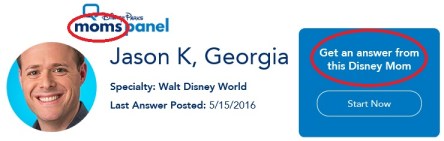
This whole discomfiture is not just literally inaccurate – it’s gauche, inappropriate and disrespectful.

And ignoring the contribution of a father by way of exclusion in its name – Moms Panel – doesn’t exactly feel welcoming to fathers seeking information.  It leaves them out of the discussion, and makes them feel like outsiders – that is, if they even bother to find and examine the site in the first place.

What’s more, among its entire 27 panelists only two are dads?  That’s hardly representative of the population, nor its customer base.disneymoms3.jpg

Third, it’s beyond disappointing that the Moms Panel was unveiled in 2008, during these politically correct times.  It’s not like we excuse Jif for prolonging use of its old fashioned motto, but at least it was born during a time where its slogan was representative of a bygone era.  That slogan, too, is inappropriate and Jif is taking steps to minimize (perhaps eliminate) its use.

But 2008?  That’s a mere eight years ago.  In this so-called modern, gender sensitive, all-inclusive, equality-seeking world, doesn’t Disney have some high level PR officer who would’ve screened this before it even happened?

This entire Moms Panel endeavor reflects a huge lapse in judgement for a global mass media and entertainment conglomerate that considers its parks “the Happiest Place on Earth.”

Dads can’t be happy with this kind of treatment.disneymoms4.jpg

Whether or not you’ve made it to Disneyland or Disney World before, at least we can all say we’ve enjoyed its movies over the years, and we continue to be enthralled with its new Star Wars handiwork and future plans.

But that’s what makes the rub hurt even more, because with Disney, we expect more.  We don’t just want our expectations met, we want them to be exceeded.  Sure, that’s a lofty desire, and maybe a bit unfair, but that’s the standard Disney has set.  We expect greatness.  Perfection.  Happiness.

All of it makes Disney’s use of the Moms Panel name indefensible.

Not long ago, Amazon – the largest Internet-based retailer in the United States – finally responded to the PR nightmare known as Amazon Mom by quietly and suddenly changing its name to reflect dads’ contributions as parents.

Let’s hope Disney can make a swift change, too, and thereby stake its claim as the Happiest Panel on Earth.

Dads are parents, too

mylicon1We’ve heard more than one SAHD’s story about being left out of the conversation while at the local park amongst a group of SAHMs.  And for a dad to get invited to a SAHMs’ playgroup – that’s even less likely to happen.  It’s hard to say if this is the norm, but it happens.

And, it’s unfortunate and unavoidable.

But when the topic is childcare, and a company purposely creates a moms-only club without a dad counterpart?

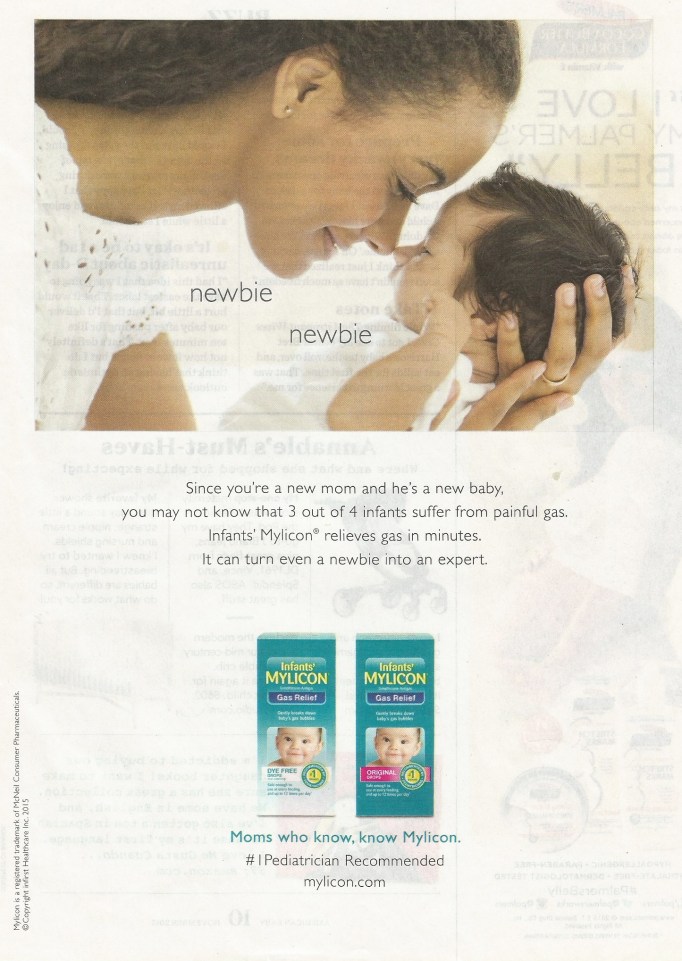
That’s blatant sexism.  The featured ad – found in a parents magazine, natch – recently caught our eye.  It doesn’t even bother relinquishing dad to the assistant role, it downright ignores him.

Over at mylicon.com, it only gets worse, where it offers Mylicon Moms, yet no similar club for dads.  Read the language on this page; look how Mylicon completely ignores fathers and makes them feel like outsiders:

Receive a free product sample, promotional information and advice from other moms when you subscribe to our Mylicon® Moms newsletter. All you have to do is share your contact information and join other moms who answer our posted question below.

How can a dad feel like one with this kind of treatment?  And all this, from a company that claims to offer an “unparalleled experience for consumers.”

Really?  Dads are consumers, and “unparalleled” means “having no equal.”  Sadly, Mylicon has equals, but for all the wrong reasons – among companies who continue to disregard dad as an equal parent.

It’s another example of exclusionary marketing that screams of old fashioned ignorance and chauvinism, as if dads can’t, don’t, or won’t handle basic family health care.

Mylicon, please do what is right, and include dad as part of your marketing mission – because dads who know, know there’s other options for painful gas.

This boy will someday be ignored by the very company using his likeness

garanimals4Do you see that cute little boy?  He’s been used.

Used by a company that was only in need of his smiling face, and then, will be ignored the moment he becomes a dad someday.

But don’t take our word for it.  Check out the Garanimals website, which uses parents and moms interchangeably like synonyms.  Of course, moms are parents, but one word refers to both genders of parents, the other only female parents; expressly mentioning moms and leaving out dads, as it did on its company website and in this print ad, purports mom to be the lead parent, the one who handles the shopping, the one who dresses kids, the one who takes care of kids alone.

That’s unfair.  That’s wrong.

It’s yet another unfortunate example of a company ignoring fathers as equal parents, and it has to stop.

Yes, that boy is smiling now, but someday he may be holding a child of his own.  He might even end up flipping through the pages of a parents magazine, encounter a Garanimals ad and then wonder, “I guess I only existed when that company needed something.”

And he might even use another company for his child’s clothes.

So in the end, this ad was not very, well, useful.

The most exquisite folly is made of wisdom too fine spun

elmonterey7How many contradictions can one company make in a single email?  We came across this promo recently, and it’s hard to decide which of these items offers more incongruity:

  • Quoting Ben Franklin – a father – and then saying that its product is a wise choice only for moms?
  • Using a quote whose original use employs the word “man,” and then disregarding that same “man” in its promotional hashtag?
  • Using the term “kids” in the ad copy instead of just “girls”?  Because after all, El Monterey will eventually disregard the boys (who are among those kids) when they become dads.
  • Assuming that Ben Franklin would’ve loved El Monterey burritos, when even as an adult in modern times, he couldn’t have made the pick to buy them.  Clearly, according to El Monterey, it would’ve taken his own mother to choose them in the store for him.

Of course, the startling, underlying theme for El Monterey once again, is that a mother’s place is in the kitchen.  Otherwise, there would be no other reason to continue to snub dads, who certainly must be capable of microwaving a frozen food product.

And also, of course, El Monterey caps off the email promo with its #momwins campaign, which essentially leaves no one as a winner:  mom is typecast as the one who cooks, dad loses by way of exclusion.

The disappointing insistence of this El Monterey old fashioned marketing push leaves us hungry for another burrito maker, one that is thus, all the wiser.

There’s no ointment that treats offensive marketing

drsmith5We’re seeing a striking similarity with Dr. Smith’s latest ad, and ads from yesteryear that would be deemed offensive today.

Why is it that Dr. Smith’s can get away with saying that only moms trust its brand? Why does it get away with saying that only moms love Dr. Smith’s?

In doing so, it’s clearly saying that dads don’t matter to Dr. Smith’s as customers.

Forget the fact that Dr. Smith’s might be targeting its product to a certain segment – the product has nothing to do with females. So, you have to consider one simple question: don’t dads parent, too?

That said, pause for a moment and check out this old-fashioned ad.

What might be wrong about running this ad in today’s world? Because people of all genders and ages would rightfully find it incredibly distasteful and insulting.

That’s kind of how we here at dadmarketing view this newest Dr. Smith’s ad. We’re not comparing the ad content — we’re comparing how the two ads make us feel. It’s a sad state when Dr. Smith’s can’t even consider dads enough to speak to them, declaring that only mothers tend to children. It’s insulting and it’s distasteful, to treat dads this way as parents and consumers.

Dads trust Dr. Smith’s. Why can’t Dr. Smith’s trust dads in return?

Curing the case of an upset stomach

tummycalm2We came across an interesting approach from Tummy Calm, who at one point was trying to play the “only-moms-take-care-of-kids” card.

Tummy Calm, distributed by TJL Enterprises of Long Beach, CA, is gas relief medicine for children.

The attached graphic appears in its tri-fold brochure, which judging by the tiny print, looks to have been produced in March 2015. (We can’t confirm this for certain, but it seems like a plausible deduction.)

However, over on the front page of its website, we find the word “mommy” removed.

The change is a positive one, as it should come as no surprise (it’s 2015, after all) that a website is a company’s primary communication piece.

But what’s with the sudden change?

Is the brochure targeting a certain segment? That’s conceivable. We came across this piece in a doctor’s office, and we all know that marketers don’t seem to believe that dads can actually transport children to appointments. Either that, or they believe that moms simply adore tri-fold brochures. Or, dads can’t read.

Is it a case of disjointed marketing-speak? That’s always possible. It wouldn’t be the first time we’ve noticed varying approaches – depending on the medium – by products marketed to children.

Could it be that the company is just being inconsistent, and simply forgot to use the word “Mommy” on the website? That’s less probable, especially since there’s unlimited space on the Internet, unlike tri-fold brochures.

Or, did TJL wise up in recent months after reading the latest news at dadmarketing.com?

If so, hats off to a marketing team that stopped exclusionary marketing dead in its tracks and recognized fathers for the work they do.

Keep an eye out for that newly revised brochure at a doctor’s office near you.

A quiz: what kind of magazine will it be?

whatkindofdad1Just when we think American Baby magazine is leaning toward doing something right by placing a dad on the cover of its June 2015 issue (no doubt a gratuitous Father’s Day nod), we turn inside to find an article trying to be humorous, and rather offends.

First of all, we know ABM is geared toward mothers, despite its name. The advertising and writing all fuel the bias that moms are the lead parent, and that dads don’t count. For a magazine to continue with a title name that truly suggests nothing otherwise (yes, both women and men have the ability to care for babies), this is wrong – but you have to remember this magazine’s mission as you proceed with this piece. After all, a quick flip through ABM’s pages indicate the heavily unbalanced photographic tally of 44 images of moms, compared to just 11 dads. It’s like this every month.

If language expresses intent, then what does that lopsided ratio suggest?

In case you still had some doubt in your mind, the article titled “What Kind of Dad Will He Be?” (available online here), should cement the fact that ABM disregards dads with nearly every step it takes. Again, we know the magazine and this particular story favors moms – of course, there’s a need for that in this world – but why not within this same issue or another one, have a similarly titled story written for dads asking “What Kind of Mom Will She Be?”

The flimsy bone that ABM offers dads on the cover is forcefully snatched away on page 3’s table of contents, after one quickly realizes that there’s not a single article in its so-called “Father’s Day issue” offering dads a way to better themselves as fathers, or why dads mean something to families, or how to plan for a fun Father’s Day, or even the social media loving “dad bod.”

We can even look past Sarah Schmelling’s humorous tone, which somehow finds a way to dig at men by using every possible sexist connotation imaginable. By comparison, do women really find it funny when men try to be comical and use the, “a woman’s place is in the kitchen” line?

Let’s forget all that for now, though, and look at two inconspicuous items of note:

  1. Check out the photo caption at the top of page 56 (pictured above). “He may not even need coaching to become your parenting team’s MVP!” Talk about incongruous writing – first AMB is acknowledging that dads are on the parenting team (and the possible MVP, no less!) – yet the rub is in the first six words:  “He may not even need coaching”?  That’s some seriously curious language, because mothers bear no more instinctive abilities to parent a child than fathers.  One can argue whether being a parent is an instinct or an acquired skill, but one parent doesn’t possess the skill more than the other simply by way of gender.  Although this website talks about a slightly different but related topic, here’s what one wise, hipster homemaker has to say about dads and babysitting.
  2. In the last section of the article under “MOSTLY C’S,” the author uses the phrase “Mr. Mom.”  Don’t get us started on the use of that term (because we already have), but in short, would anyone dare call a working mother “Mrs. Dad”?

It’s hard to give the author kudos for the wonderful, cute ending, “Few things are more fun for a child…” when the previous sentence exhausts the last of several tired, unflattering stereotypes, suggesting that every dad must live “The Hangover” lifestyle every weekend.

C’mon dadmarketing, you might say, have a sense of humor.

It’s scarcely amusing when ABM pushes the dads-don’t-matter-to-us agenda every month, and it’s in a supposed Father’s Day issue. Imagine if, for example, there was a dad-related food story with a photo caption that offered, “She may not even need coaching to start cooking like your own mom!”

With stereotypes, there’s always someone who isn’t laughing.

Hopefully by the next time ABM releases next year’s Father’s Day issue, we’ll have a magazine that helps celebrate, appreciate and thank dads for all they do, rather than create an unnecessary divide on the parenting team.