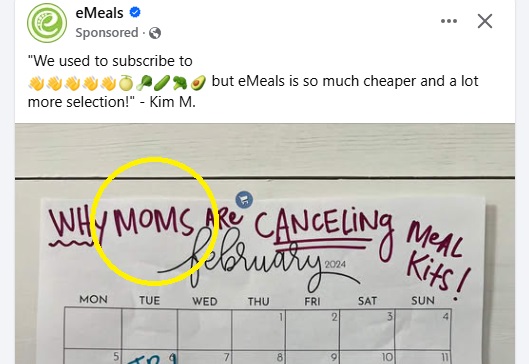
Why Doesn’t Marketing See Dads as Actual Parents? (We’re Looking at You, Meal Kits)

Some like to criticize the movie industry for endless sequels and franchise remakes. It’s a safe approach to cashing in, but it doesn’t advance the art form and allow it to move forward.

Marketing and media play the same game. They ignore dads, turning to the same strategy that insists moms are in charge despite knowing that things are different now.

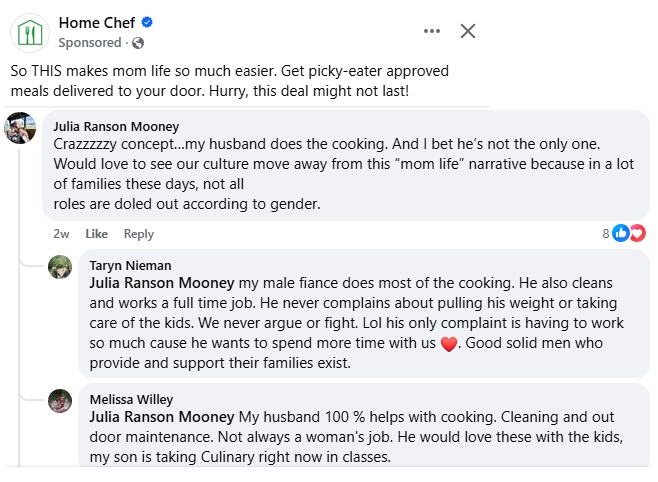
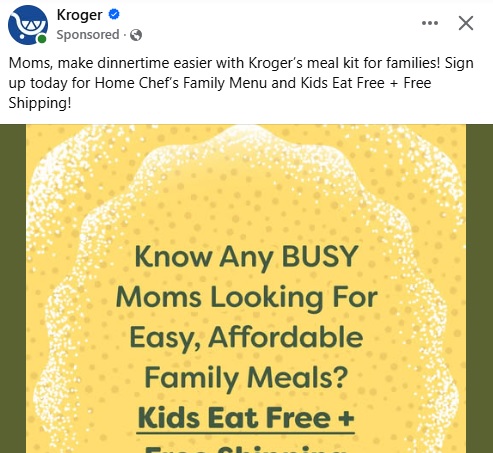
That’s because in today’s modern families, dads are equal, competent co-handlers of the household. They cook, shop, schedule, pack lunches, run laundry, and juggle the same mental load that moms do. Yet if you look at mainstream marketing, especially with regard to meal kits, the messaging is still stuck in the past: moms as the default parent, dads as either absent or comic relief.

So Why Hasn’t Marketing Caught Up?
First, there’s inertia. For decades, the advertising playbook relied on gendered roles, portraying moms as the domestic managers and dads as the weekend warriors. That framework gets recycled because it’s considered safe and familiar.

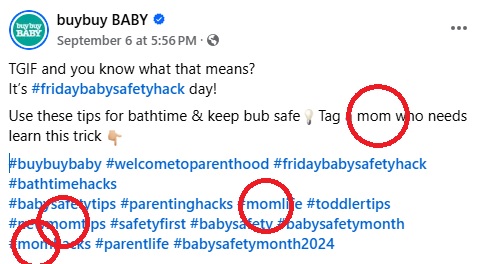
Second, social media has reinforced the gap. Hashtags like #MomLife or #MomHack have worked before, so brands lean into them for visibility. Meanwhile, dad-focused parenting communities – though vibrant – don’t get the same mainstream amplification.

Finally, there’s risk aversion. Marketers sometimes assume talking to dads in domestic roles is niche, when in fact it reflects a massive cultural shift. Younger generations of parents expect to see themselves represented as equals, and ignoring dads is not just outdated – it’s a missed market opportunity.
Want to Profit? Leave No Stone Unturned

The reality is simple: dads today are not background characters in their homes. They’re making purchasing decisions, handling logistics, and shaping family routines right alongside moms. Brands that fail to acknowledge this look tone-deaf, while those that embrace inclusive storytelling can build stronger, more authentic connections.

Meal kits still have a lot to learn. The dads don’t shop or cook myth does an equal disservice to women by inferring that a mother’s place is in the kitchen, heaping the entire load of meal planning into their lap. Moms don’t want that stigma, either.

It’s time for marketing to catch up to modern family life. Families have changed. Shopping has changed. Kitchens have changed. The question is, will the marketing finally change, too?

Who Carries the Responsibility? Spoiler: It’s Both Parents

Culturally, society tends to assume that moms carry the emotional and domestic weight of the family. We hear it in media all the time: how exhausting motherhood is, how no one sees what moms go through, how they’re stretched too thin. And none of that is wrong. Motherhood is exhausting. The emotional and logistical juggling act is real.

But here’s what often gets left out of the conversation: Fatherhood is just as heavy, and just as invisible.

Not in a competitive way. Not to minimize anyone’s struggle. But to recognize that society still rarely asks what dads are going through. Marketing and media are nearly oblivious to it.

The Quiet Pressure Dads Feel

Today’s dads are not coasting. They’re on the front lines everyday doing school drop-offs, late-night feedings, managing bills, fixing the faucet, and still fielding work emails from the sidelines of a soccer game. They’re active partners, not just “helping out” but fully responsible for the well-being of families.

Yet they often get left out of the narrative. Their exhaustion is quiet. Their fears are often kept to ourselves. And while moms are rightly offered support and solidarity, dads are more likely to hear: “Well, that’s your job, so man up.”

It’s Not About Keeping Score

This isn’t about who has it harder. It’s about mutual understanding. When we focus only on one parent’s burden, we risk ignoring the full picture and missing the chance to support each other better.

Because if moms feel like no one understands them, and dads quietly feel the same way, maybe what parents really need is to listen to each other. To stop assuming and start asking. To admit that yes, this is hard for both parents. And it’s okay to say that out loud.

No one is supposed to carry the pressure of family life alone, neither moms nor dads. It’s supposed to be managed together.

Google Search Trends That Prove Dads Are All In

For decades, the cultural script around parenting has cast dads as the stereotypical sidekick. He’s the guy who burns dinner, buys the wrong diapers, or babysits his own kids like he deserves a medal. Yuck.

But there’s mounting evidence that this outdated and wildly inaccurate narrative is crumbling, and Google’s search bar is one of the most honest mirrors we have. Because if you want to know what people actually care about, just look at what they’re Googling at 2 a.m.

The Search Bar Doesn’t Lie

A dive into recent Google Trends and keyword data reveals a clear shift: new dads are searching for parenting guidance in large and growing numbers.

Search terms like:
• “how to get baby to sleep through the night dad”
• “best baby carriers for dads”
• “mental load in parenting”

…have all seen significant year-over-year growth. Some, like “stay-at-home dad schedule,” have doubled in volume over the last five years.

These aren’t idle curiosities. They’re search queries driven by lived experience. Despite what commercials and media tell you, everyday dads are hungry for resources, advice, and yes, even gear that speaks directly to them.

Brands Are Still Behind

Despite this data, the marketing world hasn’t fully caught up. A recent audit of parenting product ads across social media showed that fewer than 20% featured dads in a primary caregiving role.

That’s a missed opportunity, and not just for representation, but for revenue. Dads are:

• Spending more time with their kids than any previous generation.
• Making household purchasing decisions.
• Demanding products and content that don’t insult their intelligence or erase their role.

What This Means for Marketers

If your brand is still marketing diapers, strollers, or family tech like it’s 1965, you’re not just being tone-deaf, you’re leaving money on the table. Today’s dads are searching for guidance, connection, and products that respect their role. Show up where they’re searching. Speak their language. And most importantly, treat them like the parents they already are.

Because the modern dad isn’t waiting for permission. He’s already all in.

Why So Many Lists About What Dads Want for Father’s Day?

Every June the internet explodes with listicles: “27 Father’s Day Gifts He’ll Actually Use,” “Top 10 Things Dad Really Wants,” “The Best Gifts for the Dad Who Has Everything.” But why so many? Why does Father’s Day, unlike say, Mother’s Day, seem to spark such a frenzy of guesswork? The answer says less about dads being “hard to shop for” and more about how we understand (or misunderstand) fatherhood.

The Cultural Fog Around Fatherhood

For decades, the dominant cultural script cast fathers as providers, disciplinarians, or distant authority figures. That left little room for emotional nuance, or clear communication about what dads might want, especially in the context of family appreciation.

So when Father’s Day comes around, many people are left guessing. What does dad want? A new grill? A power tool? Just to be left alone for the afternoon?

We don’t ask these questions because dads are mysterious. We ask them because culturally, we’ve been a little out of practice when it comes to listening to or celebrating fathers beyond their functional roles.

Because Fatherhood Is Evolving

Today’s dad is as equally invested and involved as today’s mom. But marketing and media haven’t quite caught up. Instead of recognizing dad as a fully competent parent, many brands still cater to the “man cave” fantasy, the lawn-mowing archetype, or the dad-as-jokester trope.

That gap between real dads and stereotyped dads creates confusion, and more lists. We’re trying to pin down what kind of dad we’re shopping for in a culture where the true image of fatherhood shifted a long time ago.

Because Dads Don’t Always Say What They Want

There’s also the simple fact that many fathers don’t articulate what they’d like. Not because they don’t have preferences, but because many men are conditioned not to express desire. They tend to put others first, namely, their spouses and children. This is what’s called decorum. They’re fine with giving their families the spotlight. This is the reason dads are in videos and photos less often. They’re the ones holding the camera and letting others be seen. Dads also may not articulate what they’d like because it’s practical or tied to productivity. So instead of saying, “I’d love a handwritten letter,” or “Let’s spend the day together unplugged,” many dads default to “I don’t need anything,” which leaves loved ones scrambling for clues. Cue the onslaught of online gift guides.

Because Marketers Still Don’t Know How to Tie Emotion to Dads

Let’s be honest: emotional tone doesn’t sell as fast as grills or ties. Many brands lean into clichés because they’re safe and familiar. But they miss the mark when it comes to what many dads actually want: to be seen, appreciated, and included in the emotional core of the family. Without question, they want to hear “I love you.”

Lists keep multiplying because we’re still trying to decode what fatherhood really means, and what appreciation should look like for someone who gets excluded in marketing copy and visuals. Peruse dadmarketing.com and you’ll be shocked at the number of companies still ignoring fathers today.

So…What Do Dads Want?

It’s different for every father, of course. But more than socks or steak knives, many dads want to feel respected, trusted, and loved for who they are, not just what they provide.

Maybe the real question isn’t what to buy dad, but how to recognize him.

And until that becomes the norm, we’ll keep scrolling through lists, searching not just for the perfect gift—but for a clearer picture of fatherhood itself.

Get ‘Ems by Gerber – What Are Dads Supposed to Get?

Gerber launched a new product line for toddlers called Get ‘Ems – small, poppable snacks designed for little hands and on-the-go parents. The concept? Smart. The packaging? Cute. The marketing? Disappointing.

If you’ve been following Gerber’s social media lately, you’ve probably noticed the trend:

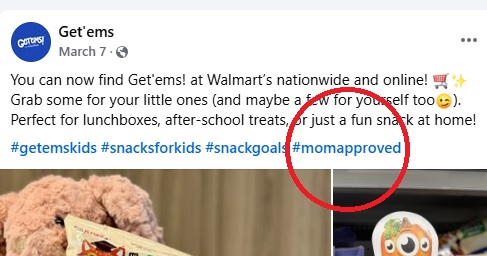
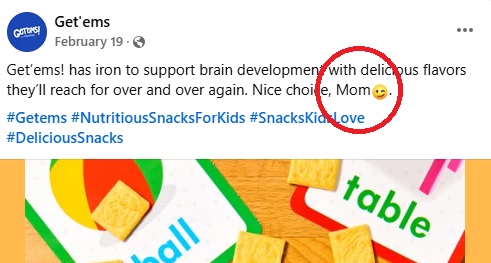
  • “…made with the good stuff moms love too”
  • “…Mom’s stamp of approval”
  • “Nice choice, Mom”
  • #momapproved

The implication is loud and clear: when it comes to feeding toddlers, Gerber sees moms – not parents – as the default audience.

This kind of gendered marketing isn’t new. But it’s especially disheartening coming from a legacy brand like Gerber, which has the reach and influence to shape how we think about modern parenting. In 2025, we should be past this old-fashioned stereotype.

The truth is: dads buy snacks too. Dads do school pickup. Dads pack the diaper bag, prep meals, and handle snack time in the minivan.

Dads aren’t fringe players in the parenting game – they’re in it, every day, just like moms.

So when a major brand rolls out a new product and makes a big splash across Instagram, TikTok, and Facebook with mom-only messaging, it sends a signal. Not just to fathers, but to kids, and to the culture at large: “Only certain customers matter.”

But here’s the thing: parenting isn’t a marketing niche carved out just for women. It’s a shared experience that deserves inclusive language and thoughtful messaging.

Imagine if Gerber said:

  • “…made with the good stuff parents love too”
  • “…A parent’s stamp of approval”
  • “Nice choice, Mom & Dad”
  • #parentapproved

Not only would that resonate with modern families – it would reflect the reality of how parenting works now. Tradition runs deep, but that’s no excuse to keep leaving dads out of the frame.

Brands like Gerber have an opportunity (and frankly, a responsibility) to lead with messaging that reflects today’s diverse parenting landscape. Because the more dads feel seen, that’s good for everyone – kids included – because it strengthens families. And for companies, it maximizes ROI.

Gerber, we’ve been through this before, so here’s a tip: Next time you’re brainstorming social media posts, try ones that don’t assume who’s doing the snack run.

Dads see the Get ‘Ems. They just want to be seen, too.

Let’s Talk About How Mental Load Affects Dads

A community potluck had brought together neighbors, friends, and families for a shared meal. Among the crowd was a father named Sam – a friendly, mild-mannered man who worked as a software engineer by day and devoted himself to his two young children at night. Sam loved his family deeply and took pride in being a present and engaged dad.

At the potluck, Sam overheard a group of parents chatting by the dessert table.

“Ugh, my husband forgot to pack the kids’ lunches again,” one woman groaned.

“Typical,” another chimed in, rolling her eyes. “It’s like they need a checklist for everything.”

“Right? My partner has no idea what I do behind the scenes. The mental load is 100% on me.”

Sam felt a twinge of discomfort as their laughter carried across the room. It wasn’t that he didn’t understand their frustration – he did. But the conversation painted an unfair, familiar picture of dads as disengaged, forgetful, and oblivious to the invisible work of managing a household.

The story of Sam highlights a crucial, often-overlooked reality in conversations about domestic labor: the way we talk about fathers and their contributions can perpetuate harmful stereotypes, hindering progress rather than fostering it.

In recent years, the concept of the mental load has gained widespread attention – and rightly so. It’s the invisible, perpetual task of planning, organizing, and anticipating the needs of a household, typically falling disproportionately on one gender. However, the accompanying narrative has too often cast fathers as lazy, clueless, or unwilling to step up, creating a blanket indictment that does more harm than good.

Efforts going unnoticed

Sam’s story underscores a common experience for many fathers: doing meaningful work for their families yet feeling invisible in the broader narrative. When their contributions are dismissed or ridiculed (keep in mind how many fathers work eight hours a day to provide for their families) it creates resentment and discouragement rather than motivating collaboration.

Societal expectations around parenting have shifted dramatically in the past few decades. Fathers are increasingly expected to be hands-on caregivers and equal partners in managing a household. And this is difficult when working outside the home to provide for a family. Yet, they still step up.

Double standards

Imagine the outrage if fathers were to collectively stereotype mothers as perpetually overbearing or dismissive of their efforts. The truth is that parenting and household management are deeply personal and unique to each family. Broad generalizations about either parent diminish the individuality of their contributions and the nuances of their challenges.

Moreover, women have rightly advocated for decades that they shouldn’t have to “do it all.” Yet, some of these same discussions frame men as inadequate for not carrying the load from the start. Marketers perpetuate the problem in ads. It’s an impossible standard that ignores the reality of current roles, shared growth and mutual support.

Reframing the narrative

To truly achieve equity in parenting, the conversation needs to move away from blame and frustration and toward collaboration and understanding. Instead of criticizing dads for what they aren’t doing, we should:

  • Acknowledge Efforts: Recognize and celebrate the ways fathers are contributing, despite the demands of their time outside the home.
  • Encourage Partnership: Approach the division of mental load as a team effort, where both parents learn to communicate, delegate, and adjust as needed.
  • Challenge Gender Stereotypes: Push back against media and cultural narratives that portray dads as bumbling or incapable. Representation matters, and it influences how dads perceive their roles.

A call for understanding

Fathers like Sam are not the exception. Look around and you’ll see they’re the norm. Yet the outdated “clueless dad” stereotype persists, overshadowing their efforts and reinforcing the very inequities we’re trying to dismantle.

Together we can build a culture where the mental load is not just a burden, but an opportunity for connection, collaboration, and shared pride. It’s time to stop badmouthing dads and start working with them – for the good of families everywhere.

Because when the load is shared, everyone carries it better and with more grace.

Do You Approve This Message?

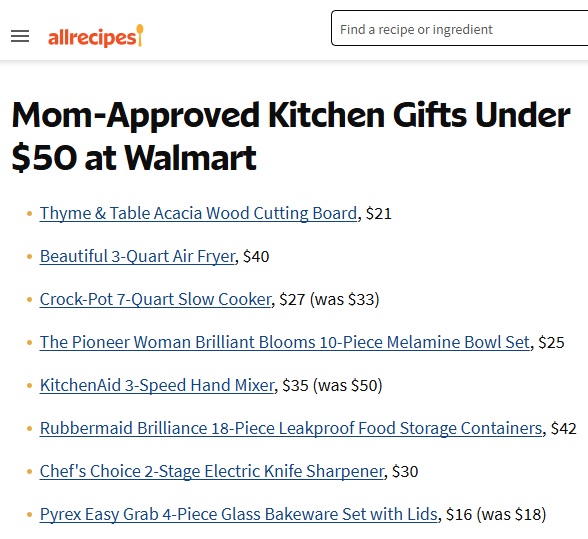
We’re a quarter through this new century, but the term “mom-approved” remains in use. It perpetuates a subtle yet significant exclusion of fathers from the parenting conversation. This exclusion is worth examining, particularly as societal norms shift toward recognizing the importance of parents as equals.

At its core, “mom-approved” is a gendered phrase that assumes mothers are the ultimate arbiters of what is best for children. This assumption reinforces the outdated stereotype that mothers are inherently more capable or involved in parenting decisions than fathers. While many mothers do play a central role in childcare, the same is true for fathers. Modern dads are indeed engaged in parenting. Yet, phrases like “mom-approved” suggest that their contributions are secondary or even invisible.

This language not only marginalizes fathers but also places undue pressure on mothers. By positioning moms as the default decision-makers, the phrase reinforces the idea that they bear the sole responsibility for their children’s well-being. This can perpetuate the “mom guilt” phenomenon, where mothers feel they must constantly prove their parenting competence, often at the expense of their mental and emotional health.

The exclusion of fathers in terms like “mom-approved” also has broader implications for how society views parenting roles. It subtly reinforces the idea that parenting is women’s work, making it harder for fathers to assert their role as equal partners. This can deter companies from creating products or services that explicitly cater to dads, further perpetuating a cycle of exclusion.

To build a more inclusive parenting culture, it’s crucial to rethink the language we use. Terms like “parent-approved” or “family-approved” are simple, gender-neutral alternatives that acknowledge the roles of all caregivers. These shifts in language might seem minor, but they can have a significant impact on breaking down stereotypes and fostering a more equitable view of parenting.

By moving away from “mom-approved” and adopting more inclusive terminology, we can celebrate the diversity of parenting experiences and ensure that all parents feel seen and valued. It’s time to recognize that the parenting world isn’t just a “mom’s club” – it’s a shared journey where everyone’s contributions matter.

All Dads Want for Christmas is Their Due

Dads don’t want a lot for Christmas,
There is just one thing they need.
And they don’t care about the presents,
If they’re discounted or free.
Just a change that’s overdue.
More than you could know is true.
Make their dream break through,
All dads want for Christmas is their due.

[music picks up]
Dads don’t always seem included,
Left out of conversations, it’s true.
All they ask this holiday,
Is a bit of fairer view.
They don’t want to be excluded,
Forgotten, left out every day.
They are parents, don’t forget it,
Stereotypes do not portray.
Just please change, it’s overdue.
More than you could know is true.
Make their dream break through,
All dads want for Christmas is their due.

They won’t ask for much this Christmas,
They won’t even wish for snow.
They’re just gonna keep on waiting,
For brands to change names and logos.
They are more than backup parents,
More than sidekicks. Aloof? No way!
They can do anything, it’s instinct.
Anything that’s in their way.

They want change that’s overdue.
More than you could know is true.
Make their dream come into view.
All dads want for Christmas is their due.

Oh-oh, dads have done the shopping,
Household chores, it’s nothing new.
So why do companies claim,
Dads can’t deal with simple doo doo?
And everyone is clinging,
To an old-fashioned ‘50s upbringing,
Santa, won’t you bring dads
The thing they really need?
Inclusion in word, photo, and deed.

Oh, dads don’t want a lot for Christmas,
To be remembered is all they’re for.
Include them, name them, don’t forget them.
That’s the gift to make them whole.
Just a change that’s overdue.
More than you could know is true.
Make their dream break through,
All dads want for Christmas is their due.

If Buy Buy Baby Wants to Thrive, It Can’t Without Dad

Buy Buy Baby, once left for dead following its parent company’s bankruptcy in 2023, rose from the ashes late last year. At its peak it operated 137 stores across the US, but last year there were only 11 remaining. Then Bed Bath & Beyond closed them indefinitely. However, Dream On Me bought the stores via auction and has plans to resurrect the brand.

All 11 locations are slated to open in November, with over 100 more arising in the next three years. Although it had disappeared for several months, you may have noticed its online presence slowly inching back onto your social media feed.

During its initial go-around it had been a brand who included fathers in advertising more prominent than others. It also employed inclusive parenting language. Its marketing team wasn’t perfect but appeared more progressive than others in the baby world.

Now in its incarnation, Buy Buy Baby seems to have taken a step backward. Notice some of its recent posts, which tend to forget a father’s indispensable contribution to the family. It even offered an oddly timed declaration of praise toward mothers – in August.

Buy Buy Baby is moving at rapid speed to resurrect a relatively new (founded in 1996) and still unknown brand (its 111 stores were less than half of the former Babies “R” Us 260-store chain).

If it wants to survive, it must get this right in its second life.

It needs to take baby steps, and know that it can’t do this without dad.

How ‘mom panels’ only tell half the story

Everyone keeps telling us the days of traditional gender roles are long gone.

They say men care for and nurture children, just as women work outside the home. Both parents contribute no matter what task needs done, because the lines are blurred and times are different now.

Ask around your circle of family and friends, and chances are those perceived dynamics match the real world. Moms and dads do indeed share responsibilities, but that’s not how the corporate world sees it. There, particularly in the realm of marketing and media, you’ll find a different story where stereotypes are held onto, where there’s a belief that only mom runs the show.chickfila2.jpg

That’s never been more evident than with the Chick-fil-A Moms Panel, a corporate initiative which works to bring moms news and announcements, gather feedback on future programs, and provide exclusive opportunities and gifts.

The program is driven through BSM Media, a marketing and media company that specifically focuses on connecting brands with moms.

The Chick-fil-A Moms Panel is believed to have close to 1,000 moms on this year’s panel. That’s a lot of moms who can help Chick-fil-A learn more about their offerings and the way they address customer service.chickfila3.jpg

The only problem? It’s forgetting half of the parenting equation.

Last year’s industry-first book, “DADLY Dollar$,” revealed several interesting facts about dads. A 2015 qualitative study by consumer insights firm iModerate indicated that dads make impromptu purchases first based on price. But there are other reasons. One reason is that they want to reward their children for good behavior, accomplishments, or even to avoid an in-store meltdown. In addition, they also like to give their families treats, either to celebrate events, reduce home tension, or indulge loved ones. They also do so out of convenience, for the sake of planning, and to anticipate items they might need.chickfila4.jpg

If money issues are often at the root of couples’ arguments, it may not prove who is right or wrong, but it at least proves this: dads have a hand on how money is spent.

Operating a moms-only panel isn’t only about ignoring half of its customers, it’s about losing out on potential revenue and the opportunity to learn how today’s modern families spend money.

Company founder Truett Cathy insisted, “We should be about more than just selling chicken. We should be a part of our customers’ lives…”

Rather than focusing on missed opportunities, we see Chick-fil-A as having a new opportunity to be a part of dads’ lives. In fact, there’s no better way for this family-owned business to remind everyone that families also include dads.