Cleaning up diapers: why the race for dads is on

In the world of diapers, there seems to be a sudden race to reach the long, undervalued segment of dads.

Although in some respects, the race might resemble that of a slow crawl.

Within the past month, we’ve seen the big three diaper makers – Pampers, Huggies and Luvs – all take intriguing steps toward speaking to the parent other than mom. Of course, that would be dad, the other parent who’s curiously inconspicuous from most diaper websites.

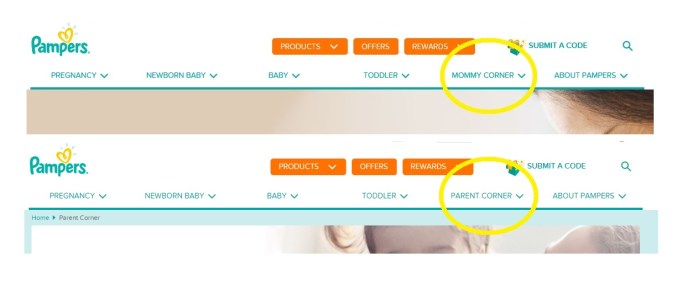
Pampers seems to be in the early lead, having quietly updated its prominent menu tabpampers2.jpg with little fanfare:  “Mommy Corner” was switched to “Parent Corner.”  Of course, Dad Marketing Headquarters noticed the change, and gave instant kudos for the fantastic, albeit minor one-word upgrade.  Fresh off its successful #PampersBabyBoard event, several dads there and elsewhere noticed the improvement and too offered their appreciation via social media.  Pampers still has a way to go to reach full parental inclusion, but tweaking a prominent communication tool like a website menu is a positive start.
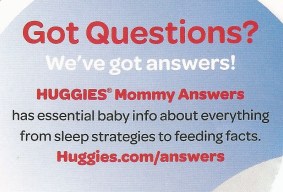
Huggies, on the other hand, maintains its long-standing “Mommy Answers” menu tab, a huggies2section which ignores fathers as equal parents in more ways than one.  We’ve been in communication with its PR agency, who assures us that changes are on the way this summer.
Huggies is no stranger to controversy. Its 2012 “Have Dad Put Huggies to the Test” campaign backfired, causing its marketing team to embark on some serious damage control after one father started a “We’re dads, Huggies. Not dummies,” petition that garnered more than 1,000 signatures in less than a week.
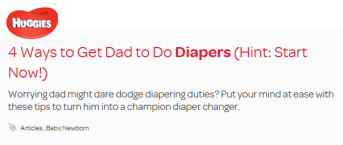
huggies7And just this calendar year it maintained a web page at huggies.com offering the unabashed advice, “4 Ways to Get Dads to Do Diapers.”  That piece has since been removed.

Luvs also made a significant change last week:  one of its front page web sliders at luvs.com was altered after repeated nudging from our office.  It only took a simple edit to make dads everywhere feel included with its new self-proclaimed slogan:  “The Official Diaper of Experienced luvs7.pngParents.”  The only problem is, there’s other sliders on its landing page that contain other mom-only references, as well as others on its site that need updated, too.

These easy fixes are often at the core of the problem.  So often it’s a matter of a quick edit – many times a mere one word – that would make a noticeable difference.  In today’s ease-of-use content management world, they’re the kind of changes that anyone could make quick and painless within minutes.  While Huggies’ changes seem to be part of a full site-wide revision and overhaul, why wait to make uncomplicated, one-word adjustments?  Those straightforward, obvious fixes should be made right now.  All of this is part of a slow, drawn-out process and it doesn’t need to be this way.  Equality shouldn’t wait.

For now, at least a word of congrats to these diaper makers is in order.  But at the same time, no parent would let a child sit for days with an oopsie in its diaper.  So why should an exclusionary website sit unattended to, just the same?

The race is on to capitalize on the spending power of dads.  Who will win?  Keep up-to-date with this site and also follow us on Twitter, Facebook, and Instagram, where you can be certain we’ll stay on top of it.

You may look like a dad, but we’re going to call you a mom

similac13It would’ve been great to be a fly on the wall when the male model (featured in this ad) got the call from his talent agent to appear in this Similac magazine ad:

Agent: How’s my favorite client?
Model: I’m good.
A: Great news – I landed you a new photo shoot for a parents magazine ad.
M: That’s cool. What’s the company?
A: Similac.
M: Similac?
A: You know, they make baby formula.
M: Oh, right.
A: Anyway, they want you to appear in a grocery store aisle holding a cute little baby.
M: Simple enough.
A: But there’s one catch…
M: What’s that?
A: They want to call you a mom.
M: (Momentary pause) A mom? But I’m a guy.
A: I know, I know. You’ll still be playing the part of a dad, but you see, their tagline is “Welcome to the Sisterhood of Motherhood.”
M: But dads aren’t moms.
A: True, but Similac likes to use “mom” as a synonym for “parent.”
M: (Awkward silence) But isn’t baby formula the perfect product to sell to dads, especially since they can’t breastfeed?
A: Right again, but they don’t need dads as customers.
M: Why not?
A: Because they say only women take care of kids and shop.
M: But I shop.
A: You’re single. When you get married and have kids, you don’t shop anymore. That’s a mother’s job.
M: That seems kind of sexist.
A: But Similac is paying you big money to look and act like a dad. (Awkward silence) They just want to call you a mom.
M: Now it all makes sense. Where do I sign?

Once again, Similac takes the shared role of parenting and needlessly genders its product – thus turning it into a mothers-only thing. It’s all the more troubling because they (gasp), used the word “parent” twice in its ad copy, only to follow up with its obdurate tagline. It concludes with a partisan invitation for only moms to converse further on social media.

The ad looks even more abnormal when you consider its “sisterhood” theme of supporting the choice between breast- and bottle-feeding – and then reflect on the same underlying “choice” theme in this particular heading – with a dad included. Breastfeeding and a dad?

We like to think that, at some point, Similac will discontinue this madness of posing dads in ads and calling them mothers in a sisterhood, but it has company when it comes to miscasting roles.


This boy will someday be ignored by the very company using his likeness

garanimals4Do you see that cute little boy?  He’s been used.
Used by a company that was only in need of his smiling face, and then, will be ignored the moment he becomes a dad someday.

But don’t take our word for it.  Check out the Garanimals website, which uses parents and moms interchangeably like synonyms.  Of course, moms are parents, but one word refers to both genders of parents, the other only female parents; expressly mentioning moms and leaving out dads, as it did on its company website and in this print ad, purports mom to be the lead parent, the one who handles the shopping, the one who dresses kids, the one who takes care of kids alone.

That’s unfair.  That’s wrong.

It’s yet another unfortunate example of a company ignoring fathers as equal parents, and it has to stop.

Yes, that boy is smiling now, but someday he may be holding a child of his own.  He might even end up flipping through the pages of a parents magazine, encounter a Garanimals ad and then wonder, “I guess I only existed when that company needed something.”

And he might even use another company for his child’s clothes.

So in the end, this ad was not very, well, useful.

Fresh perspective from Baby Brezza

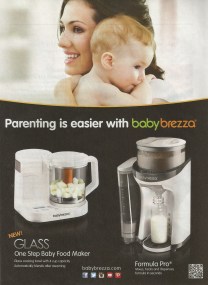
babybrezza1Companies like Similac only wish to target its product to mothers, because unfortunately, it still believes that moms solely handle the reins when it comes to feeding babies.

But then you have different companies like Baby Brezza, who offer a progressive, free-thinking approach to its marketing and advertising.

Check out its latest ad (featured), which uses the inclusive word, “parenting.”

Imagine how different this ad would have looked had it chosen to use the word “mothering” instead of “parenting.”

Even with a photo that only includes mom, by using that complete, all-encompassing term, it makes dads feel like they’re being spoken to – like they count.

Over at babybrezza.com, you’ll find a site that mimics the ad, where uses of parenting abound, just as the testimonials impressively reference non-biased terms such as “families” and “parents.” The videos also include dad feeding baby, and includes a special section “Kitchen Time with Dad.”

It’s no wonder Baby Brezza received awards from Parent Tested Parent Approved and the National Parenting Center.

Keep up the good work, Baby Brezza.

Welcome to the ‘hood

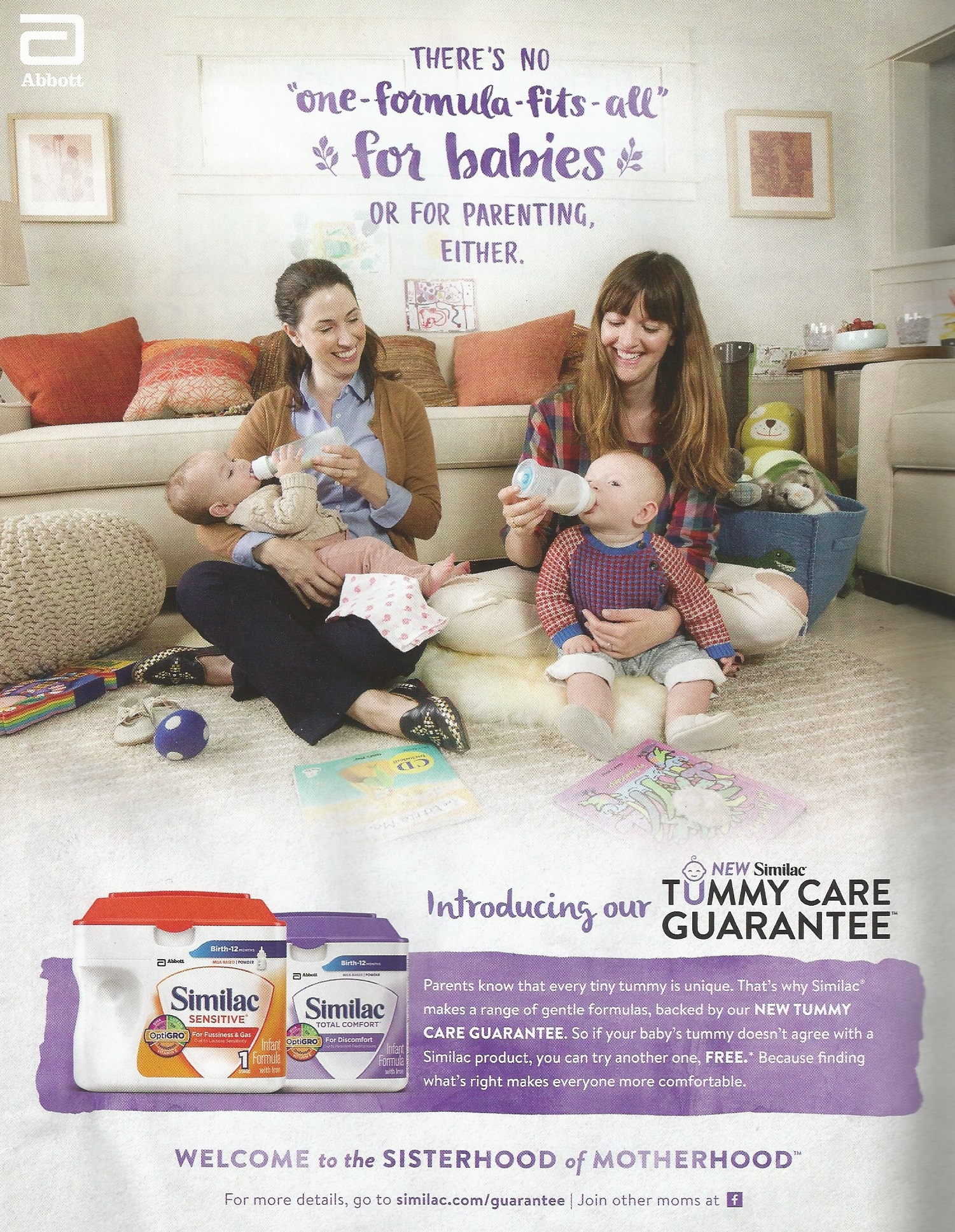
similac9Overly drenched in heaping layers of crippling irony is the headline from Similac’s latest display ad (right) which preaches, “There’s no ‘one-formula-fits-all’ for babies, or for parenting, either.”

Calling this marketing-speak odd would be an injustice to the word odd, instantly giving it a meaning never originally intended. It might just make something we all currently agree upon as odd, say, Miley Cyrus’ antics, seem almost girl-next-door normal.

Thus, we here at dadmarketing can’t call this latest advertisement odd. Rather, Similac’s ad proclamation is off-the-charts anomalous.

Here’s why: Similac, by way of its marketing message, slogan and ad copy (below), is saying that only moms are parents, yet its headline (above) tries to tell us something otherwise.

Again, did you notice the slogan from which it can’t seem to let go? “Welcome to the Sisterhood of Motherhood”? There’s nary a dad in the universe who can relate to that, and we’re talking about a product called baby formula, not breastfeeding, nor a feminine item. Dads should be every formula makers’ dream, a sure-fire built-in customer for life, but Similac doesn’t seem to want it that way.

Abbott, makers of Similac, has been touting this exclusionary “Sisterhood/Motherhood” slogan for several months now, and by it saying “there’s no one-parenting-fits all,” it sure seems to want it both ways: mild use of the word “parent” hidden behind its unilateral, sexist slogan.

Besides, check out the exhortation at the end of the ad: why would dads even bother taking Similac up on its invitation to visit Facebook?similac10

Dads aren’t moms!

It’s time to give this old-fashioned slogan a rest, and for Similac to consider that dads just might be part of its customer base, too. It’s no fun for dads to get ignored month after month. It’s campaign preaches a non-judgmental approach, but it has judged dads loud and clear:  they don’t count.

When it comes to taking care of babies, it’s not just a motherhood. It’s also a fatherhood.

And above all, it’s called parenthood.

KSN = Kraving Serious News

ksn1Remember the time when TV journalists simply reported the news?

Me neither.

That practice seems to have disappeared, because today we find newscasters and reporters performing, serving more as entertainers. They don’t exactly act like play-by-play announcers simply reporting the action on the field, but they’re also not full-time color commentators. They’re somewhere in between.

News is the reporting of recent events whereby the media provides us with information, and the media is the watchdog of us all. But just because freedom of speech offers us the right to say anything we want, doesn’t mean it should be said.

Think about it: as you watch the news – just after news stories and in between segments or commercials – how often do we hear those little banters, or commentaries, or jokes, or diatribes on some social situation or person among desk anchors? It’s supposed to be a segue to a different topic where we see the anchors’ personality and human side, but instead the power of the media is so often used to influence many via one person’s opinion – whether intentional or not.

It’s likely the “reporting hat” and “show host hat” morphed into one with the major increase of morning shows, mid-day shows, afternoon shows and talk shows, where features and lifestyle stories and commentary blended into one giant pot labeled “TV news,” all under the banner of the network.  This isn’t necessarily a bad thing.  Watching the lighter and softer side of news is enjoyable and breaks up the seriousness, but reporting has certainly become less sharing of factual information, more entertainment.

Take, for instance, this recent story featured on Kansas Today on July 8, 2015 on KSN in Wichita, Kan.

Kansas Today’s Katie Taube gave fellow reporter and dad-to-be Mark Davidson, her husband and also dad-to-be Dylan Hagen, as well as veteran dad Leon Smitherman, a list of items to find at Babies R Us. They were asked to work together to find each item in order while a KSN camera crew followed them along.

What’s not clear is why this piece occurred at all?

Was this supposed to be some fish-out-of-water premise, putting manly-men in an environment with which they’re not familiar as we watch hilarity ensue? Was the station trying to send some bumbling guys on a wild goose chase for some impossible-to-find items? Were we supposed to laugh at their overall ineptness?

After you watch the video, scroll below to read the comment from one perceptive viewer named Marissa:

“Why are you mocking dads? My husband could run circles around me when it comes to many of the so-called ‘mother roles.’ We’re living in 2015 people! Why don’t you start mocking gays along with it!”

Well said, Marissa, for we find nothing humorous or newsworthy about men going shopping, especially for items that they’ll use to co-parent these new children.

ksn2Even if these particular men weren’t familiar with a “Diaper Genie,” it’s not like anyone couldn’t find it after a common sense search. These dads are going to become parents, not babysitters, and it’s their equal responsibility to raise them just as the mothers will.

Taube, Davidson, Hagen and Smitherman are probably kind, friendly, stand up people who meant no harm, but as we’ve said before on this site – they weren’t thinking this idea all the way through. And that’s just the problem, we need to think about others and how they might feel. No one likes to be labelled, stereotyped, left out or excluded, but that’s what marketers, media and entertainment do with dads all the time.

Generations ago, it was the father who went to his work while mother stayed home with the children. So, yes, once upon a time dads were perceived as the secondary, assistant parent while mom squarely took the lead. But those days are over, and yet today, some still perpetuate this bygone era.

If KSN continues with this treatment of news, what’s next week’s segment going to be? Filming moms while they enter the work force, laughing at all their mistakes as they try to make it in the “real” world? Following girls around as they attempt to play sports? Taping men who actually try to cook a meal and clean the home?

Times have changed, we all need to treat dads with the love and respect they deserve as parents – being every bit equal parents as mothers. No one is more important as a parent than the other.  Those moms-to-be have no more instinctual ability to parent the child than the dads do. They’re both parents.  Equally.

And next time, hopefully KSN will be reporting the news, not creating it.

PS: Best of luck to all parents-to-be!

Give it a rest

I feel pretty confident in knowing that if I open a copy of Newsweek, that I’ll be able read about the news. If I pick up TV Guide, it will cover the topic of television. Sports Illustrated, naturally, deals with sports.

What about American Baby magazine? Well, as you might imagine, it discusses babies and parenting. Since most babies aren’t prone to pick up magazines and read them, you would think its primary audience would be parents.

And you would be wrong.

It’s moms.

American Baby magazine, and others like it – Parents, FamilyFun, Parenting, Babytalk – all seem to think that dads don’t count, and don’t exist.

In the November 2014 issue of American Baby magazine, for example, I counted images of 29 moms. And how many dads?

Zero.

Fifty-three pages and not one single dad (note: there were a few male doctors, but no dads).

But the ban on dads doesn’t stop there. It was the tiny little headline (pictured) that makes dads feel useless: “Better rest for you, mom.”americanbabymag2

That also evidences a slight tinge of narcissism. C’mon, don’t dads need rest, too? Don’t dads have a hand in taking care of kids? Just because the baby actually comes forth from a female, doesn’t mean that moms are instantly able to nurture better than dads, or that they must care for them more. Since these magazines believe the falsity that dads are less competent, shouldn’t that be all the more incentive for editors to have some articles scripted specifically toward fathers?

We all know that media has a heavy hand in shaping public perception. If it really wants to be a trustworthy source for news and information, and genuinely speak to all of its readers, then it should live by the adage that parenting involves fathers.

American Baby magazine wants to give mom better rest.

All dad wants is some respect.

Quality marketing is their recipe

How refreshing is this latest email campaign from Wendy’s?wendys

In a world where marketers often perceive moms as the parent-in-charge, here’s an invigorating approach from a company that’s simply giving both parents their rightful due. It was plain and simple, but it got the job done.

There’s no special web tab titled, “For moms.”

They don’t overdo it in the other direction with some out of place, one-time deal for dads so often seen only in June.

Their website doesn’t look overly frilly or feminine, as baby websites so often do.

They did their own way, and did it right – by focusing on family.

Like so many companies before them whose stories have been revealed right here at dadmarketing, Wendy’s had every opportunity in the world to exclude dads and put moms solely in the spotlight.

Rather, they use the words parent and family at every chance they get. While it’s not exactly a shared 50-50 equivalency among photos of moms and dads, we don’t think it’s necessary.

Their mission and focus is carefully crafted by a team who stuck to a game plan by highlighting the adoptees, and in turn, present some touching stories with class and dignity that make all parties feel welcome. They realize that families come in all shapes and sizes, and they didn’t exclude anyone in the process.

It was only one little email, but Wendy’s has dadmarketing’s highest Seal of Approval, and others should take lessons from them.

Wendy’s goal here wasn’t about hamburgers or the bottom line, but it all makes perfect business sense.

Well done, Wendy’s.

An unfair lady

You may have noticed the recent headline about the University of Tennessee athletic department dropping the “Lady” volunteersportion of its Volunteers nickname from all sports, except basketball.

I vividly remember the first time I was introduced to the word lady and its association with a sports team – at my local high school. Frankly, I couldn’t believe my eyes, and I had questions. Lots of them.

Why was a girls team purposely making themselves out to be different than the boys (and as a result, giving them a lesser-than feel) by putting this unnecessary word on their jerseys?

Did the athletic director or the coach dream up this humiliating way of separating the girls from the “official” sports teams otherwise known as the boys? (That was the message it appeared to send to myself, and others.)

At the very least, why couldn’t they be identified as girls, instead of such a formal word like lady, which really has more of an adult connotation?

Why use a prim and proper term like lady anyway? That implies refinement and politeness, hardly qualities I’d want in a sports team. (Then, that made me wonder if, during games, these female athletes would really sweat, or rather glow?)

And, treating all things equally, why then, didn’t the boys team use the moniker “gentlemen” on theirs?

It was as if the girls team was intentionally signaling everyone in attendance with a madcap scarlet letter and caution label right on their jerseys: no, we’re not the real sports team, we’re just the ladies sports team. If you want to see the official sports teams, you’ll have to watch the main event, the boys.

I’m all for recognizing two different genders and giving each their due, but this deliberate separation by way of a simple term left the entire situation feeling so unnecessary, cruel, unfair and demeaning.

The Academy Awards doesn’t call it a Lady Oscar for the actress; it’s just an Oscar.

We don’t have teachers, and lady teachers.

There aren’t parents, and lady parents.

All male cats aren’t just cats, with the others being called female cats.

Sure, there’s still plenty of absurdity in our world. Seeing a female city council member categorized as a councilman looks as inane as it is literally inaccurate.

Yet even other parts of the sports world have been slow to embrace equality. Despite the effects of Title IX, sports has taken a long time to get with the program.

For example, why must the men’s NCAA basketball logo be branded “Final Four” while the women’s logo states, “Women’s Final Four”? Shouldn’t the former be called “Men’s Final Four,” making all things uniform?

And speaking of uniforms, isn’t that what sports clothing is supposed to do – make things alike, as in unified? If you let one team wear “Volunteers” on a jersey, and their counterpart wear “Lady Volunteers,” does that really send a message of togetherness and harmony among the entire Tennessee athletic department?  And its women’s teams even have their own blue accent color to create a further divide.  Talk about a silent, unspoken rebellion.

Then you have the NBA. Yes, the NBA came first, but why is the women’s league deemed the WNBA? Shouldn’t the men’s league be rebranded the MNBA, or at least give the women’s league a name with a less secondary feel to it, such as the Liberty Basketball Association, or American Basketball Association?

What about the PGA vs. the LPGA? Are not the women golfers of equal stature? The “L” makes it seem like the lesser league that it’s not. When Michelle Wie played on the PGA tour from 2004-2008, did it not seem like the media had promoted her to the main/real/top league? NASCAR doesn’t have a special WNASCAR for female drivers like Danica Patrick.

What surprised me the most about Tennessee’s announcement was how some former female athletes felt they were losing their identity with the loss of the word lady.

Those athletes might read this post and charge us with political correctness gone too far. But this has nothing to do with political correctness. The term “PC” describes the attitude of being careful not to offend any group of people in society believed to have a disadvantage.

One could accurately argue that women have disadvantages in a variety of ways, but using the nickname Lady Vols certainly doesn’t create any advantage; it belittles, demeans and unnecessarily separates.

I suspect the athletes, fans and those around Tennessee athletics had become desensitized to a term that was so commonplace and deeply rooted in sports culture at their university. The winning ways of the successful hoops team no doubt made it famous and celebrated.

The term had grown and became its own separate brand with no one ever stopping to question how silly it looked in the first place. Can’t see the forest for the trees, kind of comes to mind here.

It’s a bit like Jif’s “Choosy Moms Choose Jif” saying, or Kix’s “Kid-Tested, Mother-Approved.” Frankly, I’m surprised more dads aren’t up in arms over them. But both moms and dads have probably become deadened to the phrases. Those old-fashioned sayings have been around for decades and after all, many people enjoy the products anyway, so the slogans go unnoticed, and in the if-it-ain’t-broke-don’t-fix-it vein, most really don’t ask questions.

But questions are important.

As for my original questions, no one’s really ever been able to succinctly answer them. I doubt anyone associated with Tennessee can either, especially those who strangely want to continue with the Lady Vols nickname for basketball only.

But our country was founded on dignity and equality, and dadmarketing will keep searching for it in our corner of the world.

We hope the folks at Tennessee do in theirs, too.

Cooking someone’s goose

For something as new as Jesben Slow Cooker Sauce, and for someone as young as its founder, its slogan is about as archaic and dated as it gets.

Doing its best Jif impersonation, Jesben advances an old-fashioned stereotype while demeaning not just dads, but moms too, as it implies the well-worn “moms cook, dads don’t” mantra we hear from tired products who often find it hard to innovate, giving the perception of an old-fashioned product.

Ironically, that should be the opposite of Jesben.jesben

Although we haven’t tried its sauce, we like the entire concept, its packaging and logo, and overall looks like a winner. Its primary slogan, Elevating & Simplifying The Art of Slow Cooking, is a much stronger description for a product that should want to be seen as pioneering. After all, slow cookers aren’t the simplest and quickest meals to make (nor clean up), yet the terms elevating and simplifying are the kind of words that make us want to give it a try.

And we get the fact that we’re all busy, but why put dads in parentheses, making them out to be the lesser cook, the secondary go-to-source for family meals?

Why not replace the “Moms (& Dads)” with the bolder and more succinct “Parents”? Better yet, how about eliminate the entire slogan entirely and stick with the much finer “Elevating” saying as the primary wordmark?

With an outdated slogan like the one on the front page of its website, we were fully expecting to see an FAQ with something degrading like, “Is it easy enough for dads to use?”

Jesben’s product is young, and it has a bright future.

Consider every customer, Jesben, and dads will consider you.